|
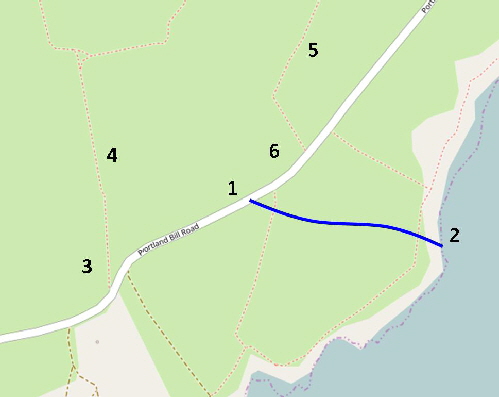
Culverwell Area
|
|
|
© OpenStreetMap contributors - see http://www.openstreetmap.org/copyright
|
|
This area contains largely unspoiled countryside with not a quarry in sight!
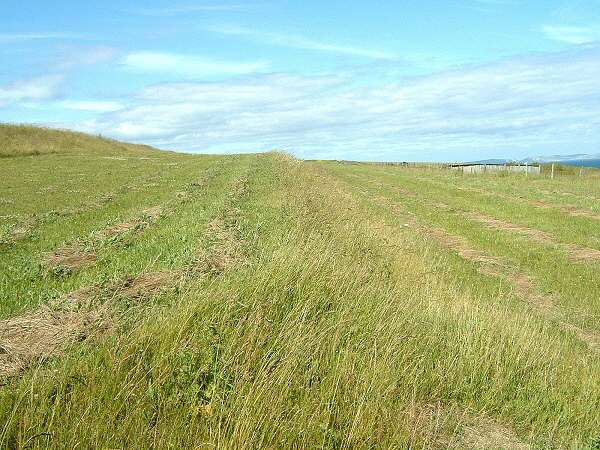
The main road to Portland Bill runs through fields where is are still signs of the medieval 'lawnsheds' [5] - a system of strip farming which is also found in the Purbecks around Langton Matravers.
Please click here for a detailed map. The arrow points to the centre of the area of interest. Click the BACK button on your browser to return to this page.
Please click here to visit the satellite image of this area on Google Maps. Click the BACK button on your browser to return to this page.
Please click here to visit this area on Google Street View. Click the BACK button on your browser to return to this page
|
Please use this table to navigate around this page
|
|
CULVERWELL [1]
|

|
|
WATERFALL [2]
|
|
|
OLD ANIMAL DRINKING TROUGH [3]
|
|
|
A DERELICT FARM BUILDING [4]
|
|
|
LAWNSHEDS [5]
|
|
|
SITE OF MESOLITHIC SETTLEMENT [6]
|
|
|
ANOTHER OF MY HOBBIES
|
|
|
CULVERWELL [1]
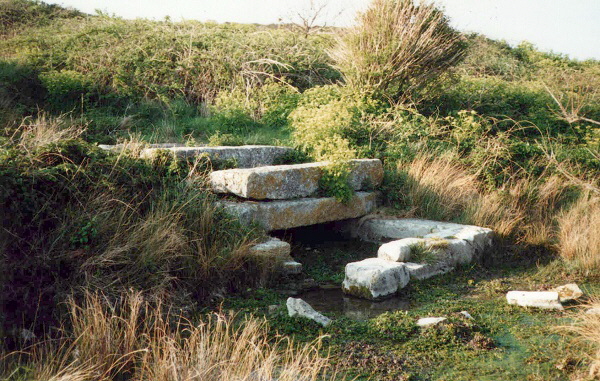
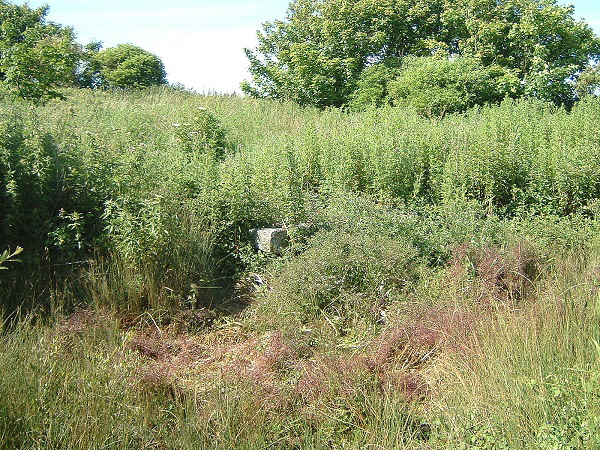
The above picture was taken in 1990. The spring at Culverwell would have provided fresh water for the Mesolithic folk living nearby. See Susann Palmer's excellent book "Ancient Portland" self-published in 1998 for more details of this site.
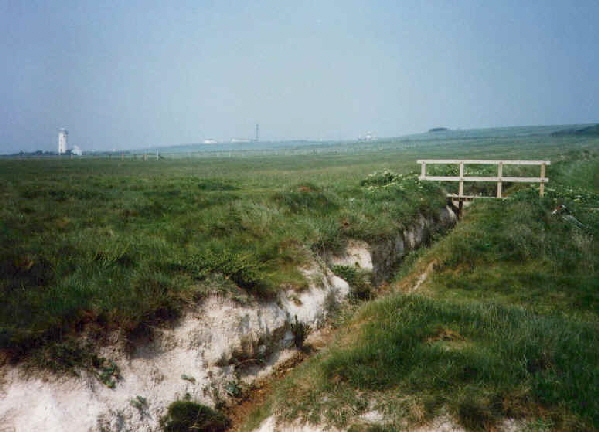
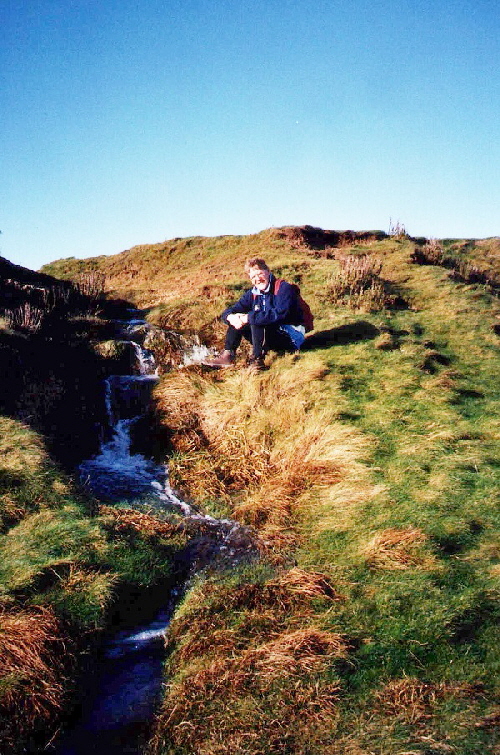
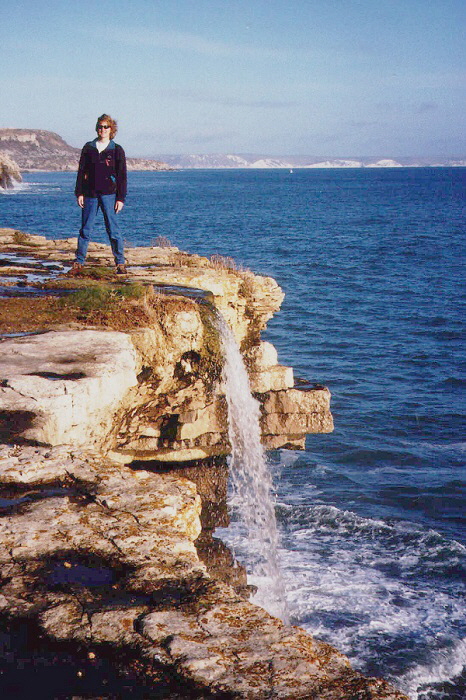
The stream runs 300 metres east across fields and through a deepening gully. This is crossed by a footbridge and then tips over the cliff edge to form Portland's only running stream and waterfall.
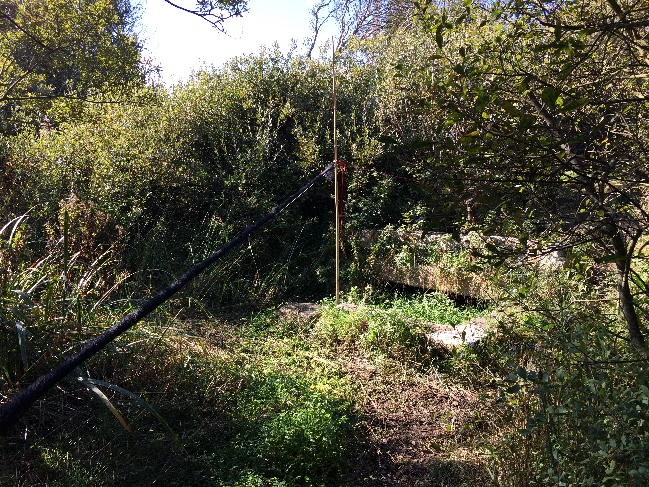
The picture above was taken in May 2003 - what a contrast! The well was later cleared and in 2016 it was safe to visit again as shown below.
The stream from Culverwell runs through this channel eroded into the limestone, under the main road, under the footbridge seen below and out over the cliff edge to form Portland's waterfall..
Return To Top Of Page
THE GREAT PORTLAND WATERFALL [2]
Illustrated here is the end of Portland's only surviving open stream. My good friend Sandra overcomes her vertigo to stand on the cliff edge.
Watery Lane, near one of the old windmills, had a running stream until recently but even that is now culverted.
Return To Top Of Page
AN ANCIENT WATER TROUGH [3]
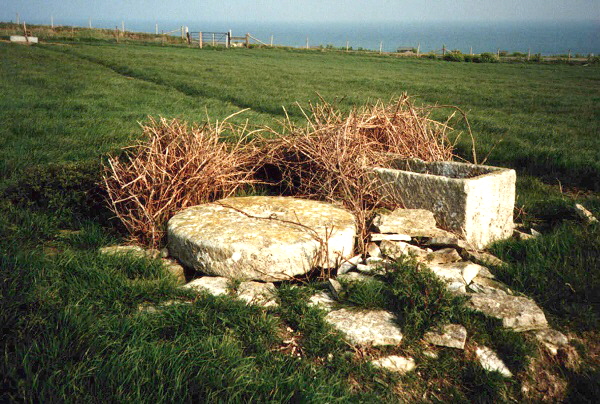
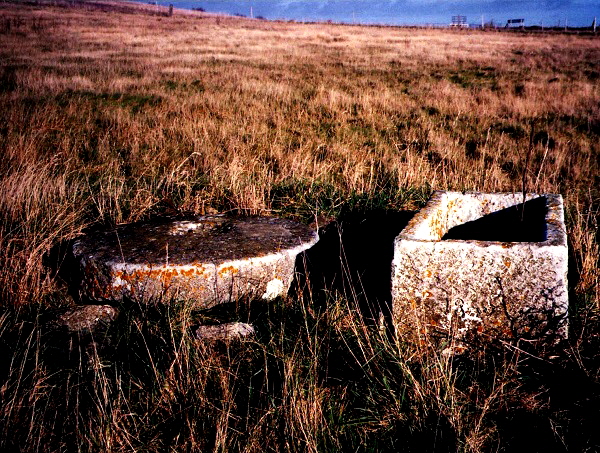
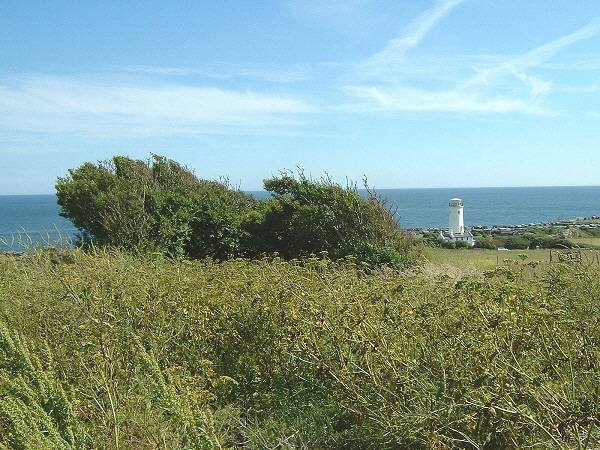
Isolated in a field almost opposite the Lower Lighthouse is what appears from a distance to be a large clump of brambles.
However, this consists of an old carved animal trough made of Portland stone and a broken slab of stone which appears to be covering a well.
Carved on the side of the trough is the date 1865.
Return To Top Of Page
A DERELICT FARM BUILDING [4]
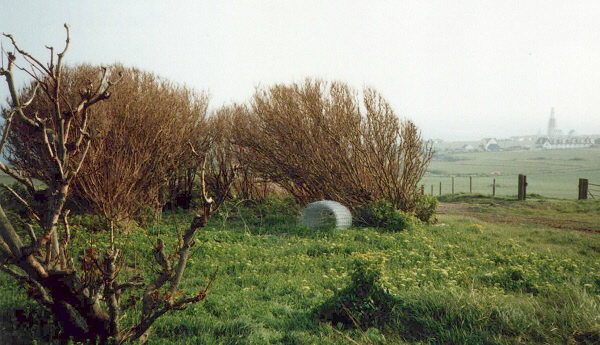
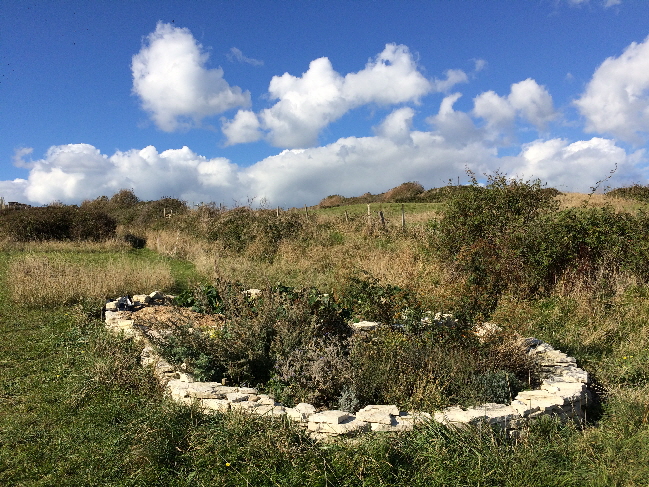
A derelict building now only exists as a single layer of blocks with trees growing inside and out. Presumably an old farm building.
Above is view in May 2003 some 15 years after the previous picture was taken. The remains of this building appear to be no more than a heavily overgrown area of brambles and bushes.
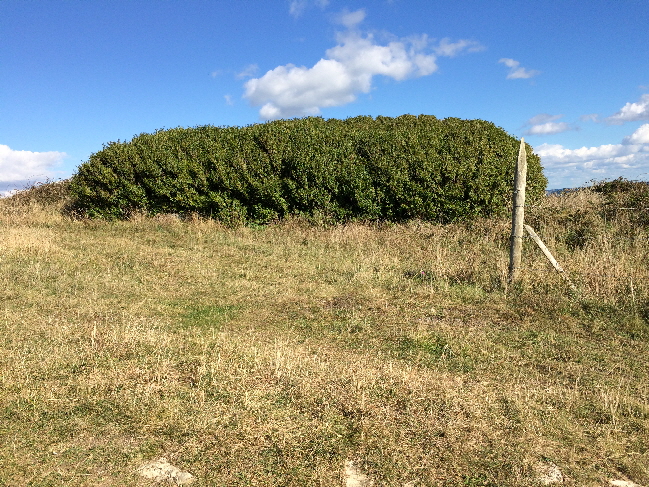
This picture from October 2016 shows the remains of the building wholly engulfed by bushes.
Nearby someone has created a small ornamental garden.
Return To Top Of Page
LAWNSHEDS [5]
This picture shows the 'lawnsheds' that run in parallel lines across the fields between Southwell and Portland Bill. In Victorian times and earlier over 2,000 of these strips were to be found all over Tophill but most have now been built upon. They represent the remains of a Saxon strip farming system once common throughout Dorset.
However, because inheritance laws on Portland favoured sons and daughters equally, the farmland became increasingly sub-divided and dispersed such that some people ended up owning hundreds of plots each no more than a few square yards in area.
Return To Top Of Page
SITE OF MESOLITHIC SETTLEMENT [6]
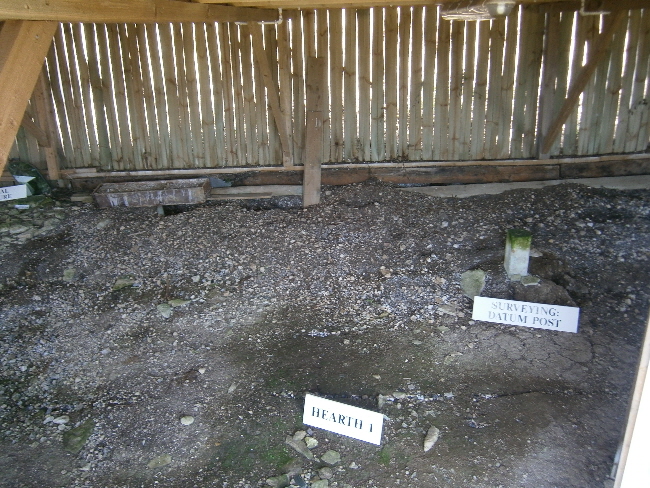
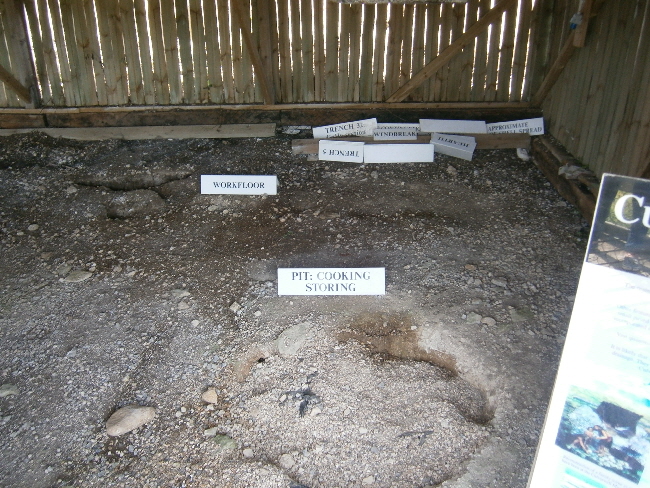
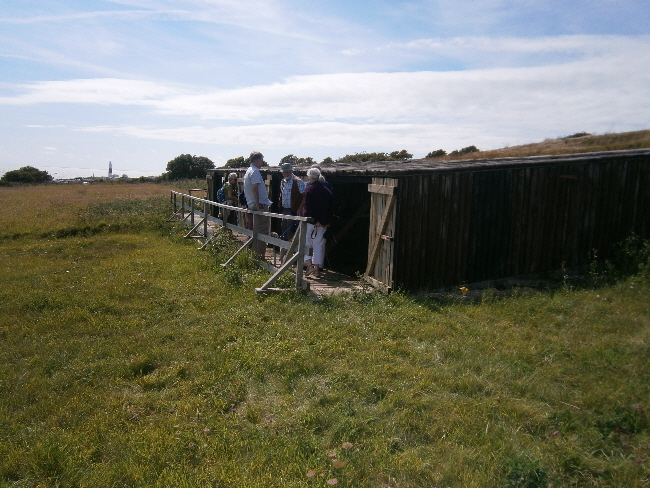
On the west of the road between Southwell and Portland Bill lies a very important Mesolithic site. There is a comprehensive website here describing the site which was inhabited between about 7,500 and 8,500 years ago.
Occasional Open Days have been held held and guided tours took place of the site showing and explaining the visible remains and artefacts as well as how Mesolithic people lived. However, the site has been shut to preserve it from damage.
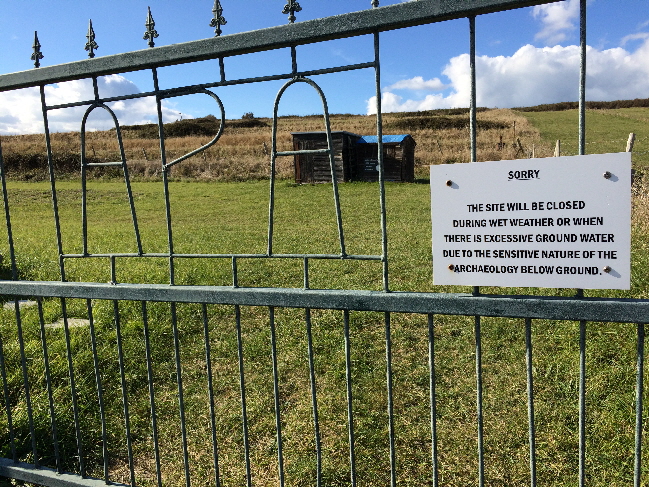
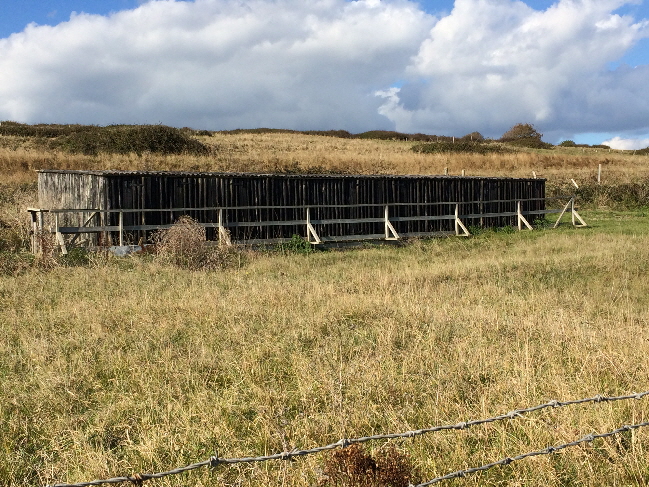
In 2004, the Culverwell Mesolithic Site won an archaeological award; the prestigious "Pitt Rivers Award", for developing this Mesolithic site on Portland.
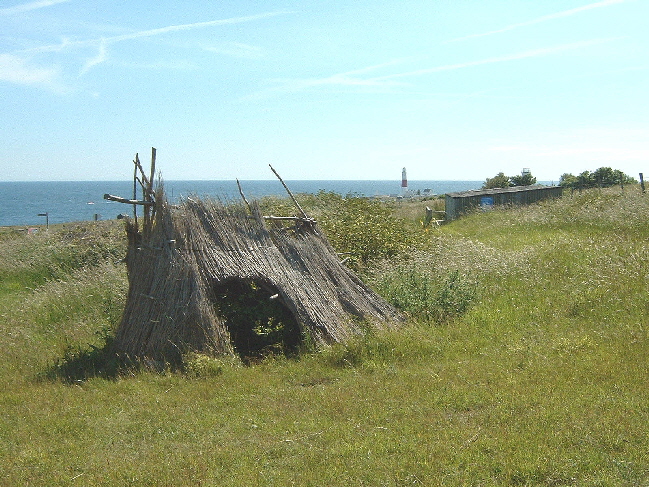
Just inside the site entrance is a dinosaur footprint on a rock. There is also a reconstruction of the sort of dwelling that was used here in the Mesolithic. This reconstruction has lasted for many years.
Please see the website here for more details of this important site.
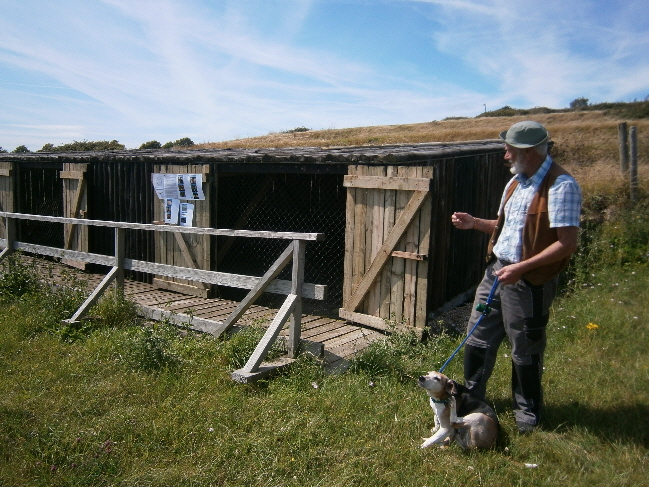
The following pictures were taken during the last ‘Open Day’
Local archaeologist Susann Palmer has published a very readable account of the site as well as other sites on Portland in her book “Ancient Portland: Archaeology of the Isle” ISBN 0 9532811 0 8.
Return To Top Of Page
ANOTHER OF MY HOBBIES

Age of 75 I started a new hobby - writing and publishing books. These are available as paperbacks from Amazon - please click here for details. Their overall star rating from readers is 
Keywords Culverwell lawnsheds waterfall Mesolithic settlement Portland Dorset
|