|
Area Around Freshwater Bay
|
|
|
© OpenStreetMap contributors - see http://www.openstreetmap.org/copyright
|
|
To the casual motorist driving to Portland Bill this stretch of the road approaching Southwell from Easton seems relatively uninteresting.
However, at the foot of the cliffs to the east is the Cheyne Tunnel and vertical shaft which was once an essential part of the Island's water supply. This can be reached and explored with care.
Please click here for a detailed map. Click the BACK button on your browser to return to this page.
Please click here to visit the satellite image of this area on Google Maps. Click the BACK button on your browser to return to this page.
Please click here to see this area on Google Street View.
There is an excellent article about this area of Portland here.
|
Please use this table to navigate around this page
|
|
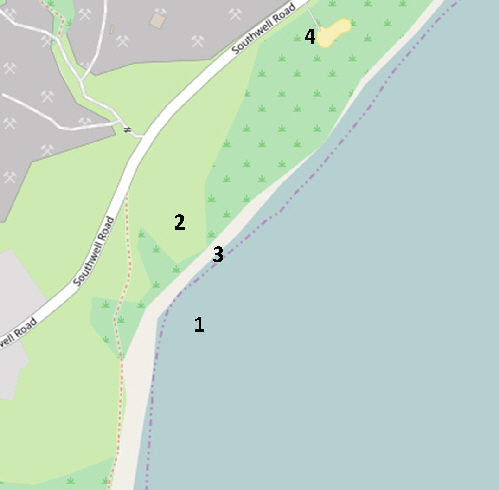
FRESHWATER BAY [1]
|

|
|
CHEYNE HOUSE [2]
|
|
|
CHEYNE TUNNEL [3]
|
|
|
CHEYNE CAR-PARK AND DUNCECROFT QUARRY [4]
|
|
|
ANOTHER OF MY HOBBIES
|
|
|
FRESHWATER BAY
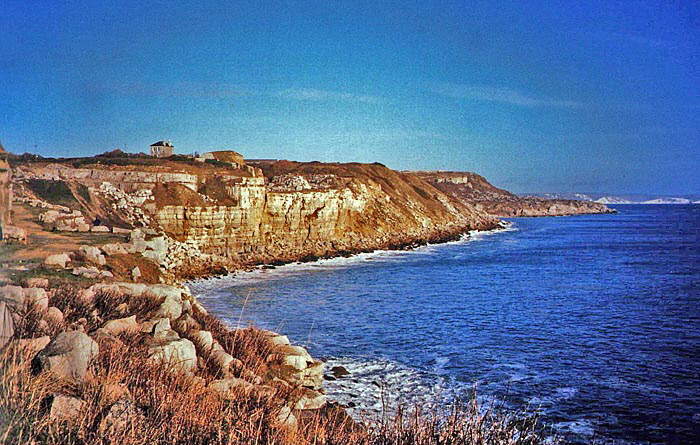
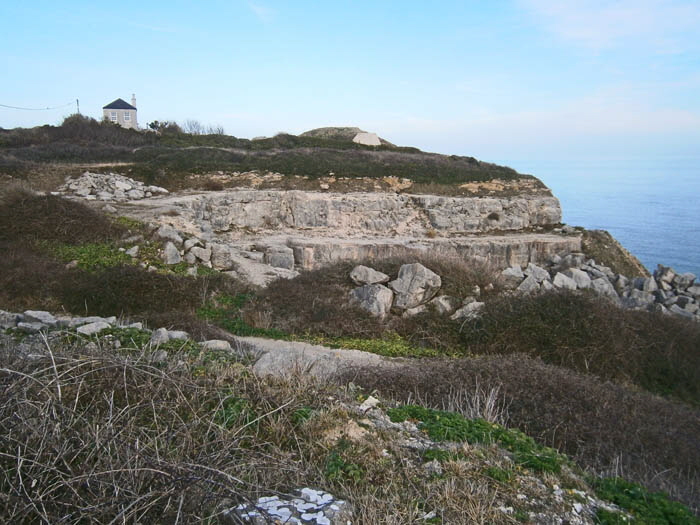
Freshwater Bay is so-called because a nearby well discharges fresh water into the sea. In Victorian times this source of water was controlled and used by the Admiralty to supply water to the Naval Base at the north of Portland. Cheyne House was built for the superintendent of the water works.
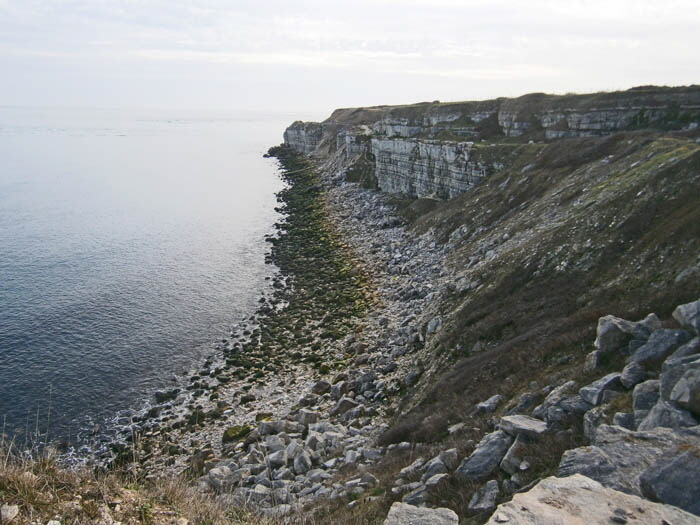
Freshwater Bay
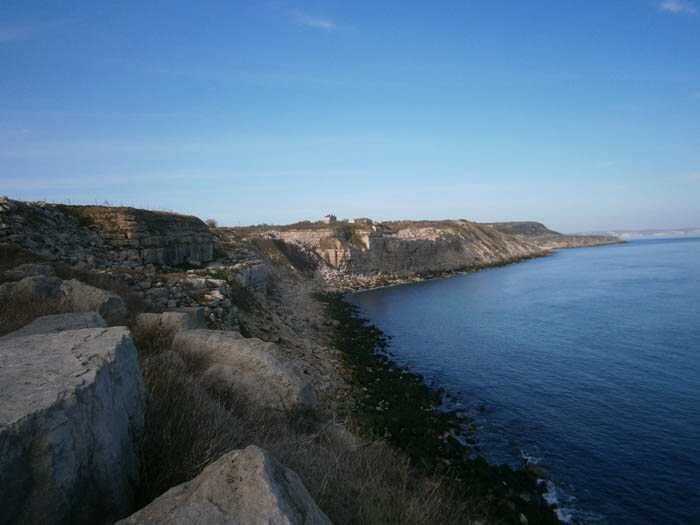
Cheyne House can be seen in the distance.
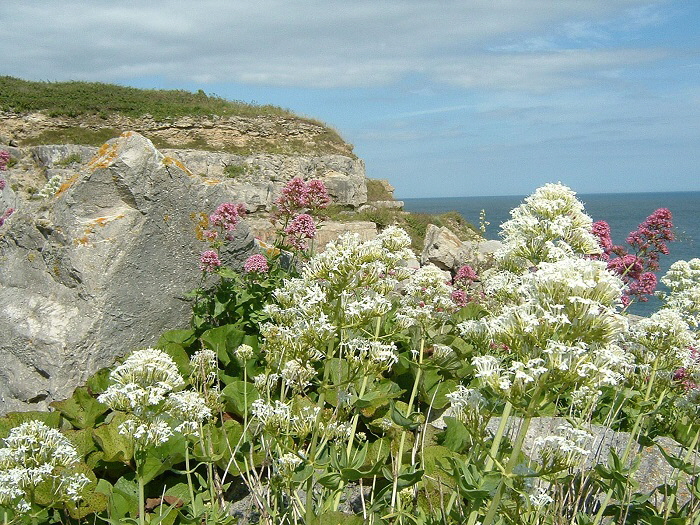
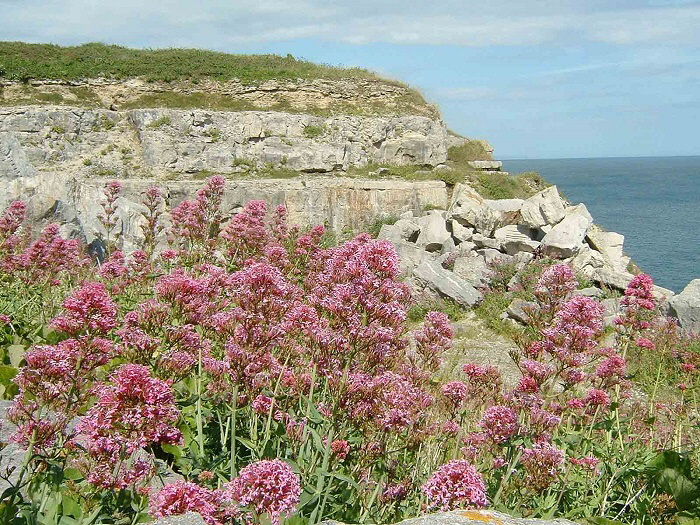
The cliff tops in this area have a great abundance of flowers.
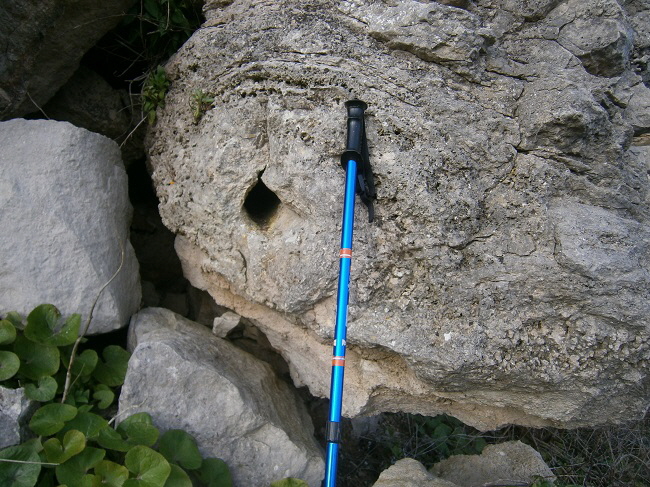
The hole left by a fossil tree. The tree originally fell over and rotted away leaving a hole as the sediment solidified.
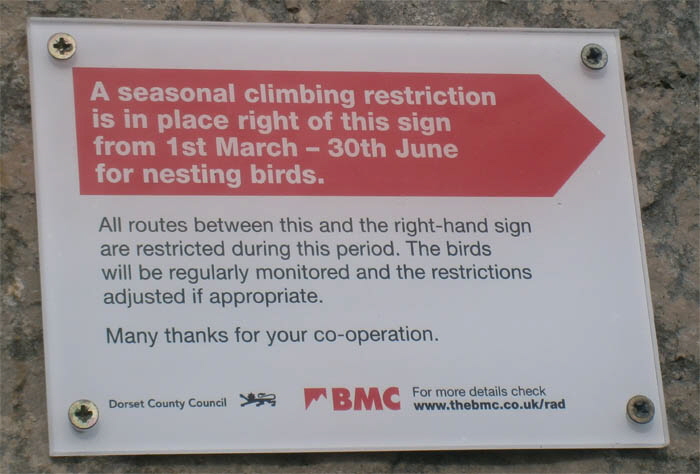
On the far right end of the ledge above is the sign below. In view of the collapse of the cliff at this point nobody would be wise to be where I was photographing this sign!
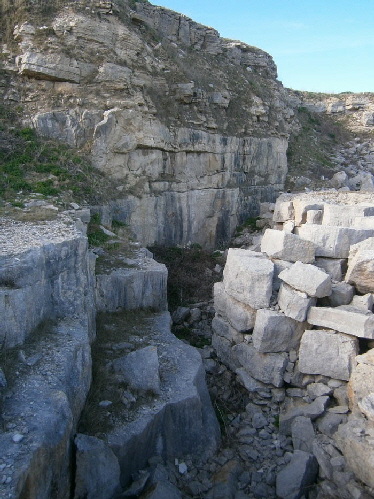
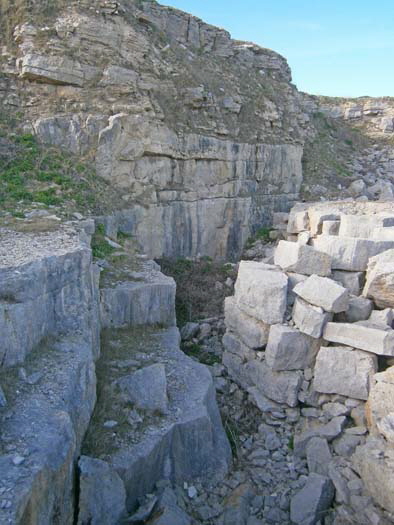
An example of a ‘back filled’ quarry. The workers took stone from the left-hand face and piled the unwanted slabs behind them.
CHEYNE HOUSE [2]
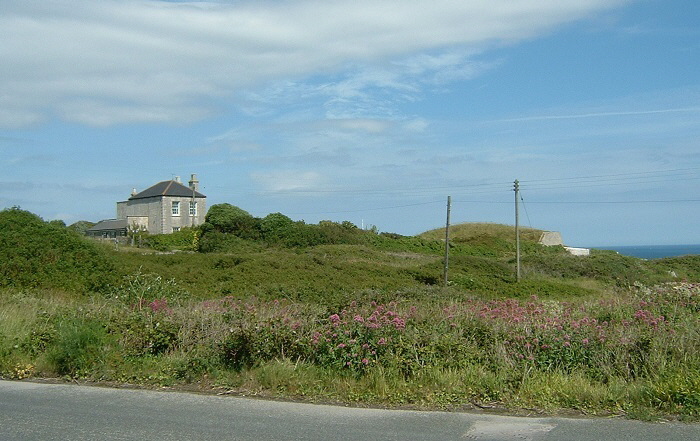
Cheyne House sits exposed on top of the cliffs above Freshwater Bay. The film "The Damned" was filmed partly on Portland in the Freshwater Bay area - click here for details of this film. A detailed account of this filming including a picture of Shirley Ann Field standing outside Cheyne House can be seen here.
There is a great picture of Cheyne House taken in 1962 to be seen by clicking here. There is also a more distant shot here including the now demolished forge building in the foreground.
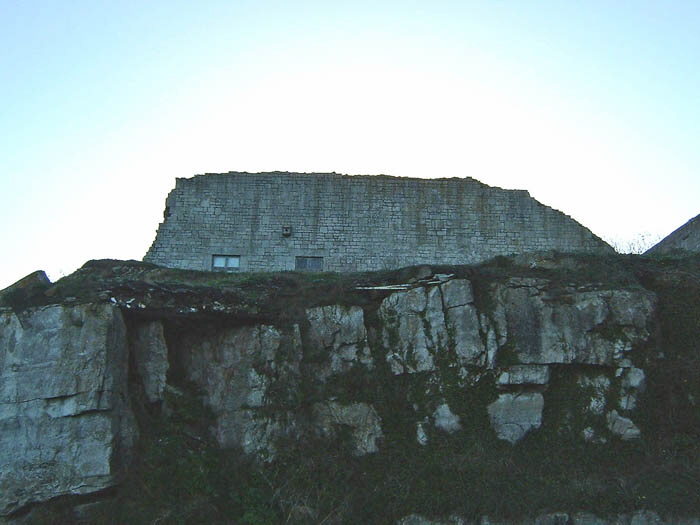
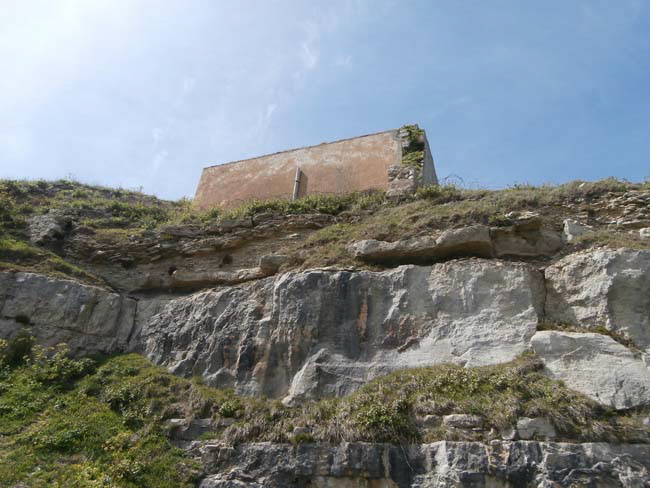
At right above is Cheyne House pumping station. This building once contained the machinery to pump water up from near sea level.
This view of the pumping station was taken from Duncecroft Quarry to the north of Cheyne House.
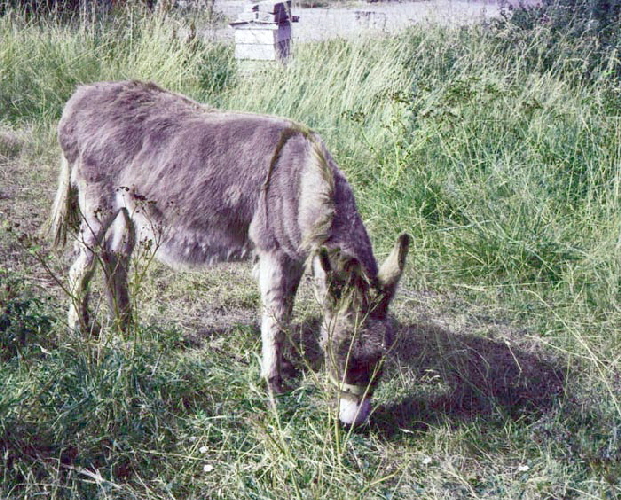
'Hank' the charming donkey who lived in the grounds of Cheyne House in the late 1980s. Sadly, the owners of Cheyne House told me in January 2003 that Hank was no longer alive.
CHEYNE TUNNEL [3]
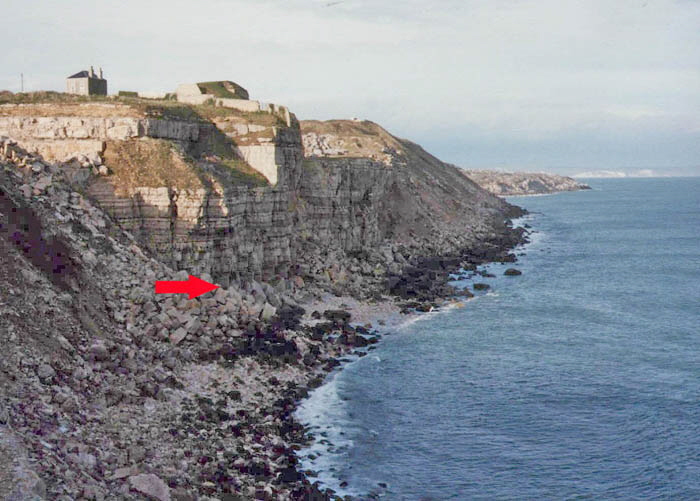
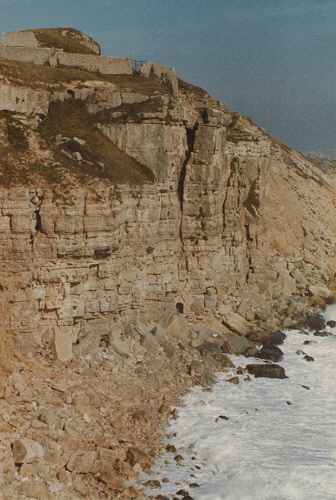
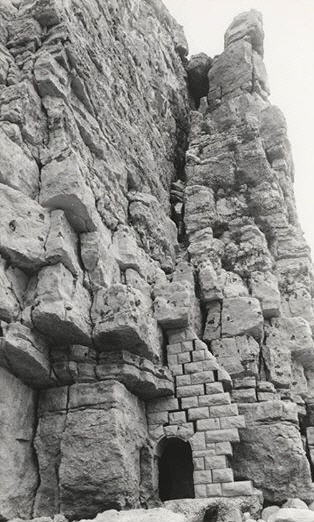
The arrow shows the entrance to Cheyne Tunnel. Until the 1970s it was secured with a cast iron door painted red - hence the alternative name ‘Red Door Tunnel’. However, over the years the door rusted and it was smashed by storms until only parts of the door were left scattered around.
It was then possible to crawl into the tunnel. The height was about 1.5 metres (5 feet) high but lower in places and the tunnel was cluttered with boulders and lobster pots thrown in by storms.
Exploring this tunnel - which was totally dark at the end because of a right-angled diversion - was a frightening experience!
The following three picture are reproduced by kind permission of Ray Nowak and these show the tunnel entrance in the 1970s.
It was very fortunate that I managed to visit this tunnel several times before access was lost. My first exploration was in about 1990 as seen below. Some of the ashlar carved stone frame of the iron door still was intact.
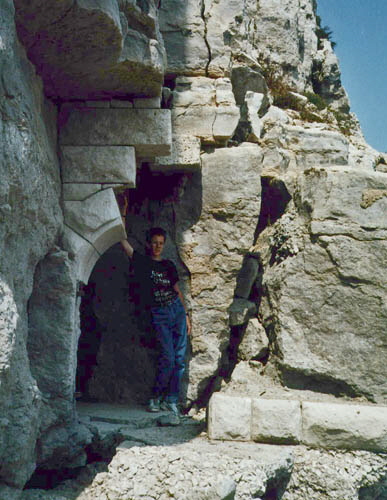
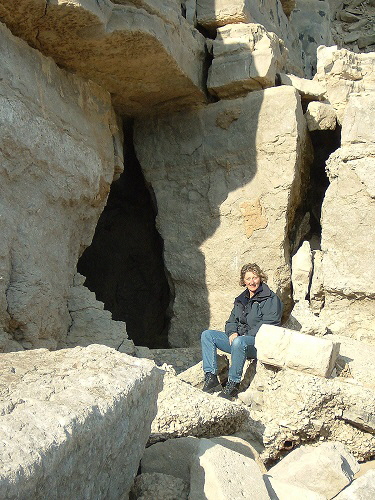
This picture was taken in 2003.
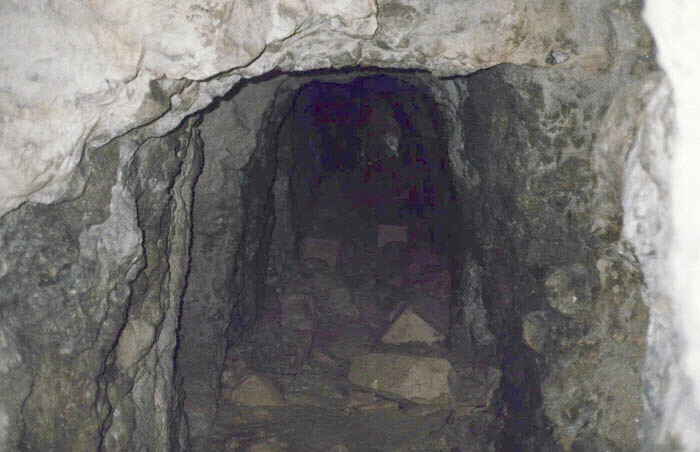
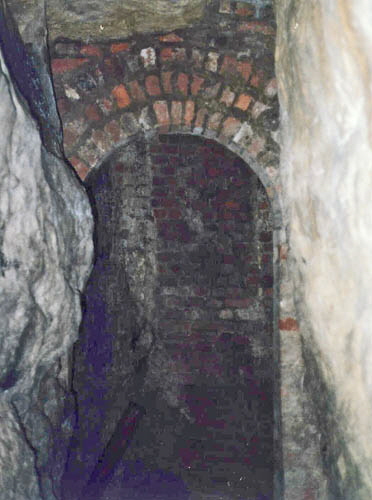
The above picture is a view into the tunnel taken in 1989 and the two pictures below were taken in October 2003.
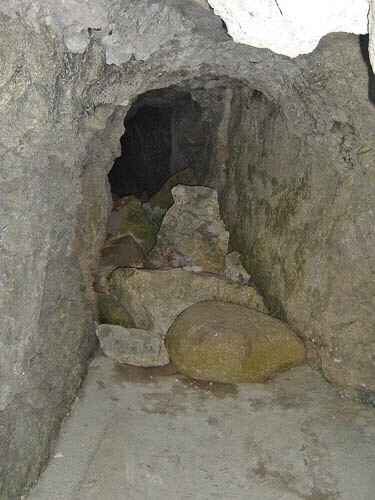
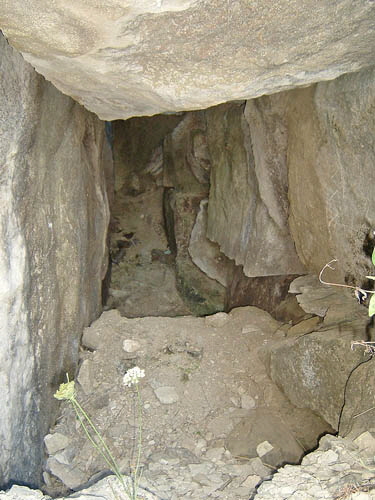
The boulders have been thrown into the cavity by storms and, even a long way into the tunnel, there are lobster pots and other debris. In wet weather the spring still poured water into the tunnel making it treacherous to crawl along.
The distance of the tunnel into the cliffs is variously given as 100 feet to 150 feet (30 metres to 45 metres). All I know is that at the end it was very, very dark! Then the tunnel made a right turn into total darkness.
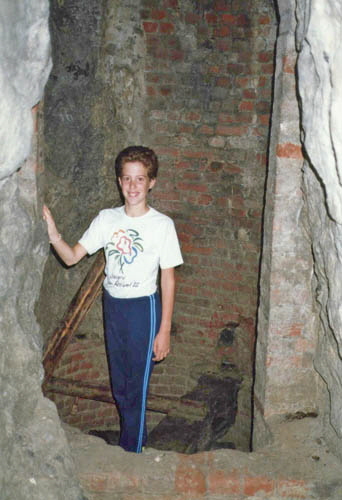
This is the bottom of the well which used to run vertically to the pumping station on top of the cliffs. My very brave daughter went with me in 1990 to get the picture below.
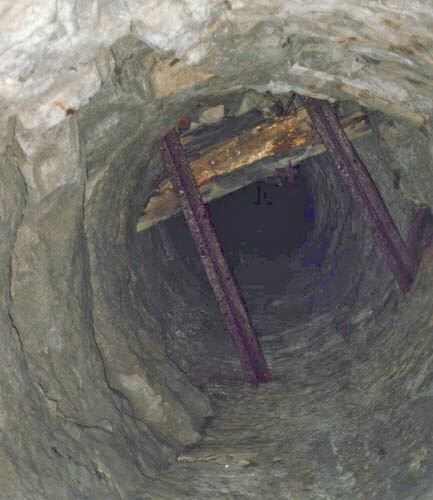
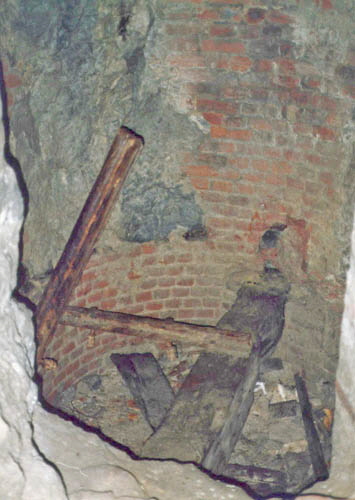
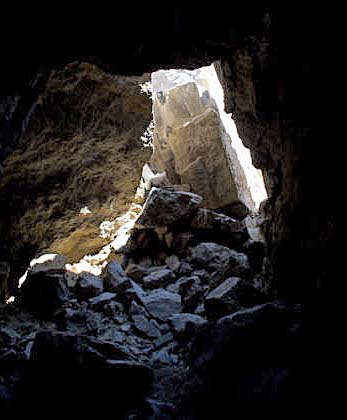
Above is the view looking up the shaft. No torch I took into this tunnel ever showed the top 150 feet (30 metres) above my head. Notice the remains of wooden planks laid across recycled tramway rails taken from the quarries. Only the base of the shaft is bricked; the rest is roughly carved out of the limestone.
Above is the view looking down the well. When the Condor catamaran sailed past, the tunnel filled with a very loud throbbing noise as the shaft resonates. This was very painful to the ears and very scary!
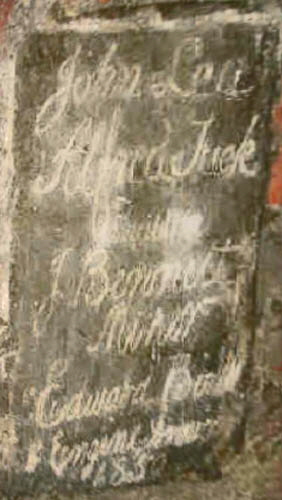
The inscribed plaque dated 1850 was discovered by Liam Deeney on the wall of Cheyne Tunnel by the foot of the well. I had missed this on all my visits to this interesting man-made tunnel. My thanks to Liam for permission to use his photograph.
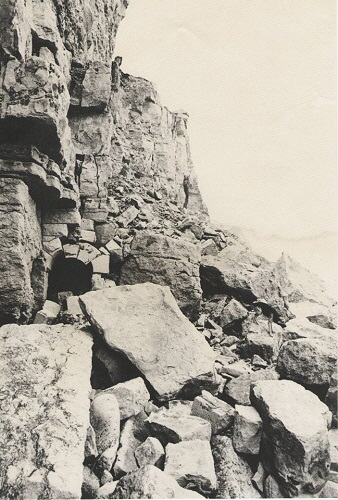
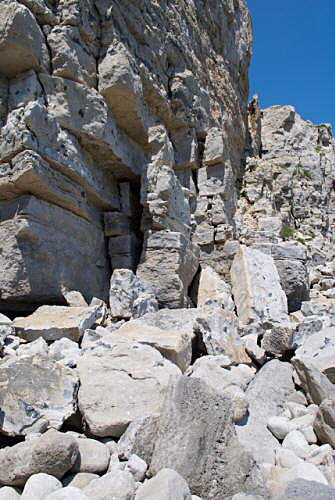
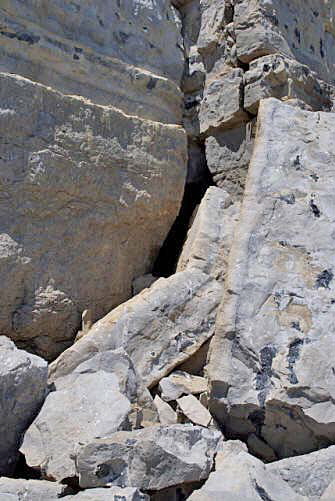
Cheyne Tunnel was blocked by a rock fall in 2011 as shown in the following three pictures kindly supplied by Adam Montague.
In 2013 Adam Short attempted to locate the tunnel entrance but he was defeated. His efforts were recorded on a YouTube movie here.
Another huge rock fall in August 2014 deposited hundreds of tonnes of boulders - some as big as cars - onto the beach by the tunnel entrance - see pictures here. The area around Cheyne Tunnel is now a very dangerous place to go because of highly unstable cliffs and the tunnel is believed to be completely and permanently blocked.
CHEYNE CAR-PARK AND DUNCECROFT QUARRY [4]
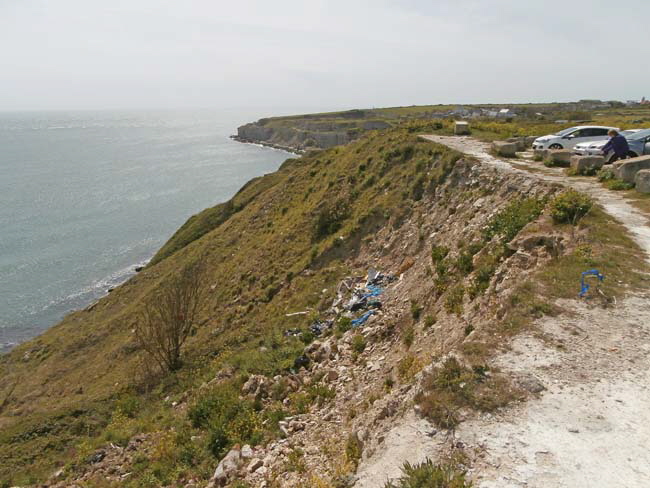
One the road between Southwell and Pennsylvania Castle is Cheyne Car-park which is a popular place to sit and admire the view over Weymouth Bay.
The car-parking area is on the extreme right of this picture and we see the result of a popular pastime on Portland which is dumping rubbish anywhere and everywhere without regard for beauty or the environment.
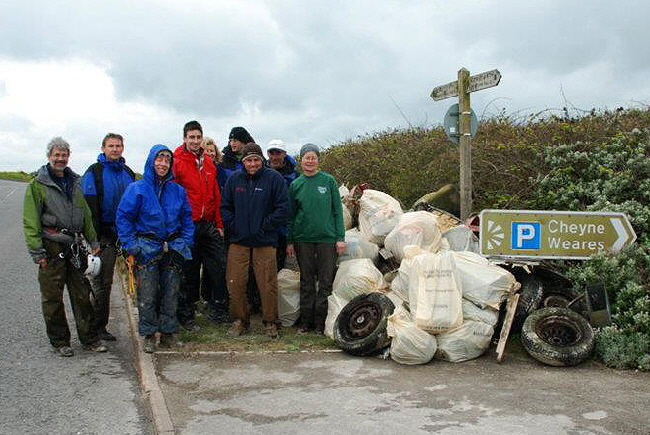
Thanks to Adam Perrett for this copyright picture
Not long ago a group of climbers abseiled down the cliffs around this car park and collected 70 bags of rubbish.
Within an hour visitors to this area were throwing their fish and chip packaging over the cliffs.
Well done to the few with a social conscience fighting to combat the anti-social actions of the many morons out there.
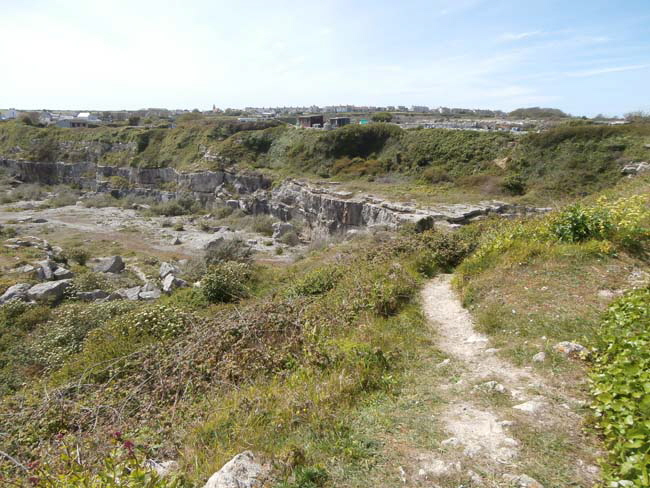
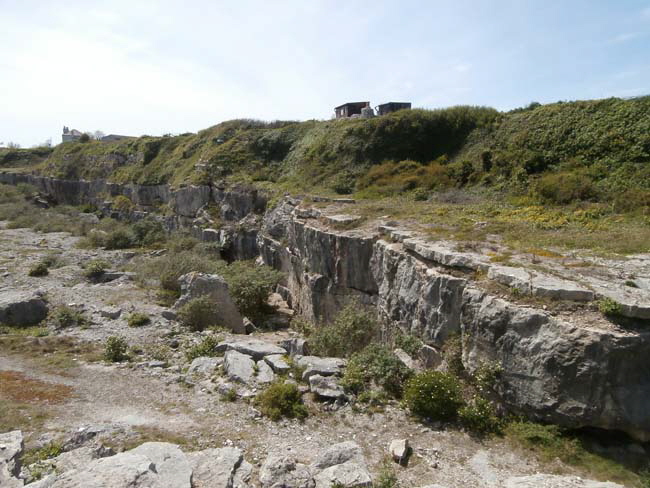
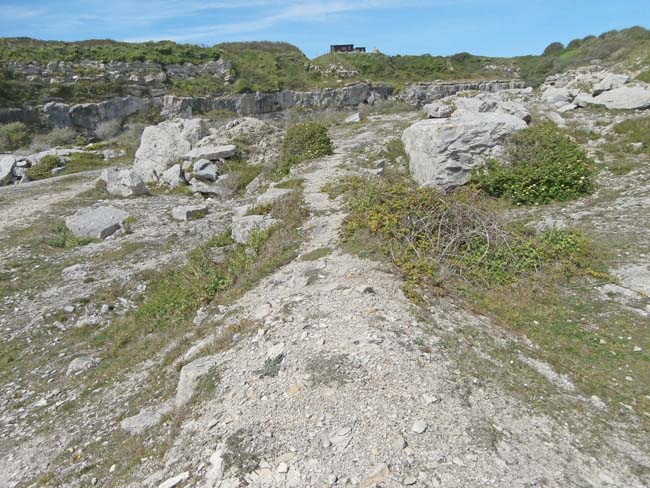
I doubt whether many visitors to this area are aware of Duncecroft Quarry as it is not visible from the road or even from the sea. It lies to the north of Cheyne House and is only accessible by a difficult footpath - seen above - from the Cheyne viewpoint.
A great deal of stone was removed from this area leaving sheer walls or untouched stone. The traditional method of ‘backfilling’ was used as shown above.
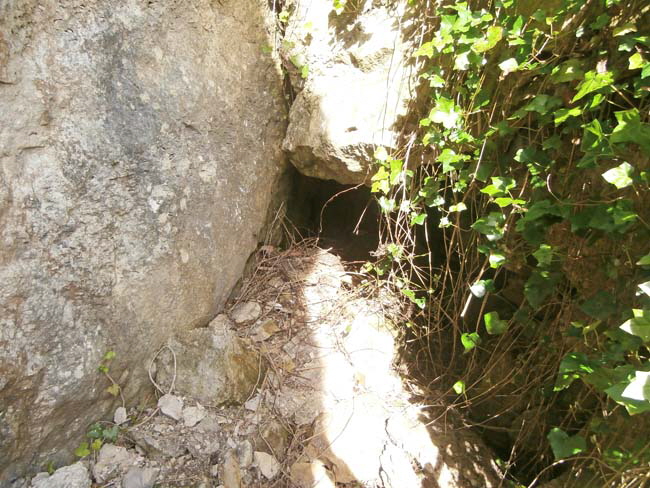
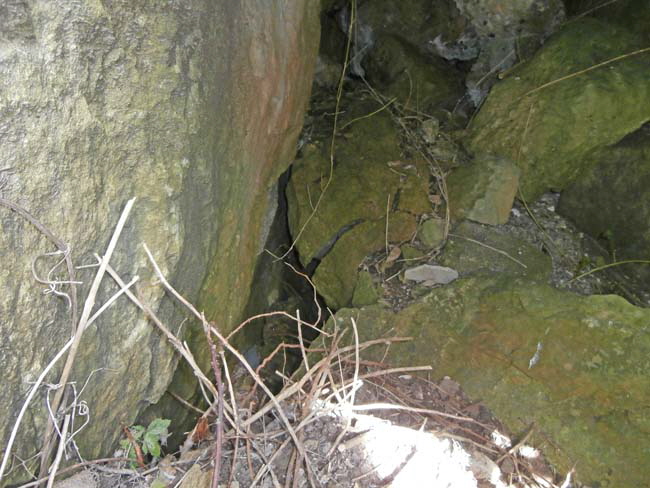
In the northern end of the quarry is a possible entrance to a cave system. I did not explore this being on my own and not having a torch but it looked worth an exploration by anyone interested in holes in the ground.
I did get this far however before turning back. It looked as though it might continue for some distance.
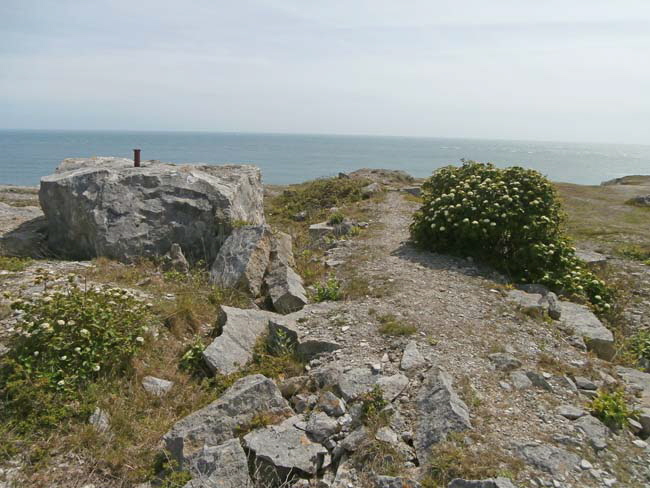
A tramway track runs across the quarry from east to west ending at the cliff edge.
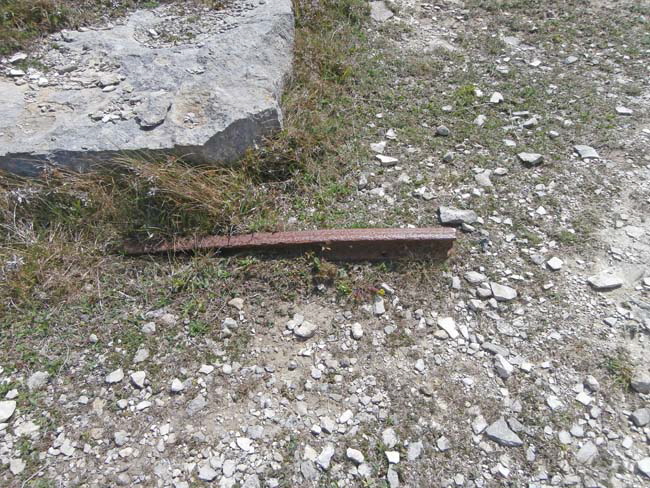
The large iron bolt in the block of stone was intriguing. Was it part of a crane? Nearby was a length of tramway rail sticking out of the ground as seen below.
The southern end of Duncecroft Quarry is a dead end at the cliff where Cheyne Pumping Station stands high above.
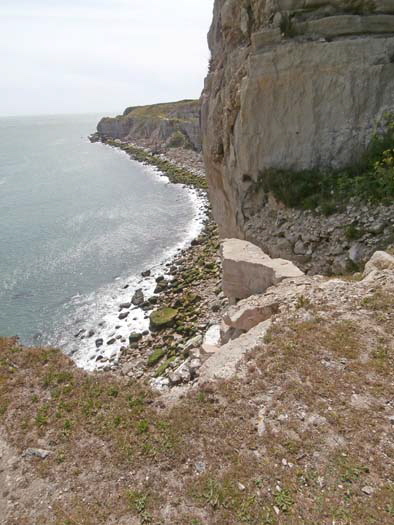
At the cliff edge is a wonderful view along the coastline. However, where I was standing was directly above Cheyne Tunnel and the huge rocks that have blocked the tunnel fell from the unstable cliffs at this point. Only a fool would stand at this point taking pictures!
Please click here to return to the top of this page
ANOTHER OF MY HOBBIES

At the age of 75 I started a new hobby - writing and publishing books. These are available as paperbacks from Amazon - please click here for details. They have so far gathered an average rating by readers of 
Keywords Cheyne House Cheyne Tunnel Freshwater Bay Portland Dorset
|