|
Independent and King Barrow Quarries
|
|
|
© OpenStreetMap contributors - see http://www.openstreetmap.org/copyright
|
|
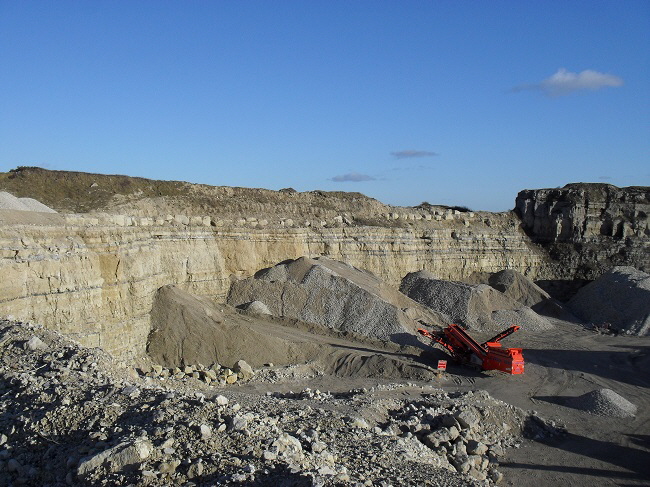
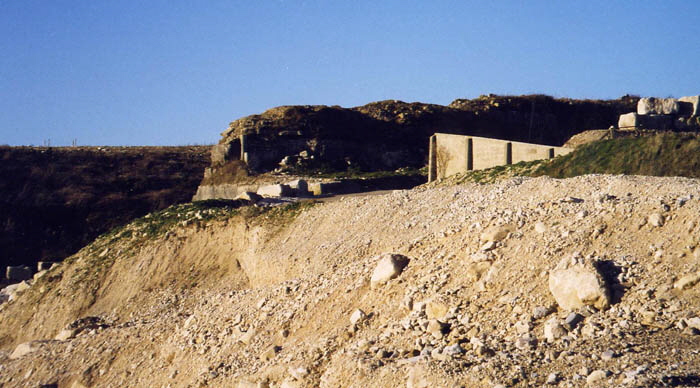
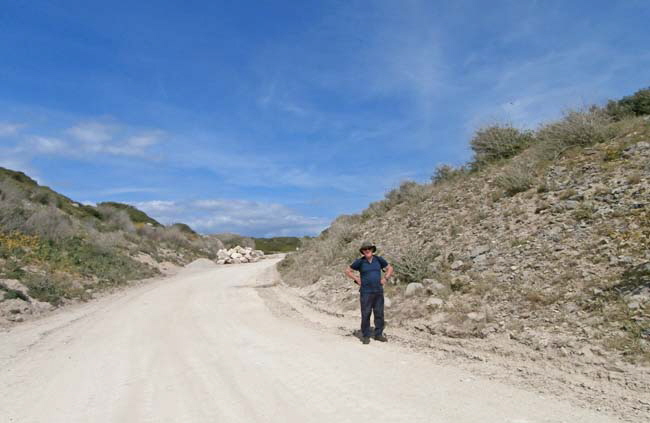
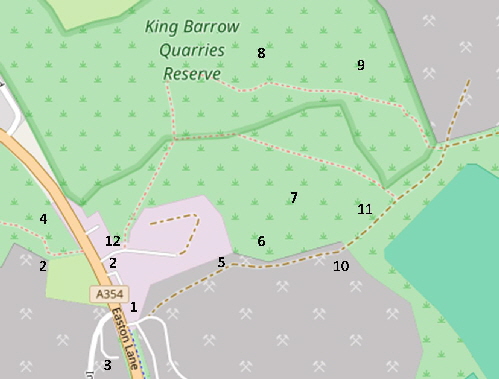
This area covers the huge area of quarried land.
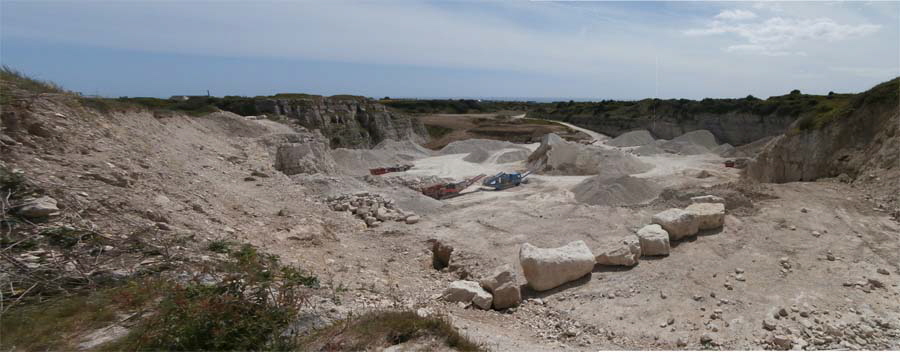
King Barrow is a worked-out quarry now run as a nature reserve by the Dorset Wildlife Trust.
In contrast, Independent is a working quarry.
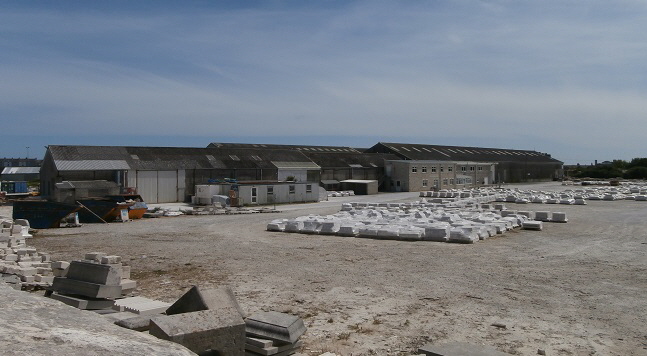
There are two limekilns, a filling station, a Community Recycling Depot and a small area of industrial buildings.
Please click here for a detailed map. Click the BACK button on your browser to return to this page.
Please click here to visit the satellite image of this area on Google Maps. Click the BACK button on your browser to return to this page.
Please click here to view the Google Street View images of this area. Click the BACK button on your browser to return to this page.
Please click here to see a large scale late Victorian map of this area. Click the BACK button on your browser to return to this page. Note the huge area of quarry workings a century ago and the network of tramway lines that transported stone blocks from the quarries to the gathering area at nearby Priory Corner.
|
Please use this table to navigate around this page
|
|
SAWMILL PUB [1]
|

|
|
TWO LIMEKILNS [2]
|
|
|
INMOSTHAY BUSINESS ESTATE [3]
|
|
|
DERELICT CRANE [4]
|
|
|
PORTLAND’S OPEN AIR SWIMMING POOL [5]
|
|
|
AN OLD TRAMWAY BRIDGE [6]
|
|
|
A QUARRY INFILLED [7]
|
|
|
KING BARROW QUARRIES NATURE RESERVE [8]
|
|
|
WAYCROFT TUNNEL [9]
|
|
|
WITHIES WALL VANDALIZED [10]
|
|
|
QUARRY BLAST SHELTER [11]
|
|
|
FOSSIL TREES [12]
|
|
|
ANOTHER OF MY HOBBIES
|
|
|
THE SAWMILL PUB [1]
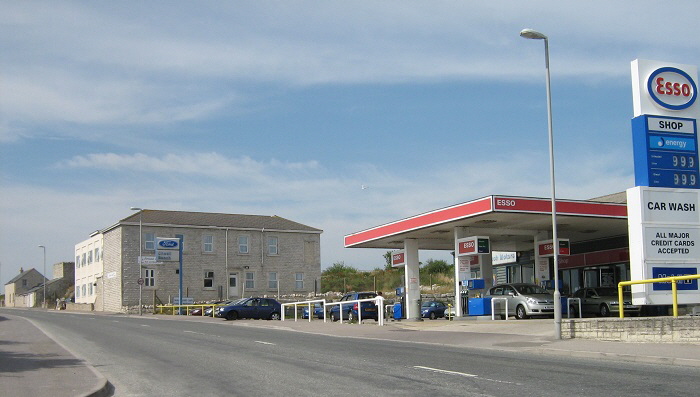
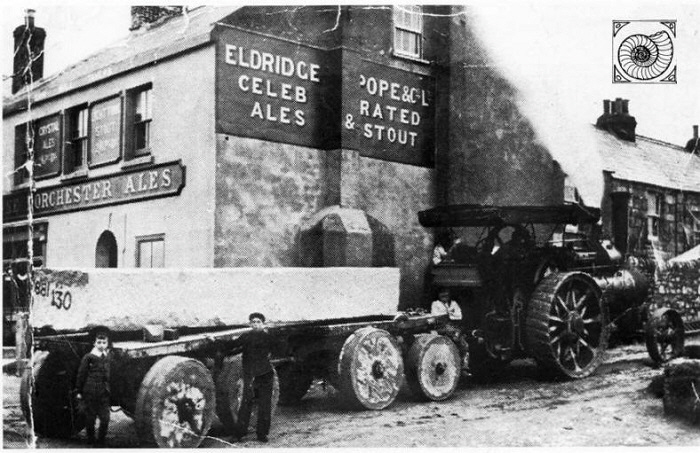
On the site of this garage north of Easton was once a famous old pub - 'The Sawmill' - as seen below. In the far left edge of the above picture is a finely preserved limekiln.
The special slab of stone was produced for the King Alfred memorial in Winchester. The slab is being taken into the sawmill.
Return To Top Of Page
PRESERVED LIMEKILNS [2]
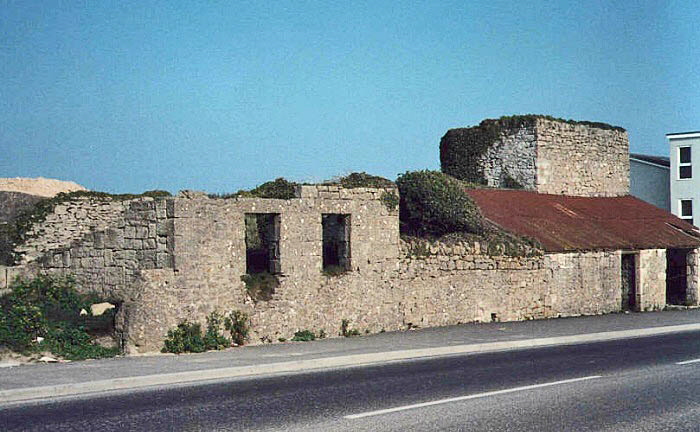
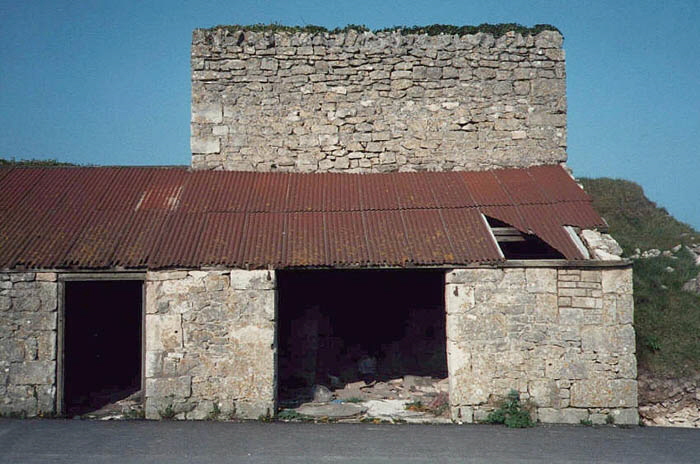
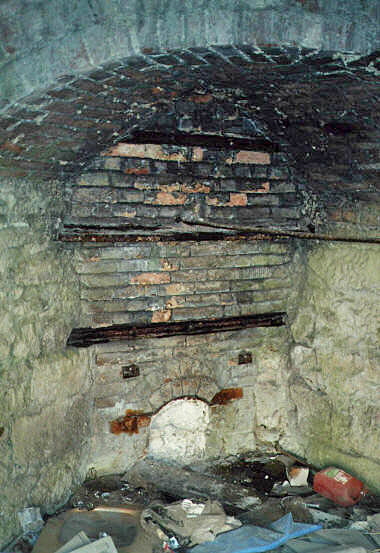
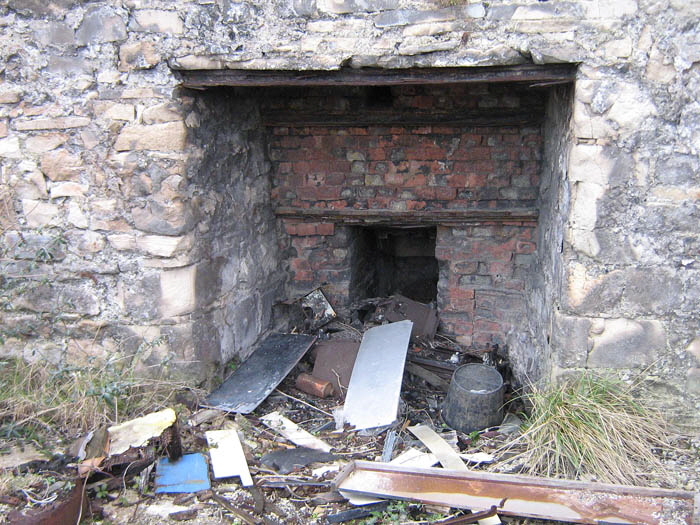
The Easton Street limekiln in its days of neglect, late 1989. The kiln on the right was open to the wind, rain and vandals whilst the main northern associated building was derelict.
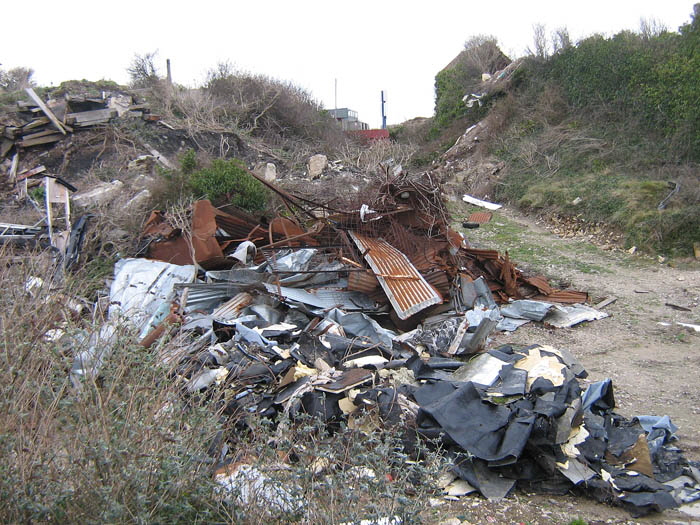
Another view of the disgraceful state into which the limekiln had been allowed to decay by the late 1980s. The rusty metal roof offered no protection at all.
It was from this humble building that lime was sent to the Drury Lane Theatre in London to provide its 'limelight' to illuminate the stage. This was created by an intense flame playing on a lump of lime. This produced an bright and very pure white light.
The grate and chimney breast of the old kiln as vandalised in 1989. Coal and limestone were piled into the chimney from above and burned. The coal burnt away leaving lime (Calcium Oxide) which could be used as fertilizer, for making mortar and for the limelight in theatres and large Victorian rooms.
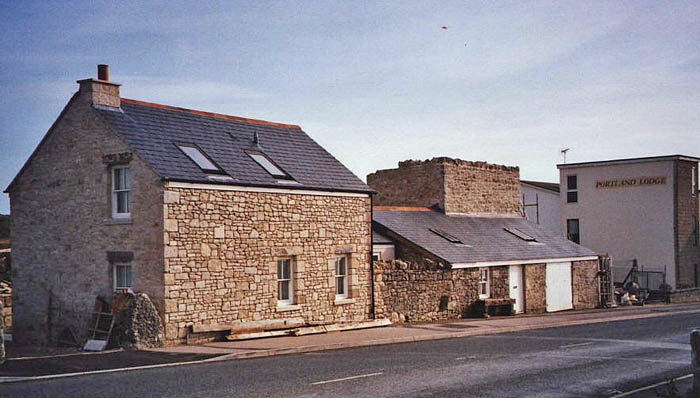
The limekiln in 2002 - turned into a residence and craft workshop.
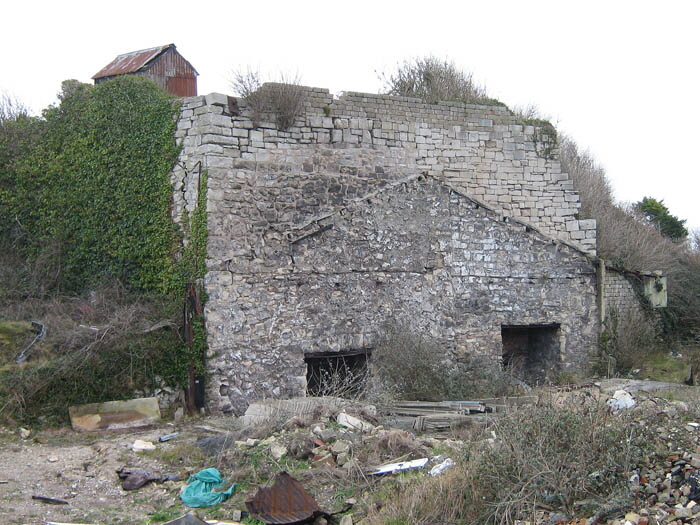
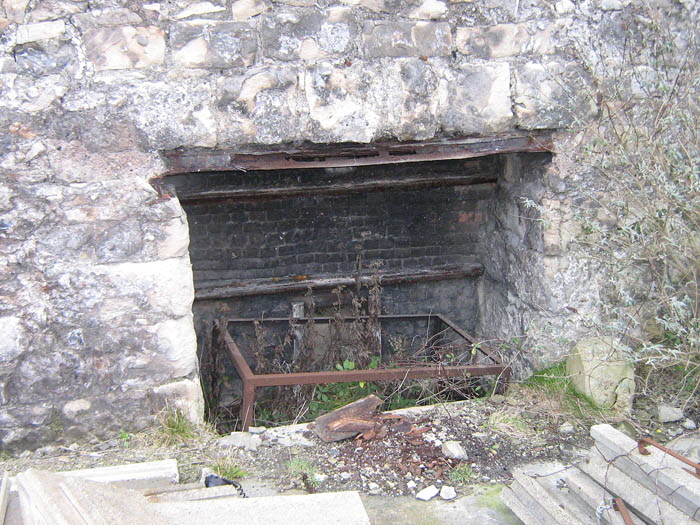
Opposite this limekiln is another larger example. This lies on private property and the following pictures were provided by an anonymous correspondent.
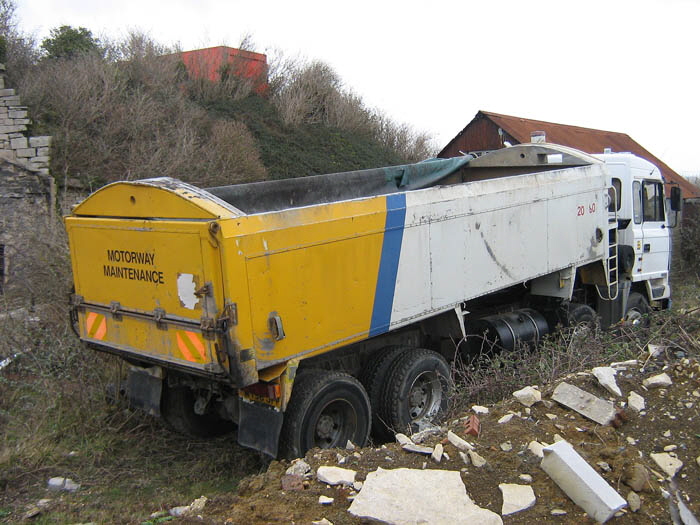
This lorry was a long way from a motorway!
Return To Top Of Page
INMOSTHAY BUSINESS ESTATE [3]
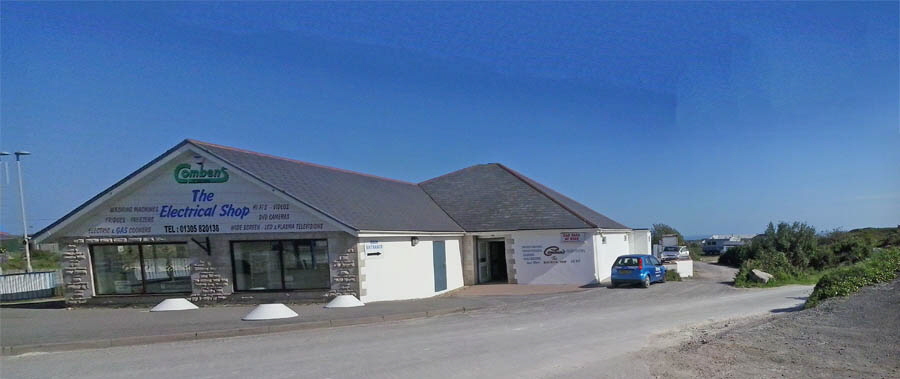
On the west side of the main road almost opposite the garage is a small business estate. One of the businesses is the long established Comben’s Electrical Shop.
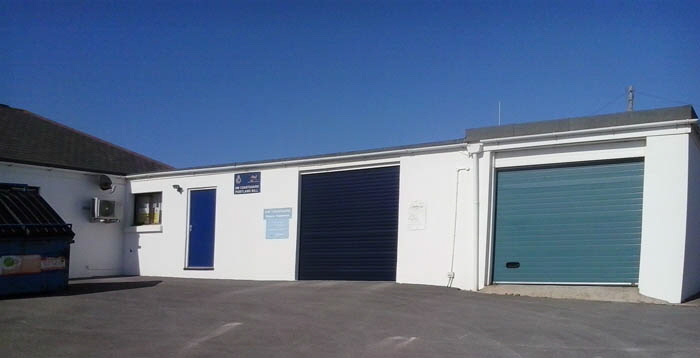
At the rear of Comben’s shop is a coastguard office and store.
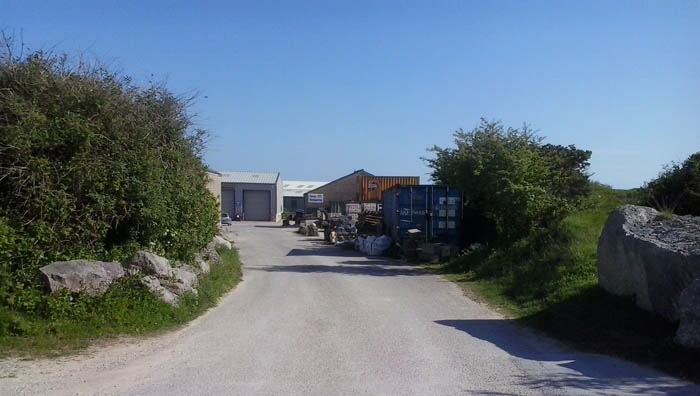
There are a few other small businesses in the area.
A century ago this was a gathering area for wagons taking stone from the many nearby quarries and transferring to a tramway which lead to the Merchants Railway. On the site of the Coastguard building was a transfer bridge where a tramway passed over a similar line. This is seen at the centre of the old map here.
There is no sign of this activity left now.
Return To Top Of Page
DERELICT QUARRY CRANE [4]
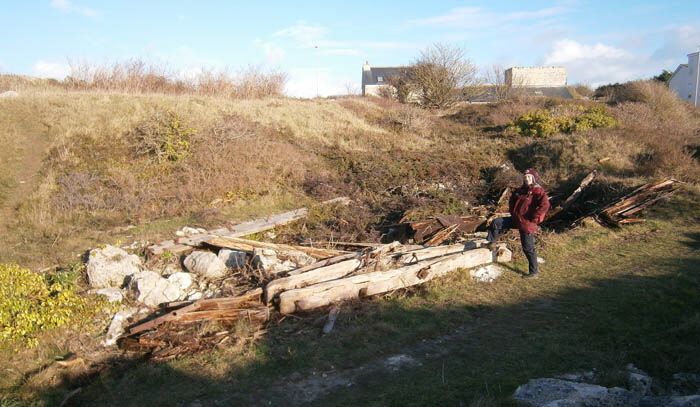
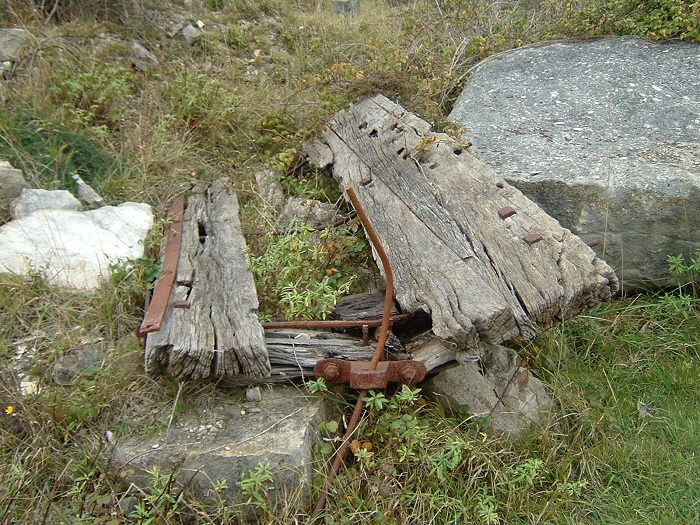
Just north of the Business Park and off the main road is a rough parking area which has a footpath leading to Tout Quarry. Alongside this path is an old crane sadly rotting away.
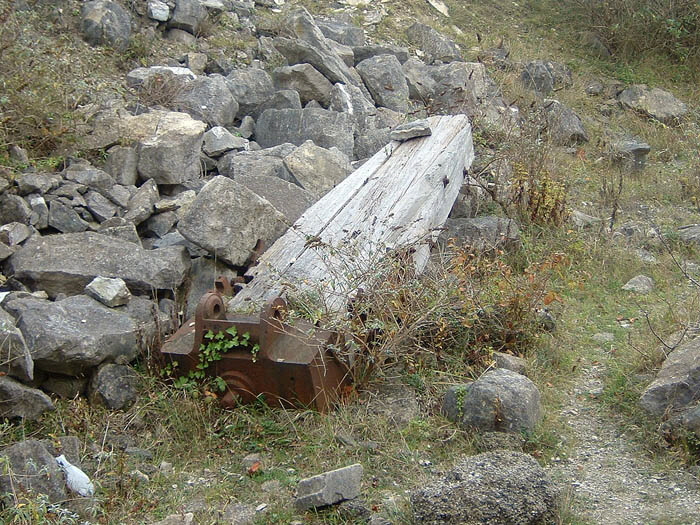
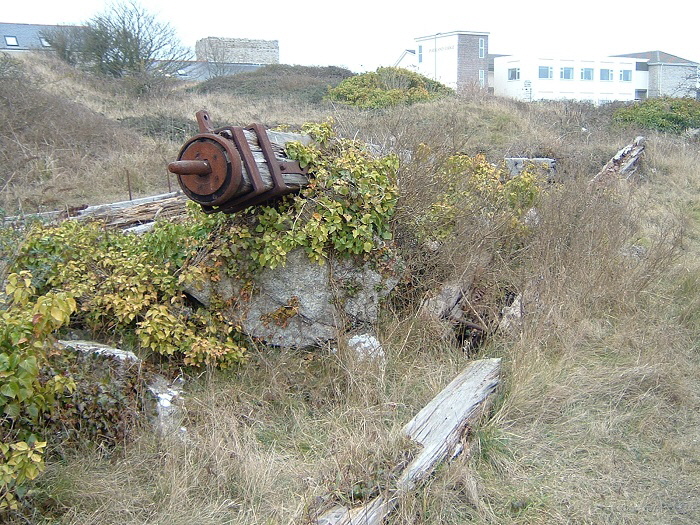
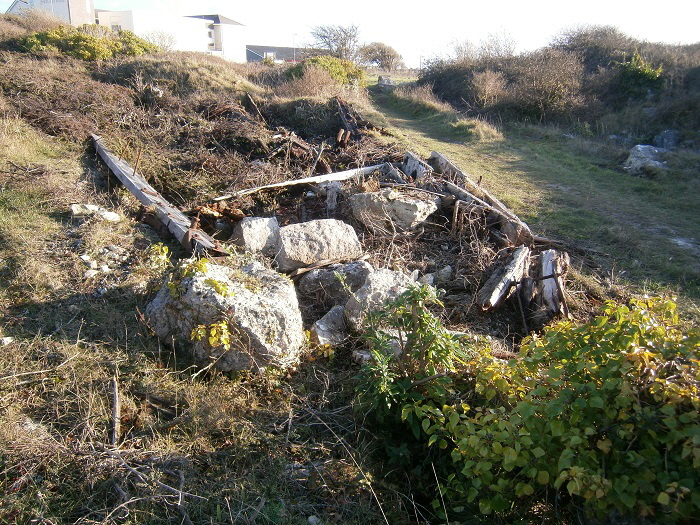
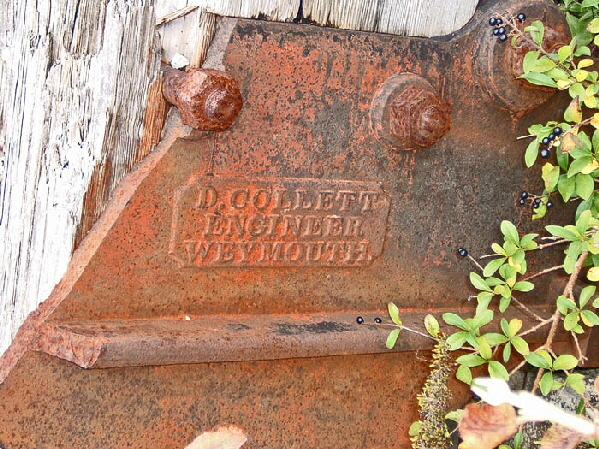
Return To Top Of Page
PORTLAND’S OPEN AIR SWIMMING POOL [5]
On the east side of the main road and behind the garage are several interesting features which are largely unknown to the public. One of these is Portland Town Council’s recently installed open air swimming pool. Although lacking changing and showering facilities it does offer the opportunity for a dip in locally sourced rain water.
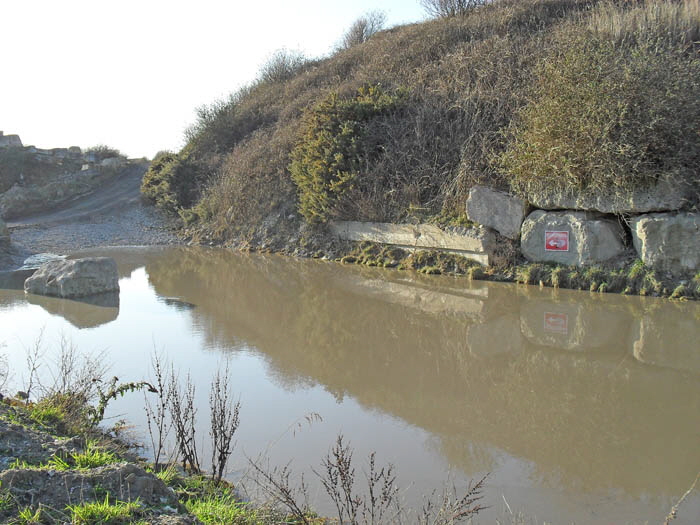
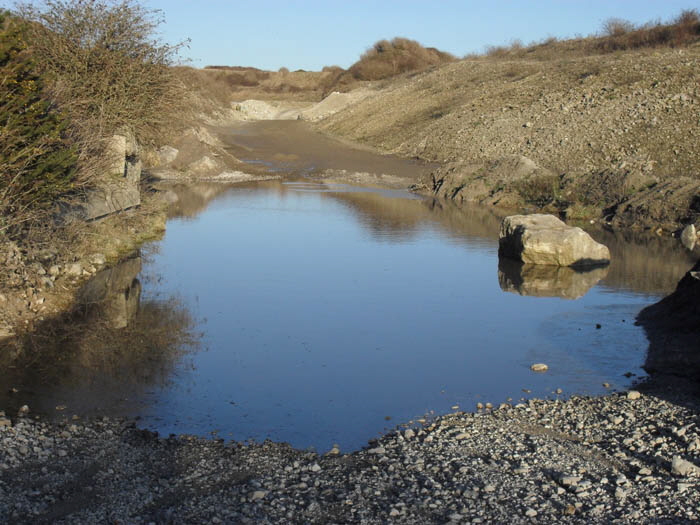
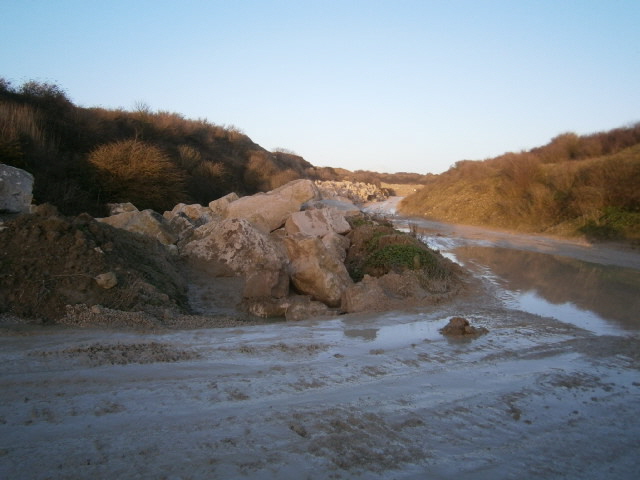
By early 2016 this valuable public swimming pool had been destroyed by huge stone blocks being dumped in the area.
Return To Top Of Page
VICTORIAN TRAMWAY BRIDGE [6]
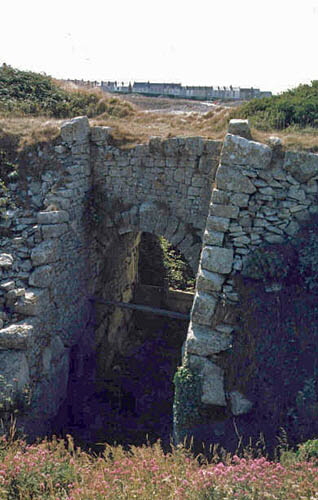
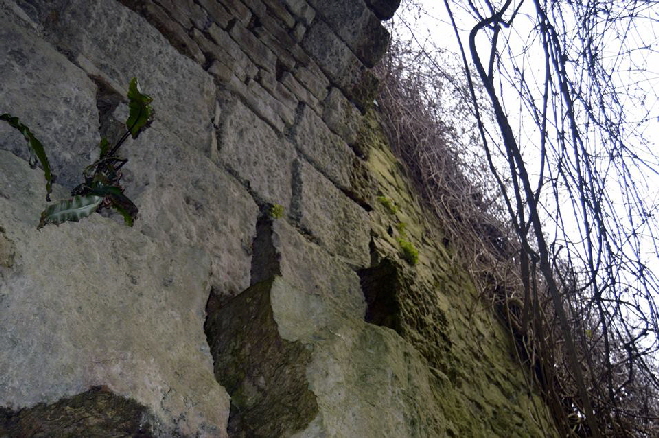
Above and below we see an old bridge, rather like a smaller version of Lano’s Arch in Tout Quarry, which I photographed in July 1989. This was somewhere behind the garage in Easton Street in the area of buildings and small commercial yards and close to the present position of the Council Recycling Centre. I searched for it several times over the following twenty years without any luck.
Did it still exist? I assumed it had been destroyed by quarrying.
Tramways ran above and below it so that blocks of stone could be lowered onto the wagons that would take it to Priory Corner for dispatch to the main incline of the Merchants Railway down to Castletown.
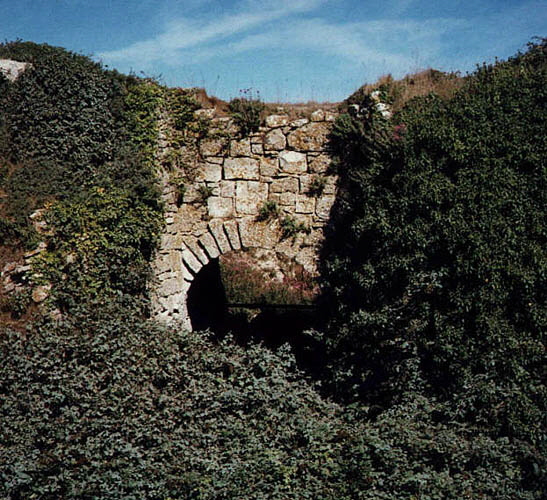
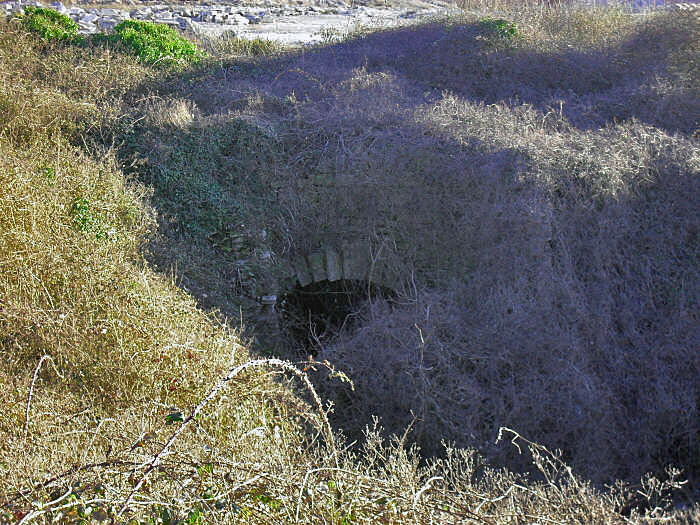
However, in 2010 I found it again whilst I was randomly hacking my way through a large area of brambles - as I do from time to time...
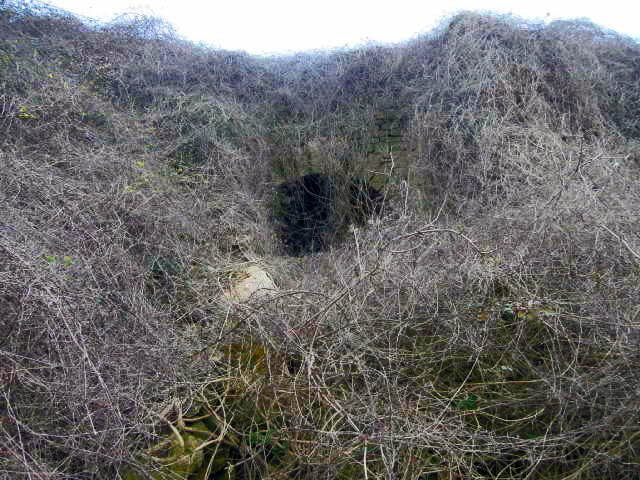
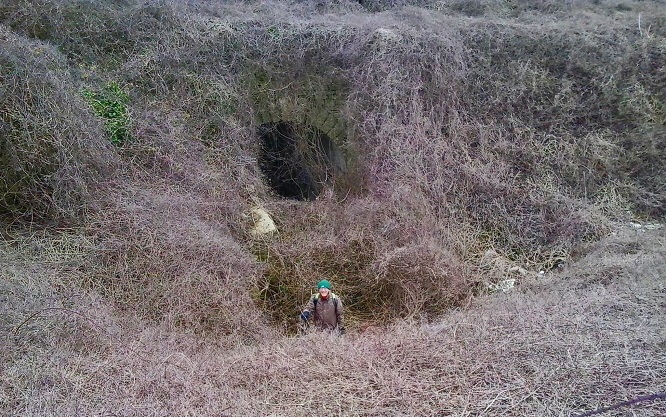
The bridge was, by then, very difficult to see and almost buried by brambles. For those with hand-held GPS devices the latitude and longitude are 50.5533 North, 2.4343 West and it is at the centre of the image seen by clicking here.
A late Victorian map - seen here - shows two tramway tracks crossing close to this location so this is presumably where the bridge is located.
The following pictures were taken in March 2016. The overgrowth of brambles and the rubbish made it difficult to get down to the archway. I managed to get some way but was unable to get into arch. However, Antje Rook later managed to get right into the archway and took some of the pictures identified below.
As far as I was able to get on this exploration.
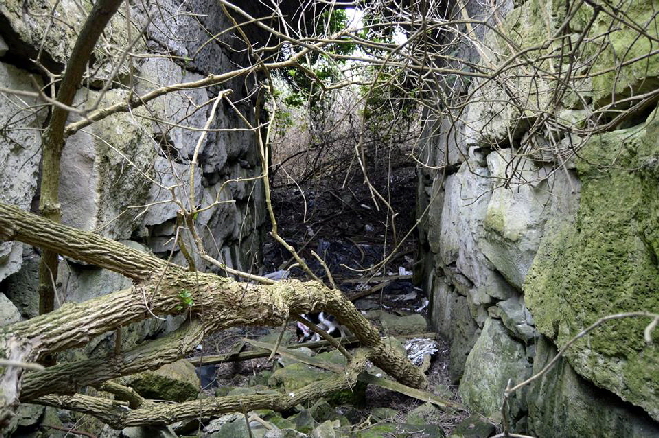
Picture by kind permission of Antje Rook who managed to crawl under the brambles and over the rubbish to get into the archway.
Picture by kind permission of Antje Rook.
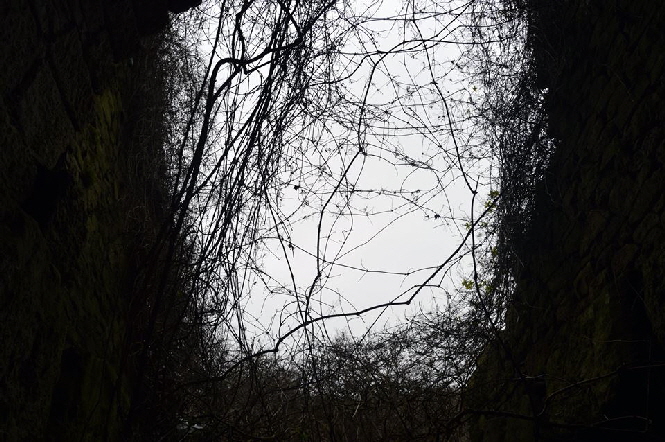
Picture by kind permission of Antje Rook.
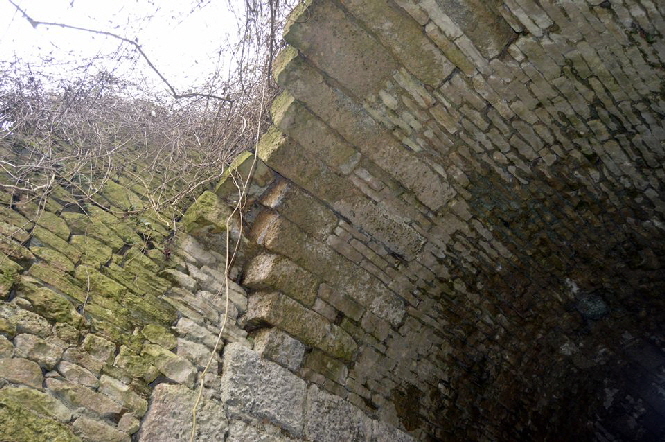
Picture by kind permission of Antje Rook.
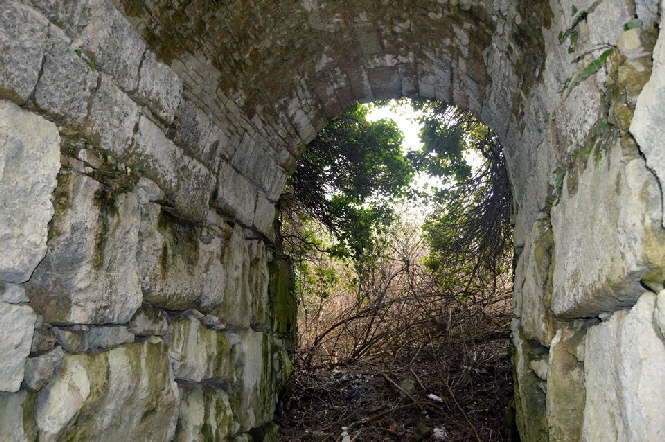
Picture by kind permission of Antje Rook.
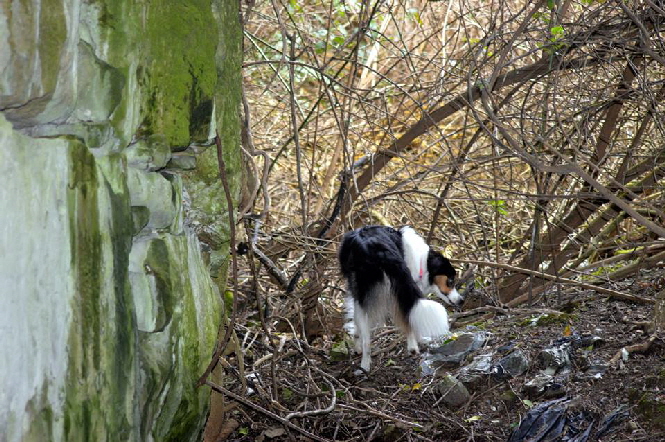
Picture by kind permission of Antje Rook.
Return To Top Of Page
A QUARRY INFILLED [7]
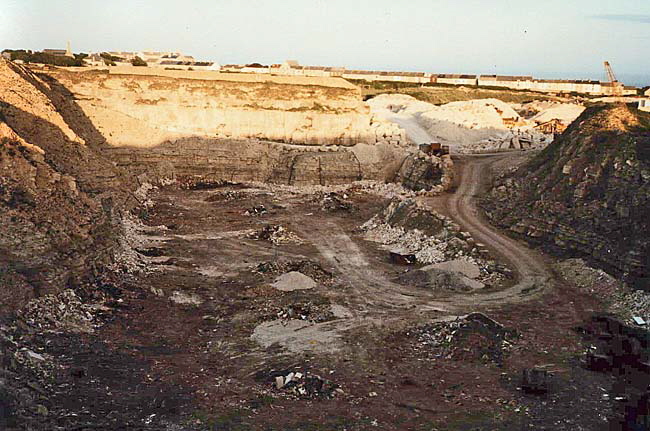
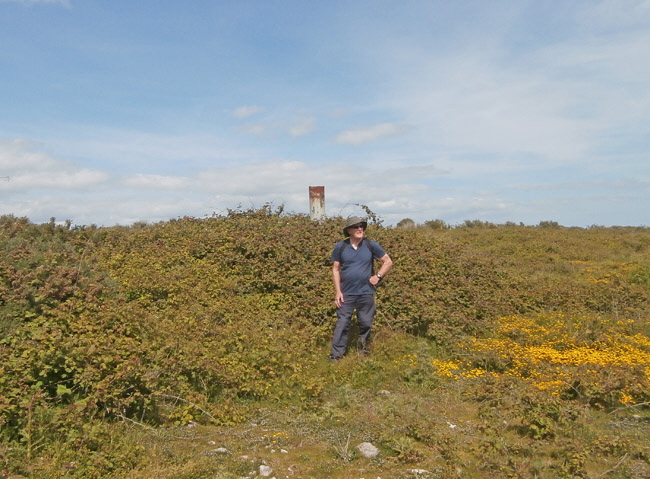
In 1989 I took the picture below. It shows my son looking into the huge depleted Withies Croft Quarry. This was situated opposite Withies Croft wall - a site of important geological interest - which was vandalized by the quarry owner. More of that disgraceful action below.
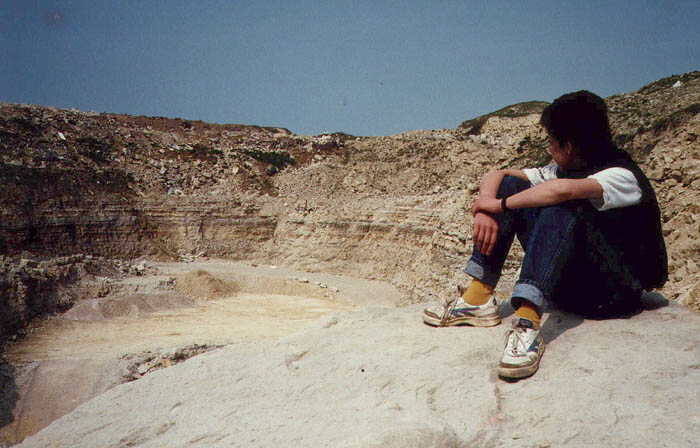
In the late 1980s planning permission was granted for it to be used for landfill with inert waste.
However, according to the local satirical magazine Scallywag, waste rotting food was alleged to also have been dumped here from lorries arriving in the dead of night from outside Dorset - even as far away as the Midlands.
It is impossible to say whether this was true or not but it is a fact that the filled quarry has been generating methane which has to be piped to the surface and dispersed - a very potent 'greenhouse gas' many times worse than carbon dioxide.
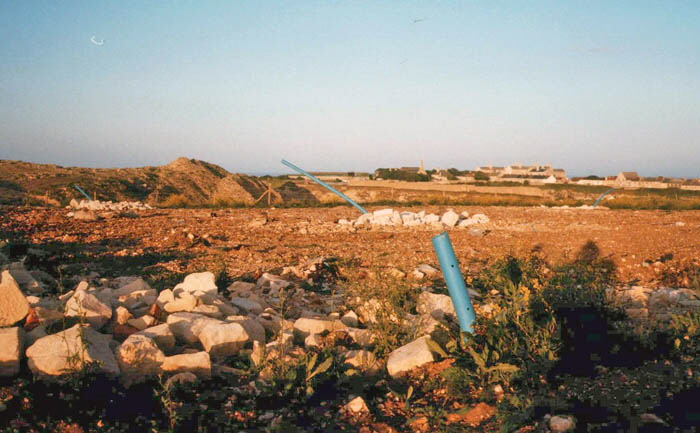
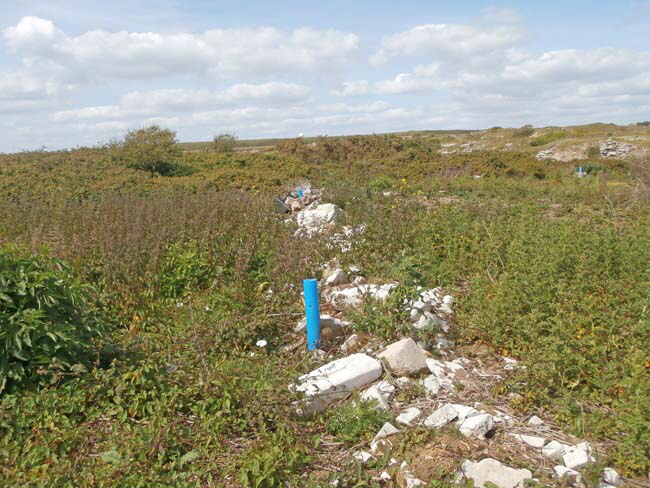
The above picture from the 1990s shows the later stages of infilling this huge hole. Note the blue pipes installed to vent methane to the atmosphere.
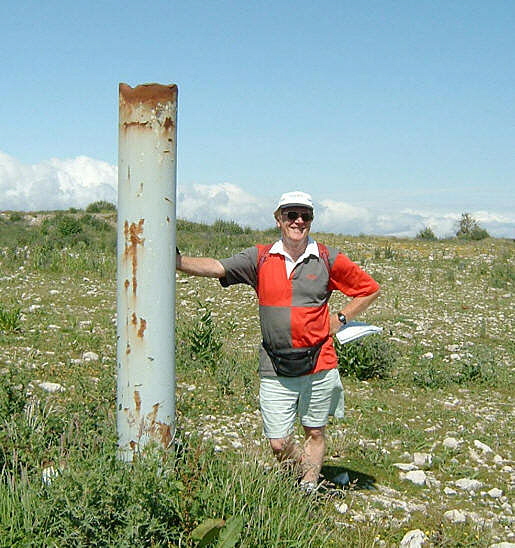
Here I am in 2005 posing on the rubbish tip whilst wearing my comedy false stomach - if only!
This is the huge quarry seen above after being filled with waste. The pipes are for collecting and dispersing methane generated by decaying organic rubbish. If the quarry had been filled with inert waste these vent pipes would not have been needed.
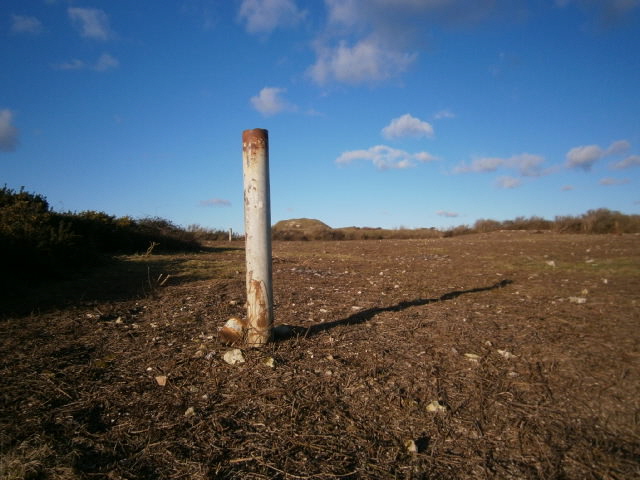
By 2015 the area was returning to nature with only the rusting Methane emission pipes to hint at what foul polluting chemicals and food waste lies beneath the surface. It is lucky that Portland no longer relies on water from its wells as these could well be polluted by the toxic cocktail festering underground at this spot.
In 2016 this whole area was cleared of scrub by volunteers as seen below.
Return To Top Of Page
KING BARROW QUARRIES NATURE RESERVE [8]
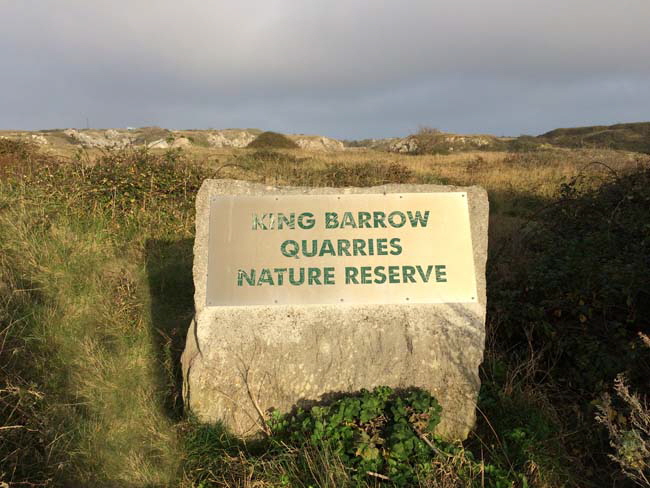
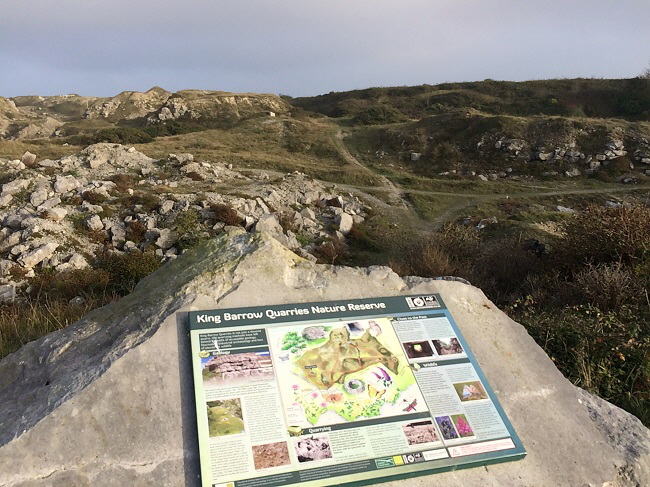
King Barrow Quarries Nature Reserve is run by the Dorset Wildlife Trust. The Dorset Wildlife Trust Reserve website can be seen here.
It was a working quarry in Victorian time. Quarrying ceased around the start of the 20th century. Since then it has slowly been taken over by nature making it a stark but surprisingly productive area for butterflies, other small creatures and birds.
During the opening up of the area several Roman coffins and other artefacts were unearthed. This led to the belief that someone of great local power was buried here giving rise to the name King Barrow.
Unfortunately, the majority of the Roman and pre-Roman artefacts were smashed up by the quarry workers and added to the aggregate and wasted thrown over the cliffs at West Weares. A small number of items were saved and are in the Dorset County Museum and Portland Museum.
A detailed history and description of King Barrow Quarry by Ashley Smith can be read here.
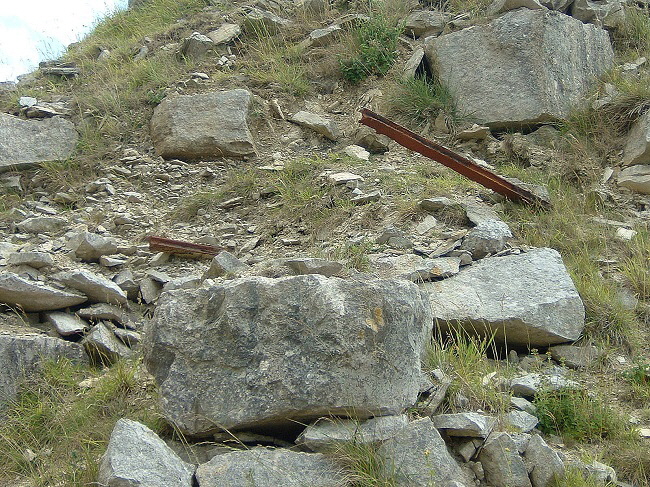
The entire area is a jumble of deserted quarry workings and remains of the tramways systems such as the rails shown above.
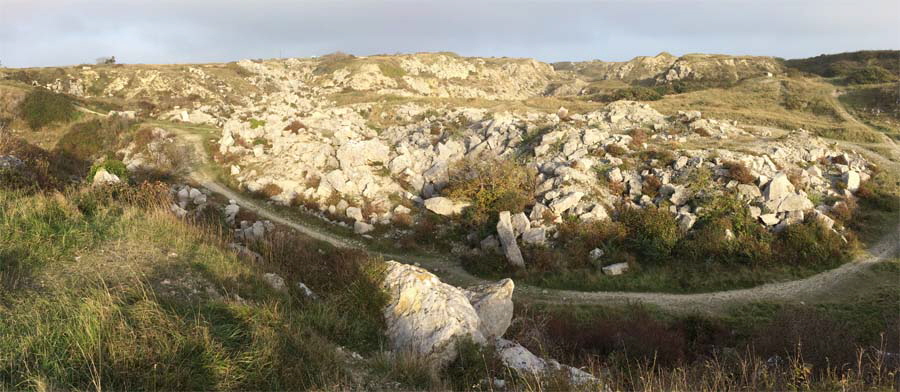
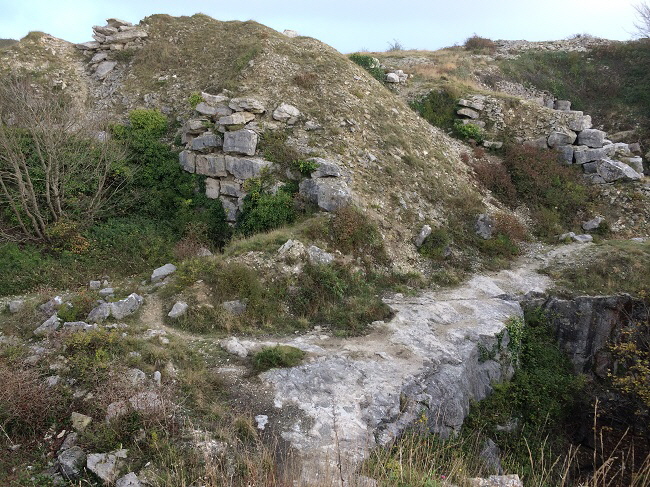
This panoramic view shows a typical view in the quarries. Jumbled piles of quarried rough blocks of stone lie scattered around with deep ravines cut by a century of labourers; many of them prisoners from the nearby Grove Prison. A few stunted trees with roots gripping the loose stone surfaces barely survive.
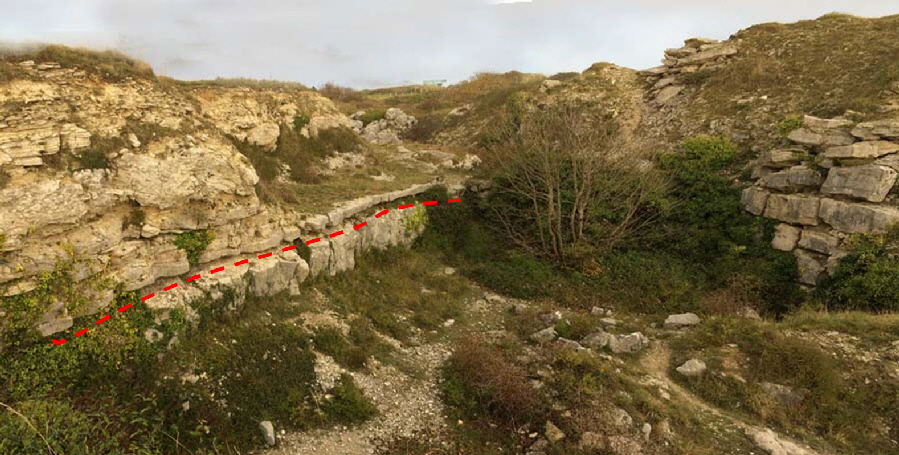
The lower Portland stone strata seen above under the red dotted line were formed in shallow lagoons round 146 million years ago. The upper Purbeck beds were later formed in shallower water when the land was exposed allowing dirt to form in which plants grew and land animals roamed the area. The red dotted line marks the dirt beds formed in this brief period before the water level rose again to inundate the land and create the Purbeck beds.
There is an information sheet explaining the creation of the stone and dirt beds which can be downloaded here. This includes an artist’s impression of what the scene would have looked like about 146 million years ago.
A warning to be taken seriously!
This whole area is great fun to explore for adults and children alike - although care must be taken near steep slopes.
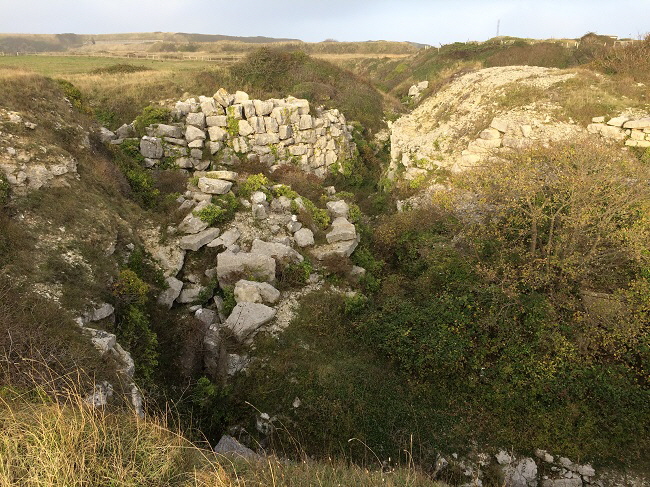
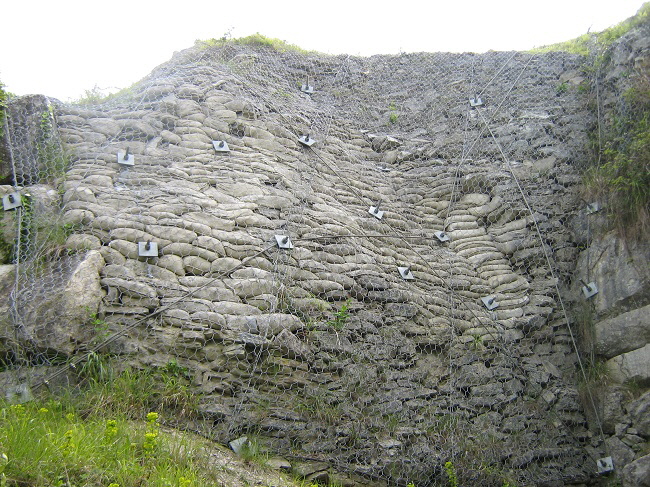
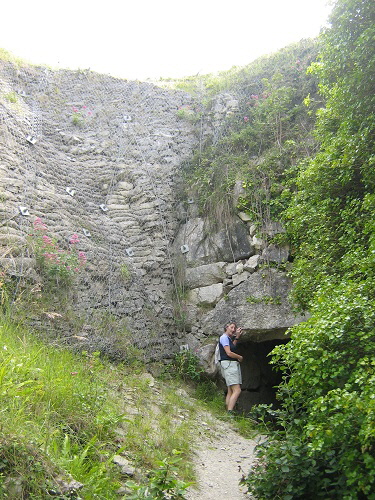
When the area was taken over by the Dorset Wildlife Trust remedial Health and Safety work was carried out, as shown above, to prevent loose rocks falling on visitors.
The south eastern parts of the quarry are still actively worked for aggregate.
The pictures below show what the quarries looked like when they were being worked by prisoners from the nearby Grove Prison and later when civilian labourers were used.
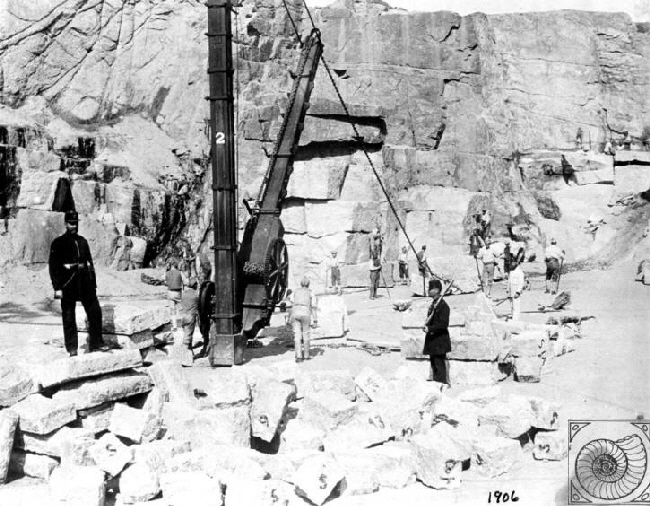
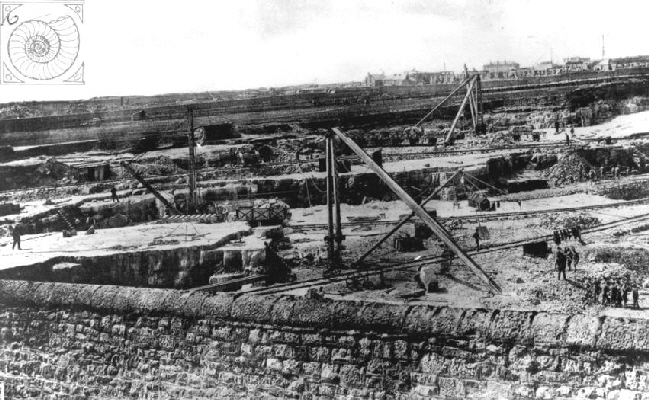
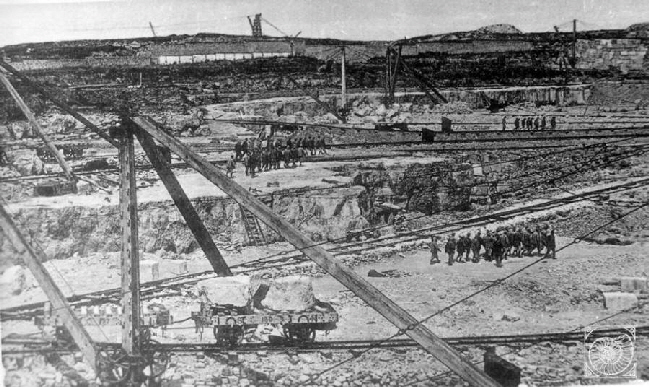
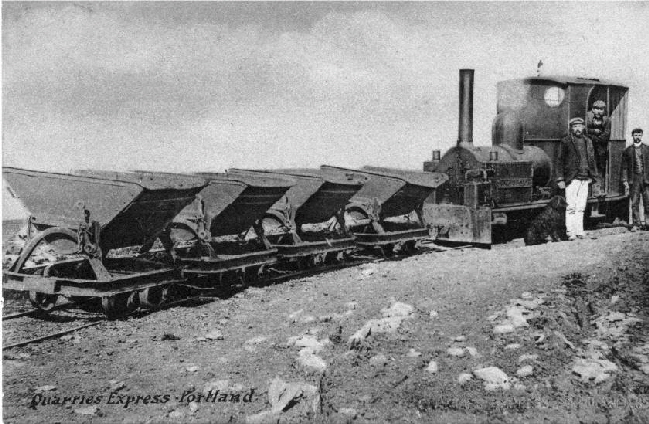
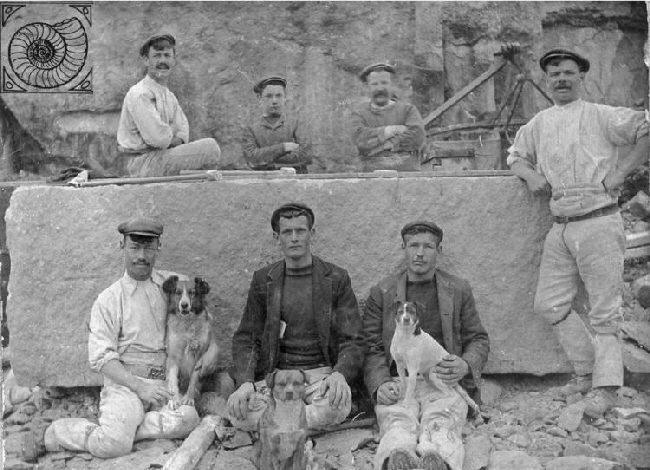
There are many old pictures from the quarries to be seen here.
Return To Top Of Page
WAYCROFT TUNNEL [9]
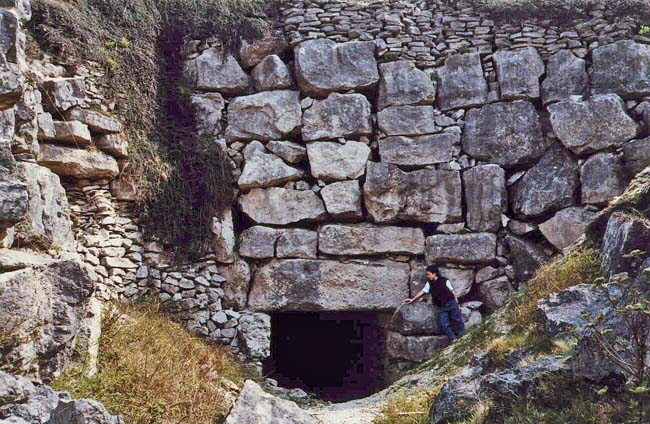
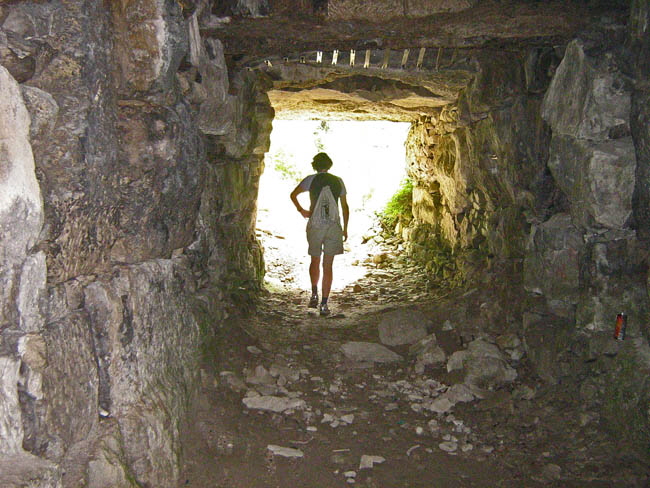
Waycroft tunnel is on the extreme eastern edge of the quarry and provided a means for tramway wagons to access the feeder lines to the Merchants’ Railway.
This is one of the few tramway tunnels still open to walk through. The other goes from Tout Quarry under the main road - click here to see this latter tunnel.
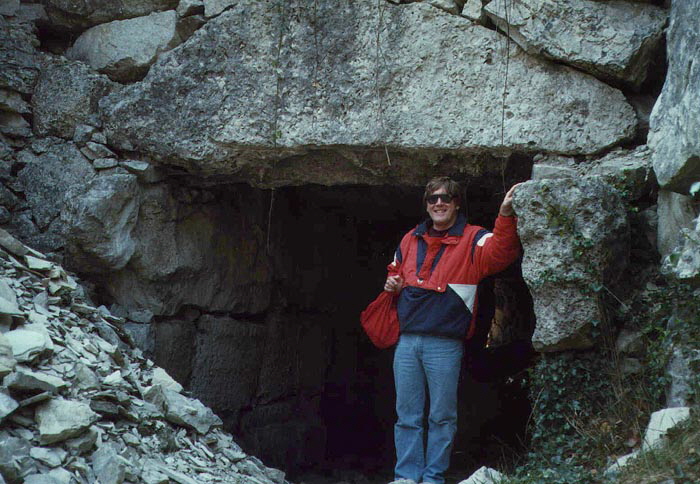
I prepare to explore the tunnel in 1989.
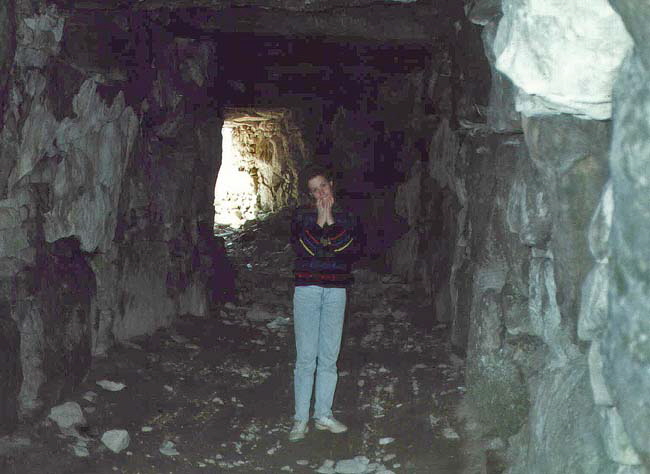
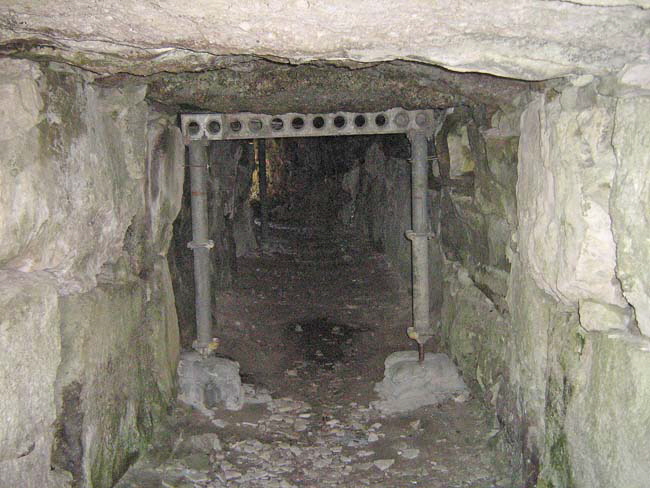
My daughter in the tunnel in 1989. This was before Elf and Safety required the tunnel to be supported by steel girders as is now the case. When the above photographs were taken there were fears that blasting in near-by quarries might cause the tunnel roof to collapse.
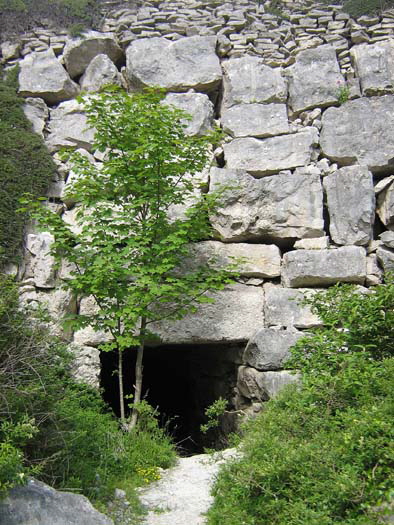
The western tunnel entrance in 1989. Notice how the tree has grown up in the modern picture below.
The western tunnel entrance photographed in 2015. Note how the tree has appeared.
If anyone is interested seeing a forty year sequence of pictures of the same tree (and who isn’t?) then have a look here. Why I keep taking pictures of a tree that hasn’t really changed over the decades is unknown. That’s just the sort of daft thing that I do.
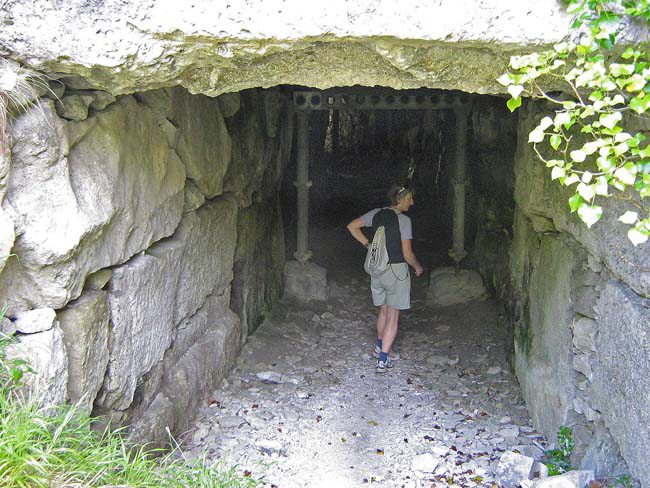
My best friend Sandra enters the tunnel in 2008 just after it had been made safe for walkers to enter. However, we have been going through this tunnel for decades without mishap.
Children love exploring this spooky tunnel!
Return To Top Of Page
WITHIES WALL VANDALIZED [10]
Adjacent to the infilled quarry on its southern side was a huge rock outcrop - Withies Wall. To read about its highly significant geological importance - please click here.
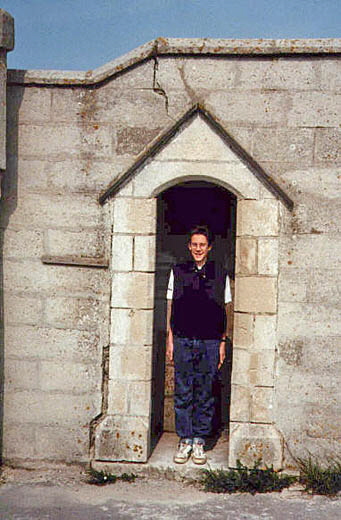
On top of this wall was a Victorian prison security wall with old sentry posts - a wonderful relic from 19th century convict prison days. Unfortunately, in June 1993 the quarry owner smashed it down - without permission and without any regard for its scheduled status.
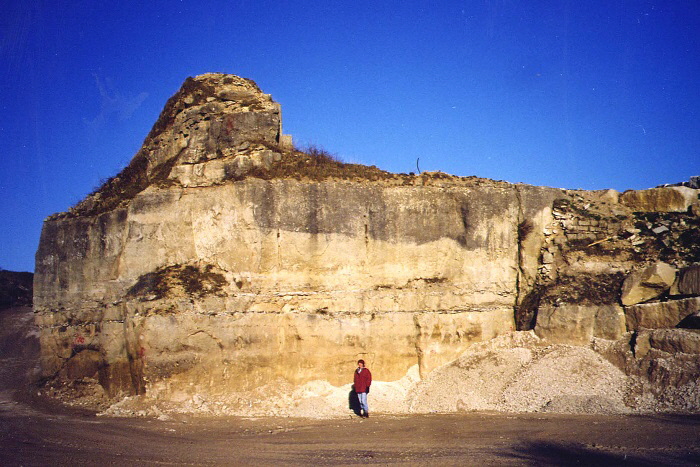
Above is Withies Wall in 1989 - a unique and accessible geological feature on Portland soon to be vandalized.
Above is this important feature partially destroyed in the mid-1990s. Part of the ancient prison wall can still be seen. The Victorian sentry box has been smashed up. A similar sentry box, seen below near the Grove, has Grade II listed protection.
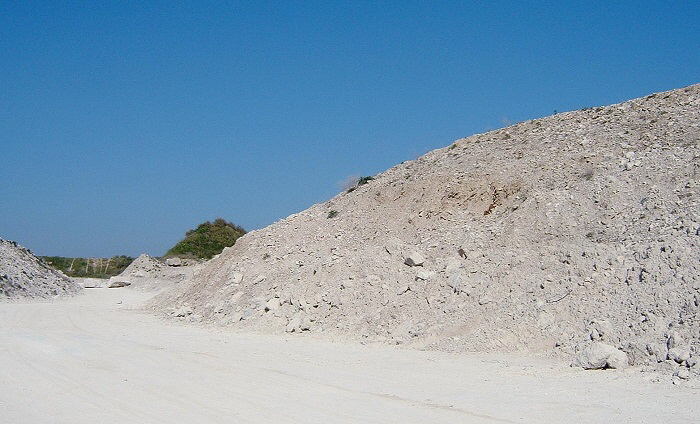
Above - Destruction complete! An important part of Portland's geological and cultural heritage turned into crushed aggregate!
Councillor Margaret Leicester was among many Portlanders who were outraged by this vandalism and the Dorset Evening Echo carried a major feature in its issue of 29th June 1993. Historian Stuart Morris described this destruction as "A tragic loss to the island's heritage."
However, such blatant disregard of the History of Portland - or indeed of Planning Law - has been typical of the behaviour of some of the quarry companies in destroying Portland's heritage over the centuries. The enormous freedom given to the Portland stone industry after World War 2 was effectively carte blanche to rip up anything irrespective of its historical or cultural value. Locals were unwilling to criticise the destruction being imposed on Portland because so many were dependent on the stone companies for employment.
The plan in the late 1980s to demolish one of Portland's medieval windmills to gain access to the stone beneath it was typical of the profit-driven mutilation of Portland by some of the commercial stone companies until tighter planning conditions were created and imposed in the 1990s. Plans to quarry a huge area of open landscape between Southwell and Portland Bill are only being proposed because a 1951 permission is being reactivated.
The vandalized Withies Wall in 2015.
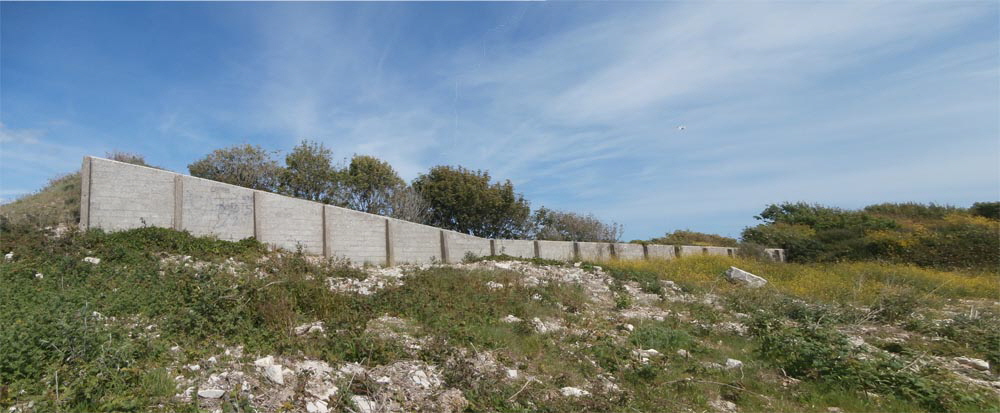
A surviving section of the vandalized security wall in 2016.
Return To Top Of Page
QUARRY BLAST SHELTER [11]
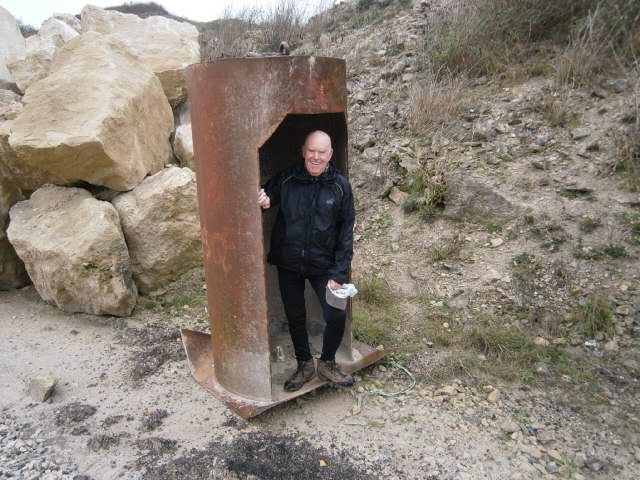
Late in 2015 this steel blast shelter appeared near Withies Wall. This had been used in the days of blasting to protect workers from flying stone.
Return To Top Of Page
FOSSIL TREE BOLES [12]
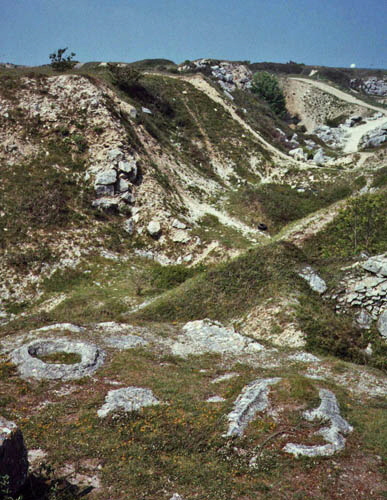
Just to the east of the Limekiln on the main road are these fossilized remains of trees as pictured in 1990. To be more accurate, these rings are the fossilized algae that grew around the base of the trees and were turned to stone whilst the trees themselves rotted away.
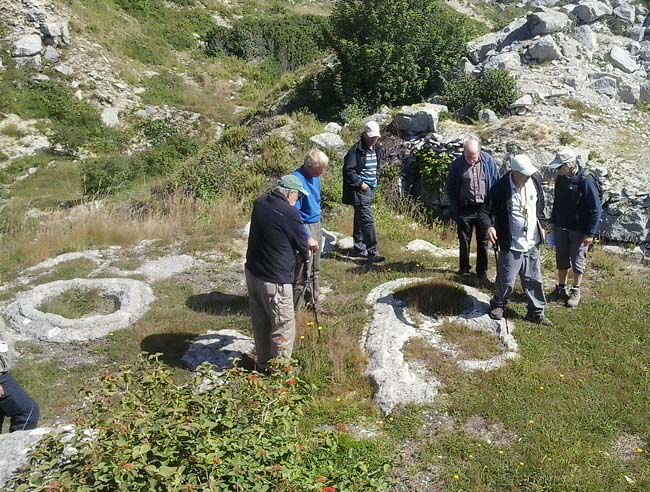
Members of the Dorchester U3A Geology Group examining the fossil trees in 2015.
Return To Top Of Page
ANOTHER OF MY HOBBIES

At the age of 75 I started a new hobby - writing and publishing books. These are available as paperbacks from Amazon - please click here for details. All have been very well received; their overall star rating from readers is 
Keywords Limekilns Fossil Trees Withies Wall Derelict Crane quarrying Portland Dorset
|