|
Priory Corner
|
|
|
© OpenStreetMap contributors - see http://www.openstreetmap.org/copyright
|
|
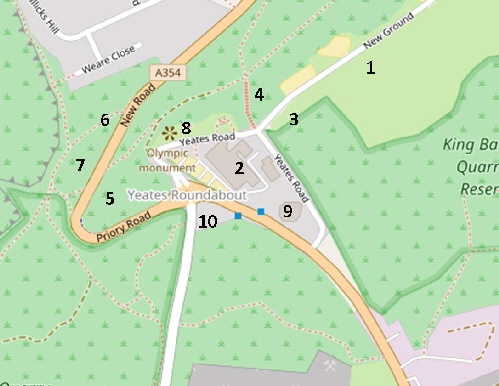
This area covers Priory Corner. Traffic reaches Tophill by this main road although there is a narrow alternative road leading to The Verne.
For over a century, horses pulled trucks over many tramways from the quarries to converge at this point. The stone blocks were then transferred to wagons which descended, mainly under gravity, to waiting boats in Castletown.
Please click here for a detailed map. Click the BACK button on your browser to return to this page.
Please click here to visit the satellite image of this area on Google Maps. Click the BACK button on your browser to return to this page.
Please click here for a detailed late Victorian map. Click the BACK button on your browser to return to this page.
Please click here to visit the Google Streetview image of this area on Google Maps. Click the BACK button on your browser to return to this page.
|
Please use this table to navigate around this page
|
|
THE VIEW FROM THE TOP OF PORTLAND [1]
|

|
|
PORTLAND HEIGHTS HOTEL [2]
|
|
|
LIMEKILN [3]
|
|
|
DERELICT BUILDING [4]
|
|
|
PRIORY CORNER [5]
|
|
|
SCULPTURE [6]
|
|
|
PRESERVED CRANE [7]
|
|
|
PORTLAND’S CENOTAPH [8]
|
|
|
HMS SIDON MEMORIAL [8]
|
|
|
OLYMPIC RINGS [8]
|
|
|
WATER RESERVOIR [9]
|
|
|
DOWSETT MOTORS [10]
|
|
|
ANOTHER OF MY HOBBIES
|
|
|
THE VIEW FROM THE TOP OF PORTLAND [1]
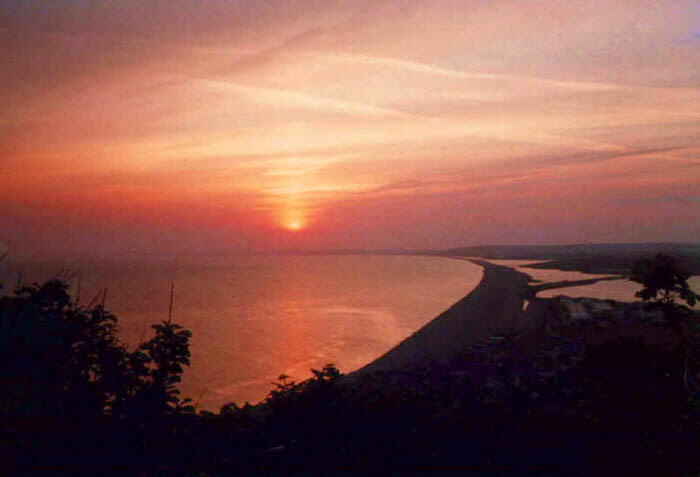
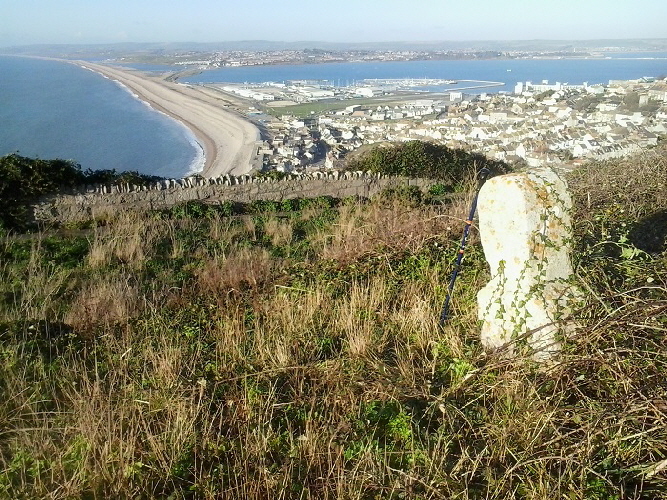
New Ground is a favourite car-parking area from which amazing views can be seen northwards over The Verne Citadel, Fortuneswell, Portland Harbour, Chesil Beach and the mainland.
A typical glorious view from the area around the War Memorial - sunset on mid-summer’s evening 1990.
Return To Top Of Page
PORTLAND HEIGHTS HOTEL [2]
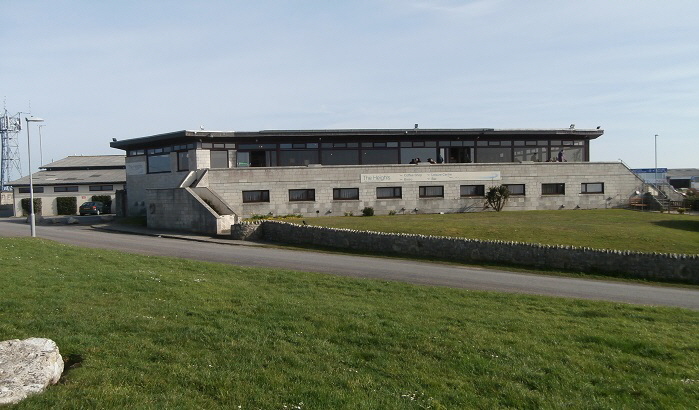
The Portland Heights Hotel stands near the highest point of Portland and enjoys spectacular views over the Chesil Beach, Portland Harbour and Weymouth. There can be few hotels in such a wonderful position. The hotel website can be seen here.
In 2016 a Planning Application was submitted to have the hotel partly demolished and replaced by new buildings which would have included an elderly care facility. This application was refused.
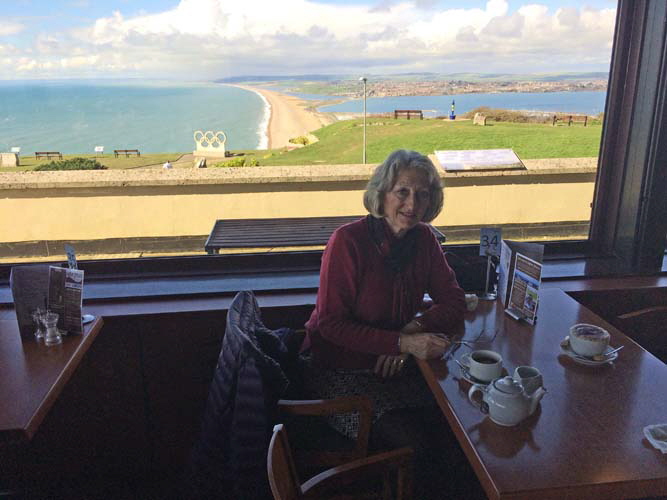
The panoramic view from the dining area must be one of the best in the country.
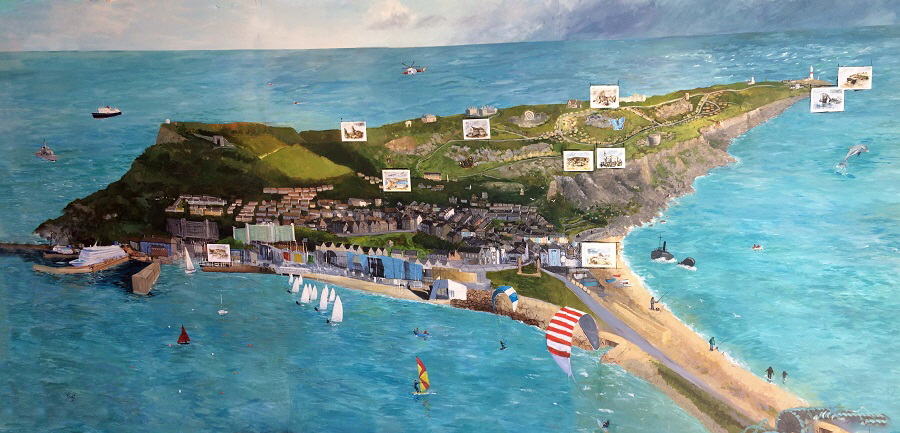
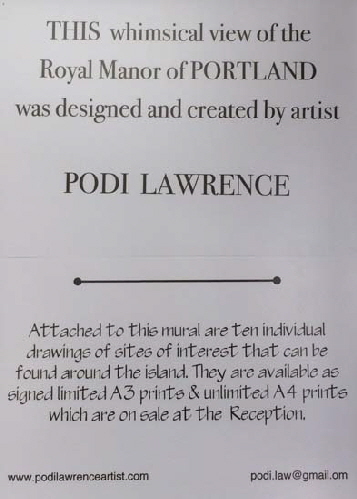
This reproduction is copyright Podi Lawrence and is reproduced with kind permission.
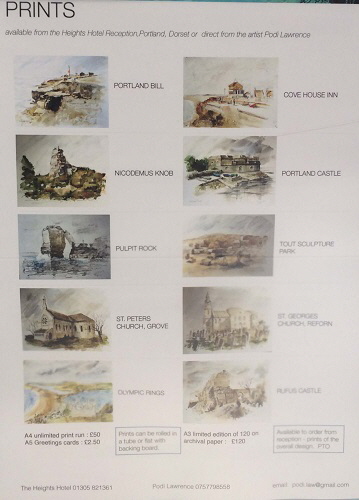
In the entrance lobby is this magnificent mural showing places of interest on Portland. This was painted by local artist Podi Lawrence.
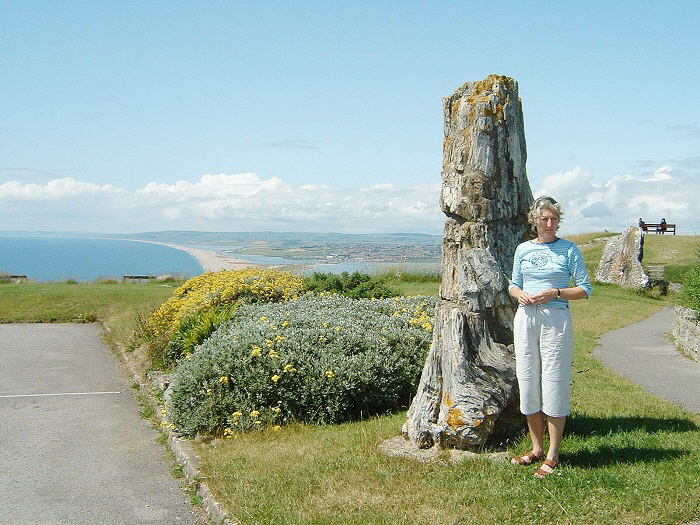
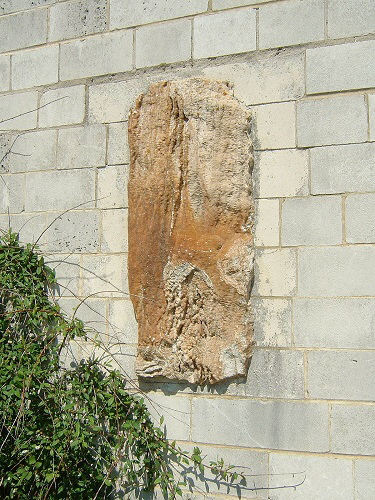
A fossilized tree stump in the grounds of the hotel.
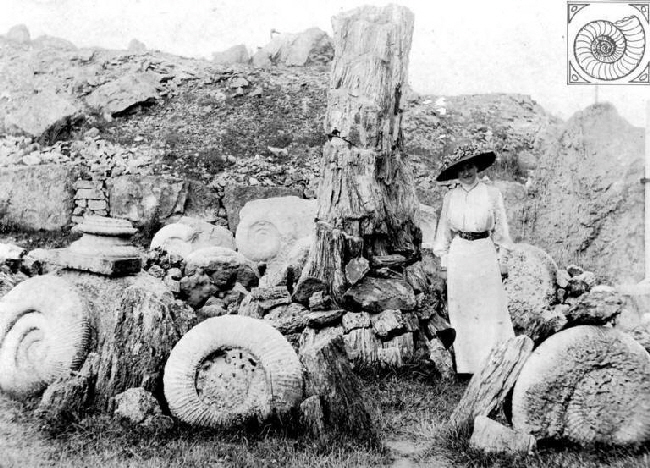
Frances Pearce on a visit to Portland’s Fossil Park in 1911 showing the fossilized tree stump.
An example of ‘dripstone’ which was formed by water seeping slowly down a rock face and calcifying the surface.
Return To Top Of Page
LIMEKILN [3]
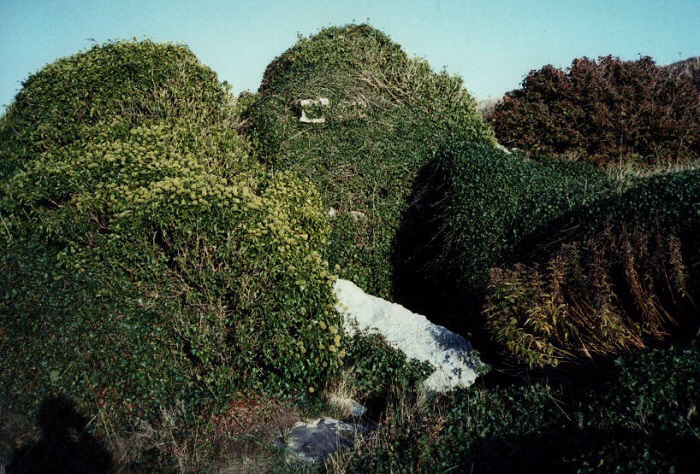
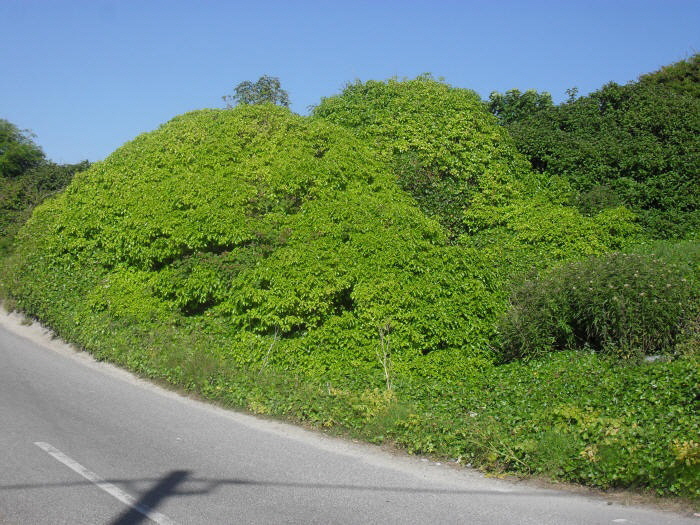
At the back of The Portland Heights Hotel is a limekiln. You would never know it exists because it is now totally buried in brambles. However, in the late 1980s I spotted the location on a Victorian map and investigated with shears and secateurs. The kiln was intact with a well preserved hearth. Over the years the brambles have completely hidden it.
The limekiln at the back of the Portland Heights Hotel in 1989 when it was just possible to get to the hearth through the encroaching brambles.
The limekiln twenty years later completely enshrouded in brambles.
Return To Top Of Page
DERELICT BUILDING [4]
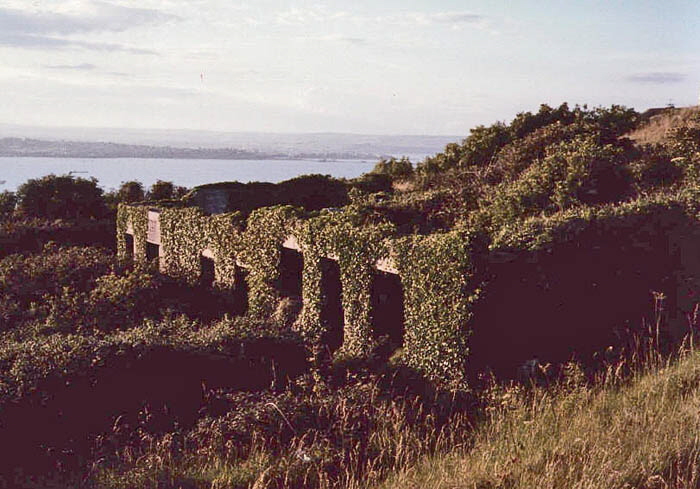
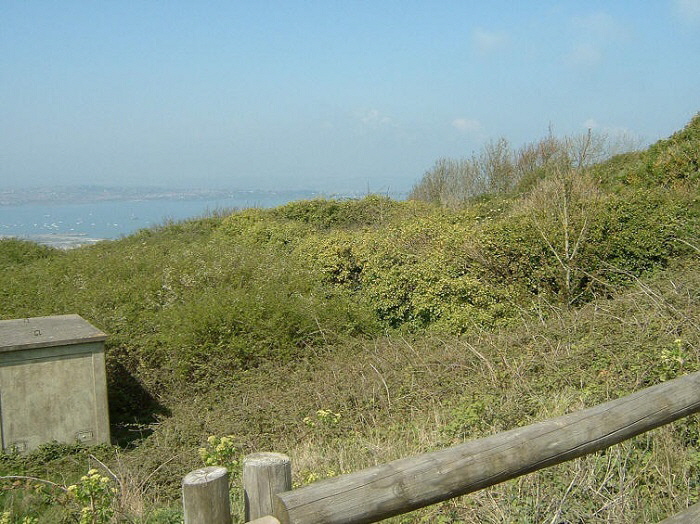
This derelict building stands at the top of Old Hill behind the Portland Heights Hotel. It was once three cottages and was the Government Ranger’s accommodation from the time when convicts worked locally. This photograph was taken in 1989. Today brambles have overtaken the building as seen below.
Return To Top Of Page
PRIORY CORNER [5]
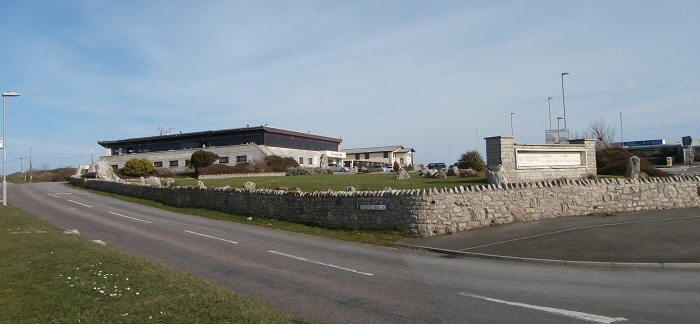
Priory Corner is the area around the Portland Heights Hotel and marks the traditional boundary between ‘Tophill’ and ‘Underhill’.
Two very steep roads were once the only means of travelling between the two parts of Portland and so there was little exchange between the two areas. This is one reason why there has been a long tradition of distrust and aggression between the two communities.
The ‘Tophillers’ belonged largely to a quarrying and farming community whereas many of the ‘Underhillers’ (excluding the ancient fishing village of Chiswell) were immigrants from the mainland who arrived to service the army at The Verne, the Grove Prisons and the Royal Naval Dockyard.
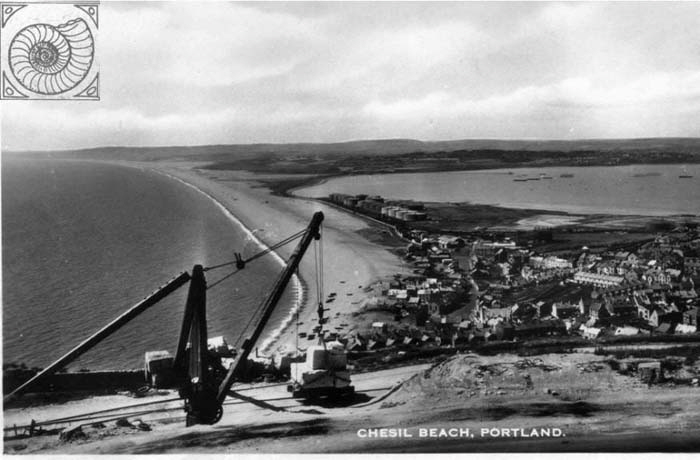
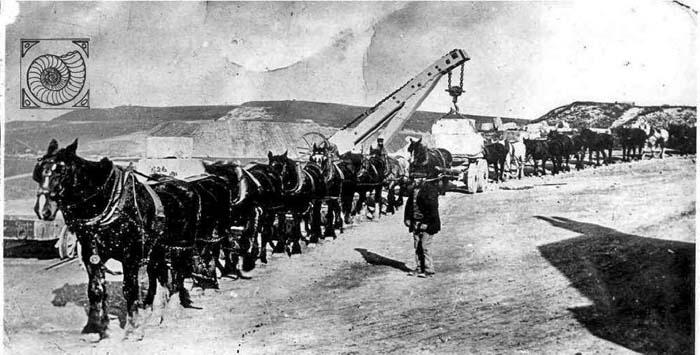
Priory Corner was also the gathering place for quarried stone before it was sent down the Merchants Railway to the waiting ships at Castletown.
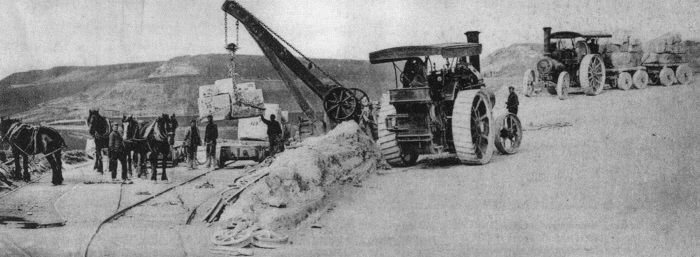
The traction engines in this picture were arriving at Priory Corner pulling wagons loaded with stone blocks. These were being transported by crane to the wagons of the Merchants Railway for onward transportation to Castletown.
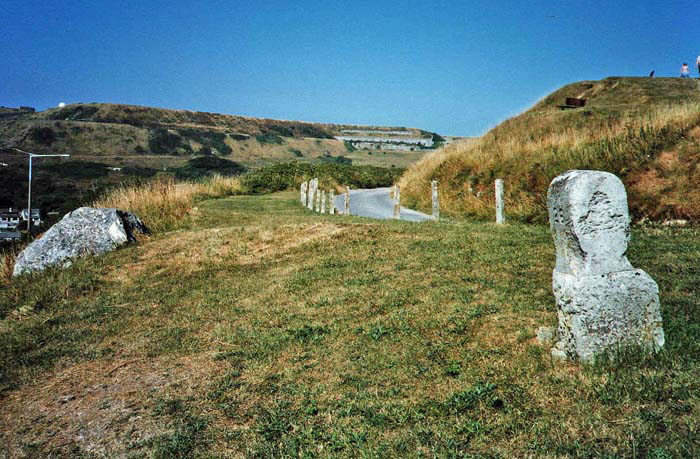
The above picture from 1989 shows the view from very close to the point from which the previous picture was taken. The road in the middle of the above picture was laid over the railway track.
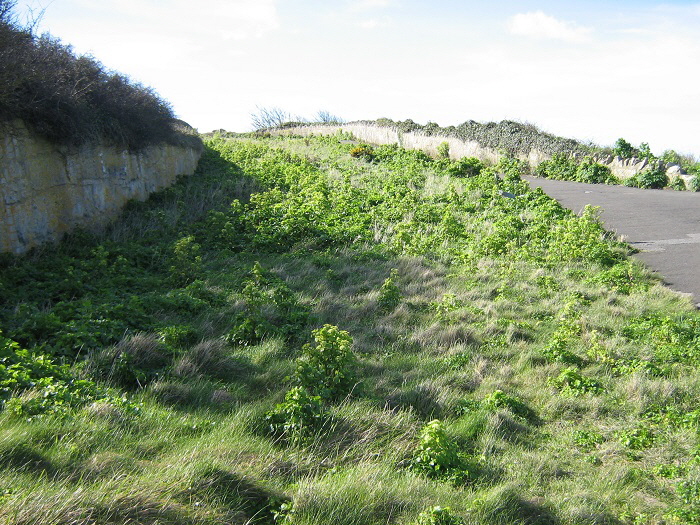
When this picture was taken the main road took a broader sweep at the hairpin bend. Due to subsidence, it was necessary to realign the road inland.
The above picture dates from 2015. The line of the original road is now taken over by nature as shown below.
The following old pictures show Priory Corner before the Merchants Railway was abandoned in 1939 due to the greatly increased use of lorries and railway for transporting stone.
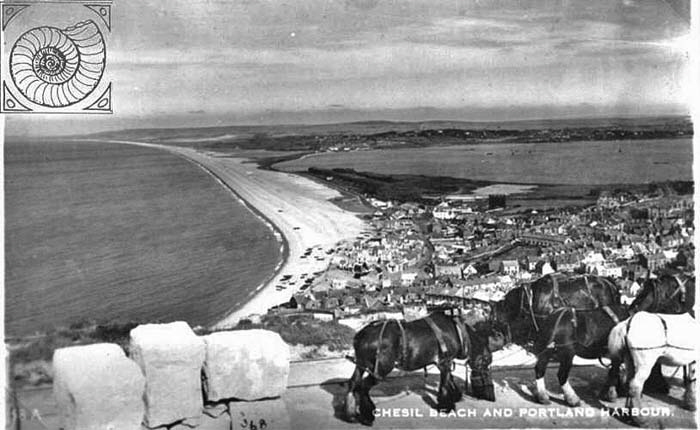
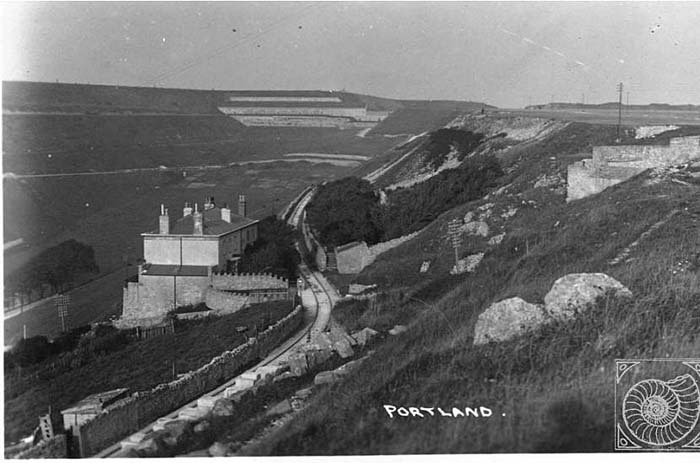
Above we see the old Merchants Railway winding down past the Old Rectory.
Return To Top Of Page
SCULPTURE [6]
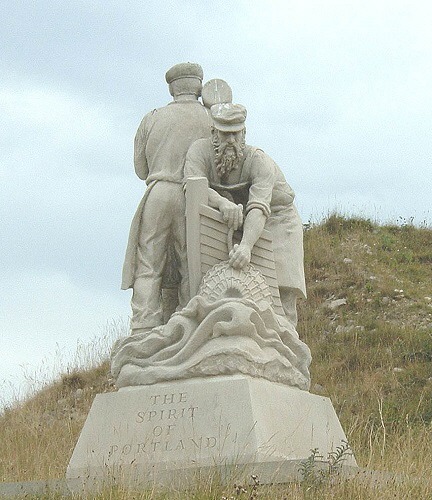
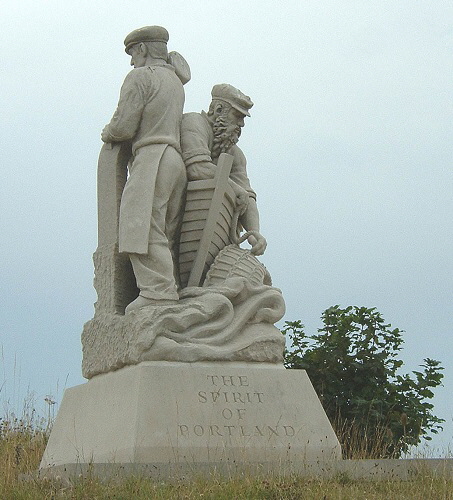
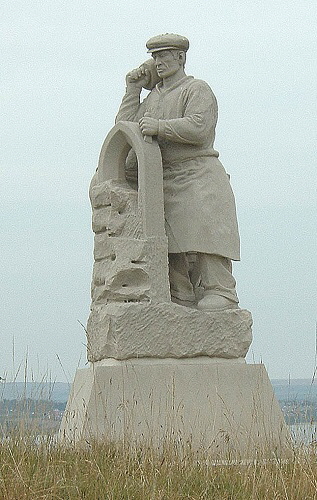
The Spirit of Portland by artist and sculptor Joanna Szuwalska. This magnificent carving stands near the point where stone was loaded onto trucks to start their journey down the Merchants' Railway to Castletown.
Return To Top Of Page
PRESERVED CRANE [7]
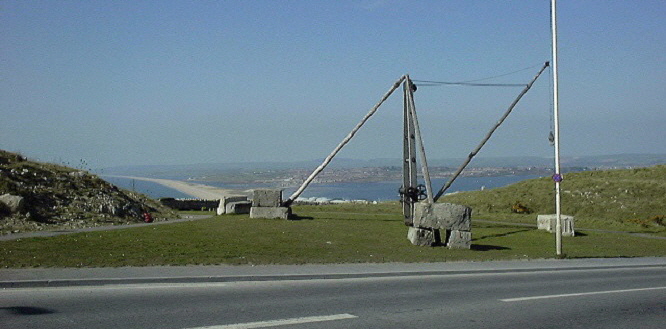
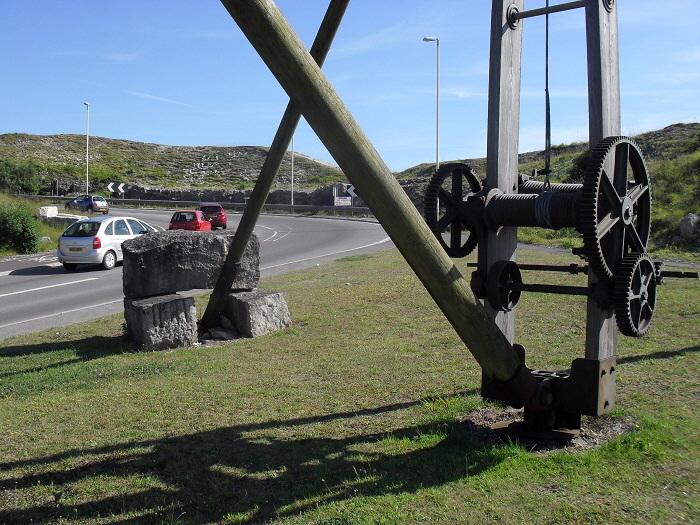
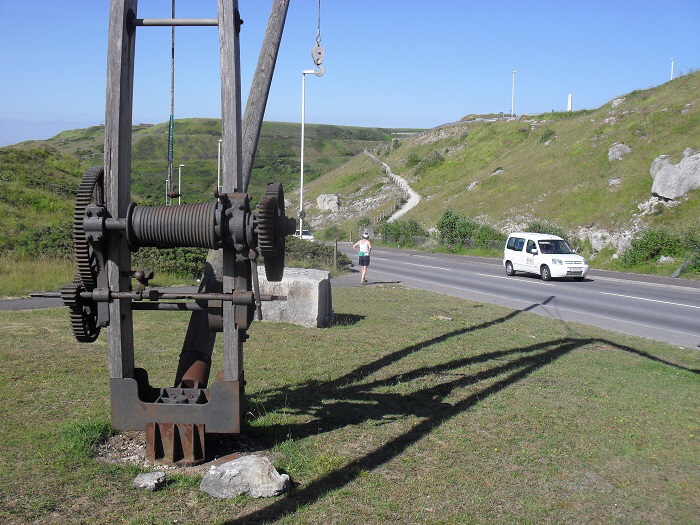
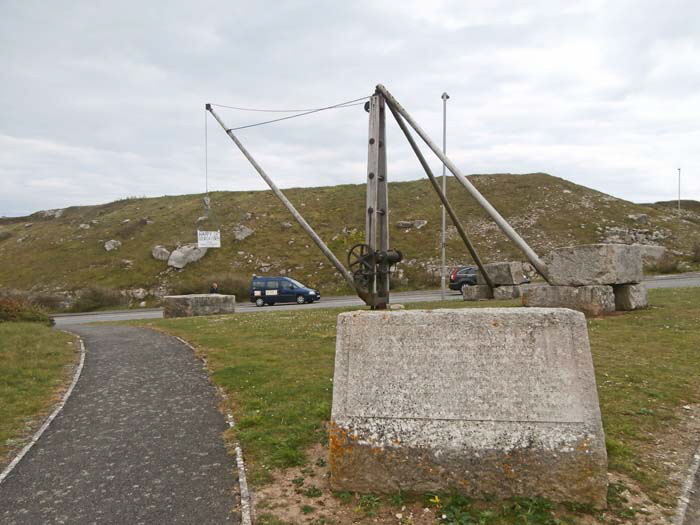
A single quarry crane has been preserved to stand near Priory Corner at a memorial to the local stone industry.
The carved inscription has almost been weathered away. Why does such poor stone get used for carving inscriptions when the monuments in St Georges graveyard show that stone can be carved and be legible for well over a century. The above inscription is scarcely two decades old. Similarly, the inscriptions on the Portland Millennium Gateway towers have all but gone due to erosion over a mere decade.
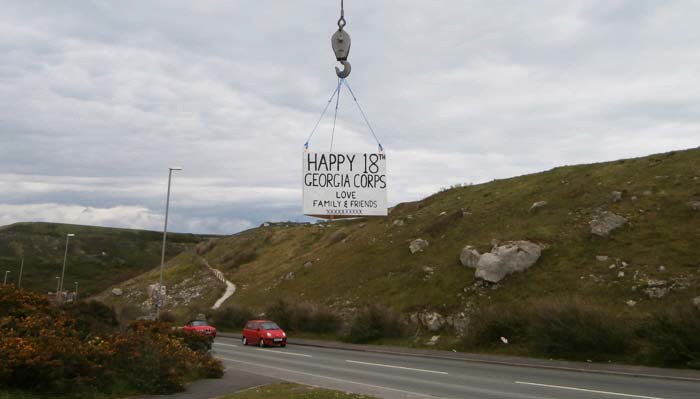
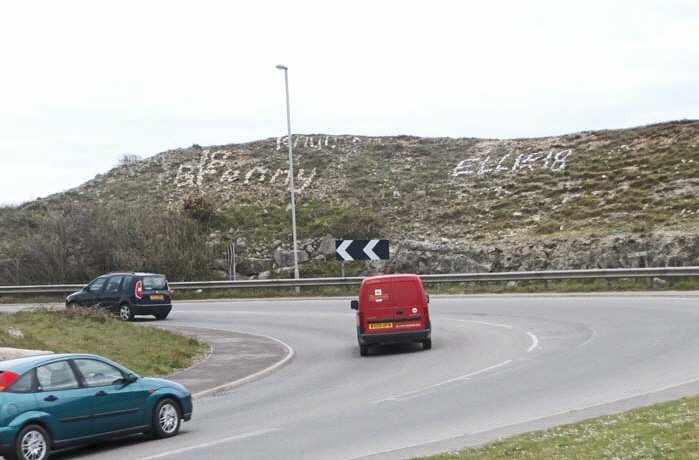
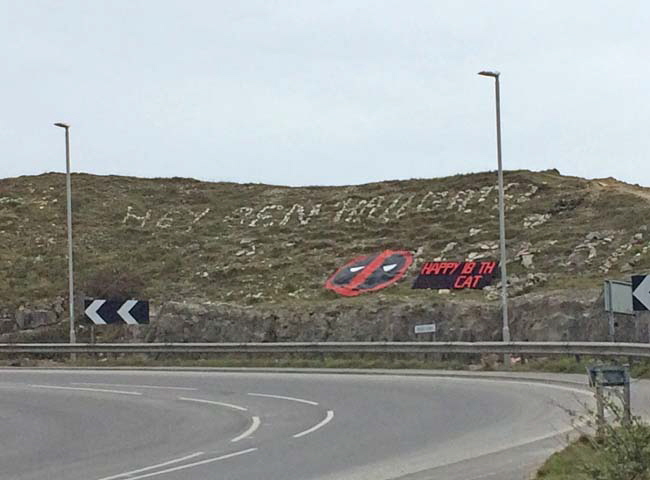
In April 2015 someone hung this birthday message on the crane. This area is very popular with wellwishers greeting their friends and family as seen by the typical examples below.
Return To Top Of Page
PORTLAND CENOTAPH [8]
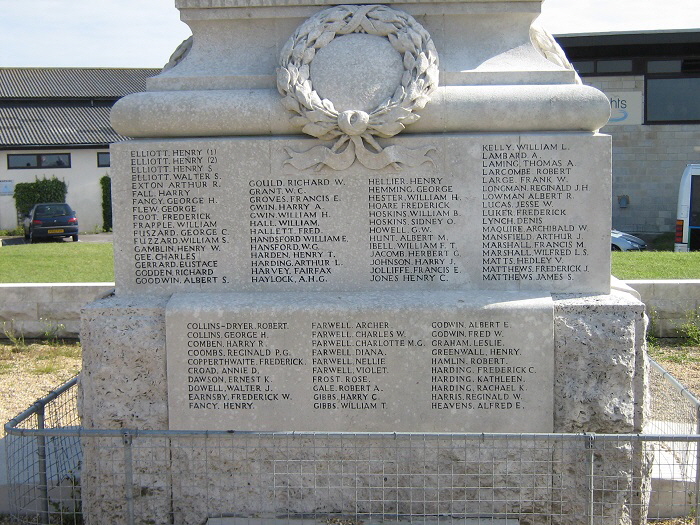
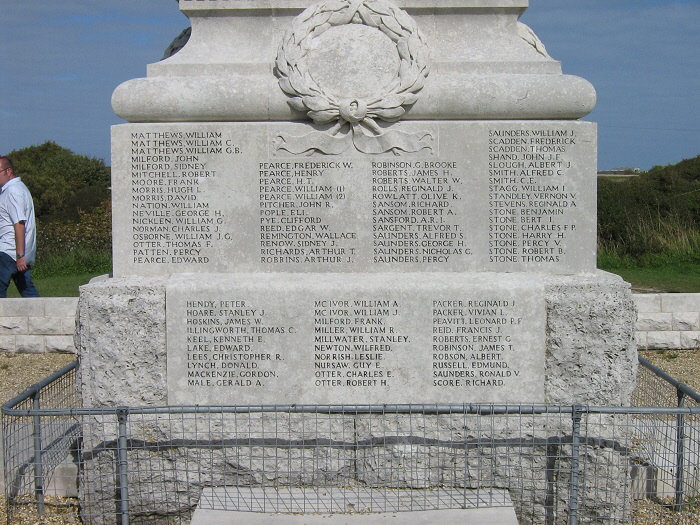
There is a comprehensive article by Ashley Smith describing the Portland Cenotaph here.
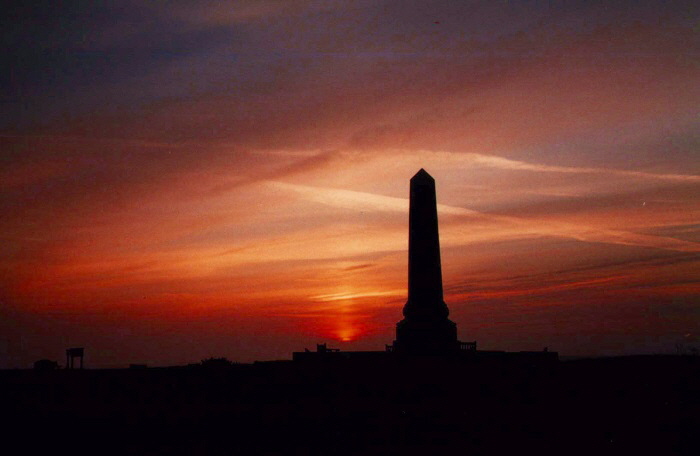
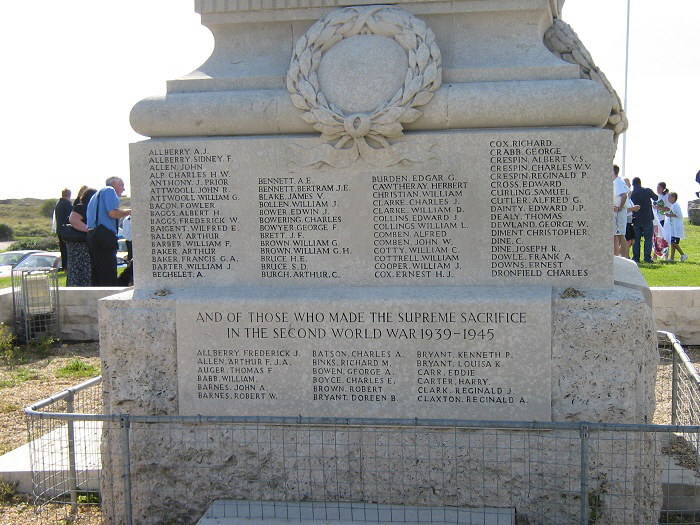
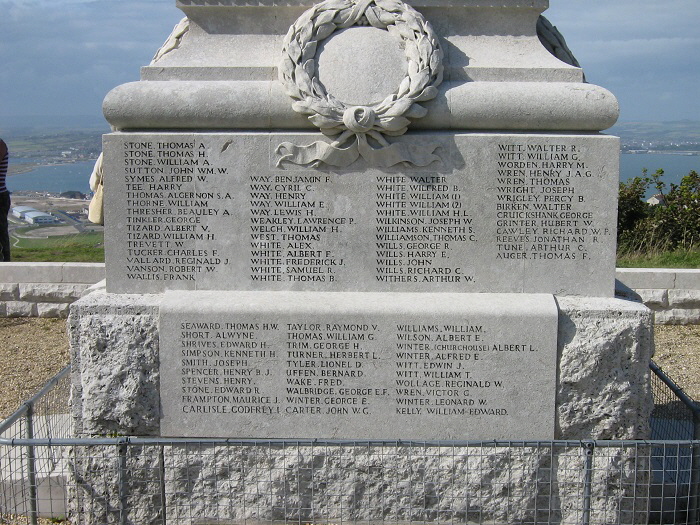
Portland sent about one thousand men to fight during World War 1. Plans to build a cenotaph were greatly delayed because ‘Tophillers’ and ‘Underhillers’ wanted their own memorials. This was down to the long-time mutual distrust and dislike between the two Portland communities. It was not until 1926 that this acrimonious dispute was solved by placing one cenotaph in a location where it could be seen by both communities.
Return To Top Of Page
THE ‘SIDON’ MEMORIAL [8]
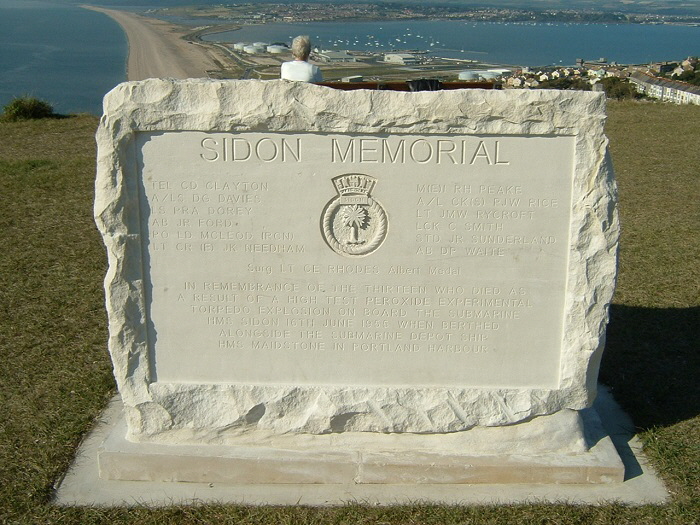
Above we see a memorial which was erected in 2005 for the men who died in the explosion of a torpedo on board the submarine HMS Sidon (P259) whilst docked alongside Portland Harbour in 1955. This tragedy occurred when an experimental torpedo using Hydrogen Peroxide as the oxidant in place of the conventional high pressure air started to run whilst being handled in the submarine. The weapon exploded killing 13 submariners.
A full account of the tragedy can be read here.
This halted the development of high performance torpedoes using hydrogen peroxide in the United Kingdom although other navies, notable Sweden and the Soviet Union, had no problems with these types of torpedoes.
Return To Top Of Page
THE OLYMPIC RINGS [8]
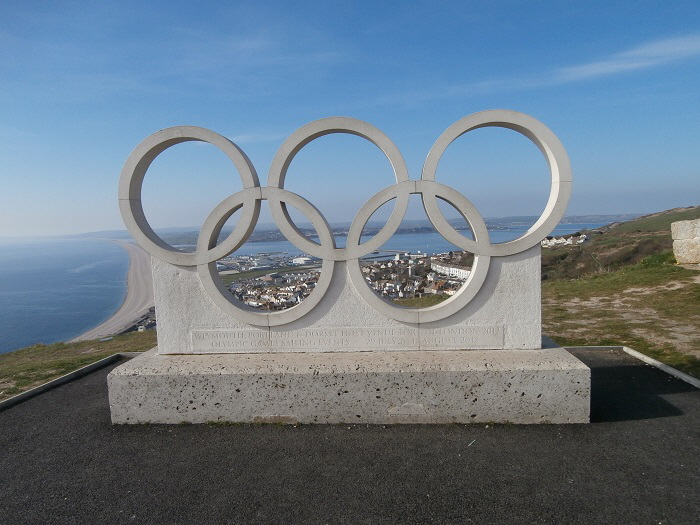
In 2012, a sculpture of the Olympic rings, carved to celebrate the summer's sailing events at Weymouth and Portland, was placed close to the two memorials. It had been in Weymouth during the games greeting passengers at the town's railway station. Although these rings were impressive when standing outside Weymouth railway station they now look rather insignificant on the top of Portland.
Return To Top Of Page
WATER RESERVOIR [9]
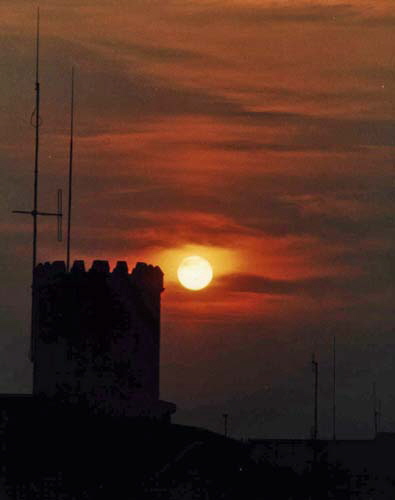
A romantic castle at sunset? Not quite... This is Portland’s old water reservoir by the Portland Heights Hotel.
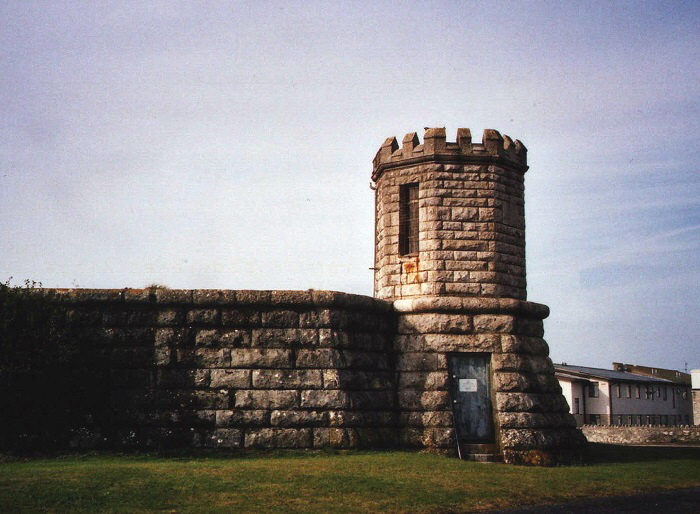
Here the Portland Reservoir is seen in daylight - a far less romantic 'castle' than when seen at sunset.
Portland's water now comes from the Fryer Waddon pumping works near Upwey. In Victorian times it came from local sources - see here - but typhoid resulted in all local wells being abandoned.
This old reservoir leaked ever since it was built and is now abandoned in favour of a new reservoir a short distance to the east.
Return To Top Of Page
DOWSETT MOTORS [10]
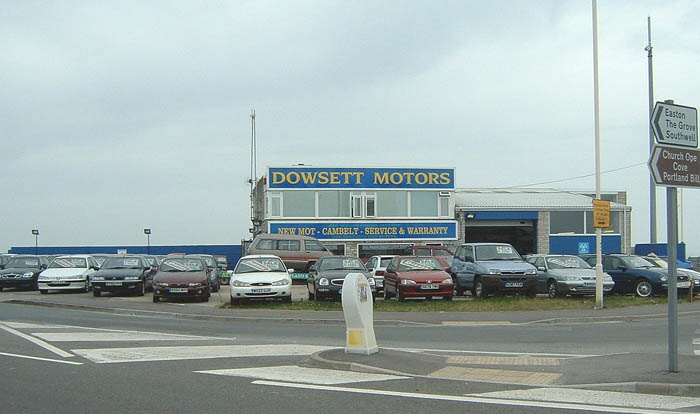
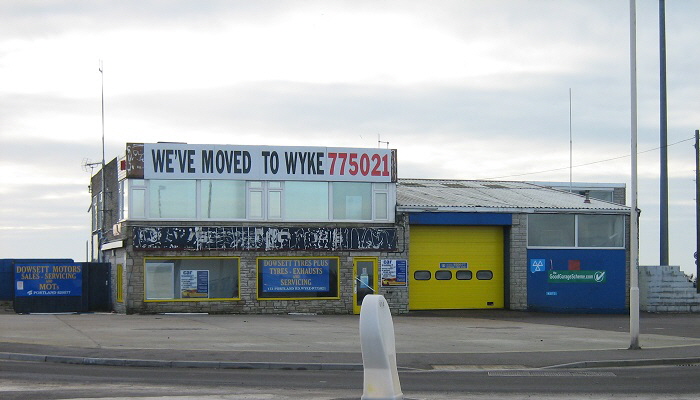
Dowsett Motors stood at the roundabout opposite the Portland Heights Hotel but moved to Wyke Regis.
![]() Return To Top Of Page Return To Top Of Page
ANOTHER OF MY HOBBIES

At the age of 75 I started a new hobby - writing and publishing books. These are available as paperbacks from Amazon - please click here for details.
Keywords Portland heights Hotel Priory Corner Cenotaph Olympic Rings Quarry Inmosthay Quarry Dowsett Motors HMS SIDON Portland Dorset
|