|
Area Around Church Ope Cove
|
|
|
© OpenStreetMap contributors - see http://www.openstreetmap.org/copyright
|
|
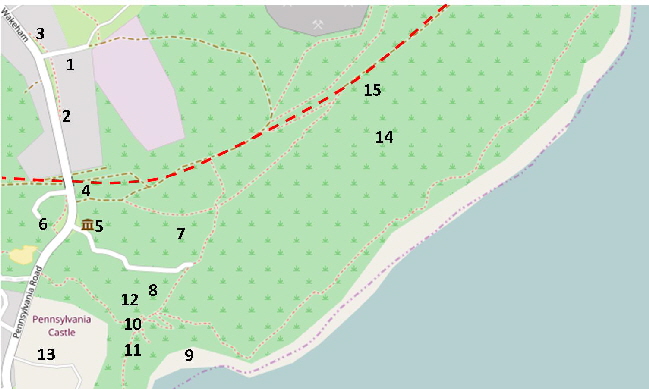
This area is explored starting in the north around Bumpers Lane [1].
We then move down South Wakeham [2] to the converted Mermaid Inn [4] and the Portland Museum [5].
We go down past the Museum to Church Ope Cove [9] and explore Penn’s Weare [14] from where the stone was quarried for the rebuilding of St Paul’s Cathedral in London in the 17th century.
Whilst in the area of Church Ope Cove we get adventurous and find Penn’s stone bath [11] which is hidden in dense undergrowth. There is also a mysterious old reservoir nearby [12].
Also in this area is the spooky derelict St Andrew’s Church [10] where I once found a huge candle reputed to be used by local witches in their coven gatherings in the church remains.
Towering above Church Ope Cove is Rufus Castle [8] or Bow and Arrow Castle as it is better known to locals.
Returning to the main road we admire Pennsylvania Castle [13].
Please click here for a detailed map. Click the BACK button on your browser to return to this page. Please click here to visit the satellite image of this area on Google Maps. Click the BACK button on your browser to return to this page. Please click here to visit the Google Streetview image of this area. Click the BACK button on your browser to return to this page.
|
Please use this table to navigate around this page
|
|
BUMPERS LANE [1]
|

|
|
SOUTH WAKEHAM [2]
|
|
|
ALESSANDRIA HOTEL [3]
|
|
|
THE MERMAID INN [4]
|
|
|
PORTLAND MUSEUM [5]
|
|
|
LONDON CENOTAPH QUARRY [6]
|
|
|
AN ABANDONED CRANE [7]
|
|
|
RUFUS CASTLE [8]
|
|
|
CHURCH OPE COVE [9]
|
|
|
ST ANDREW’S CHURCH [10]
|
|
|
JOHN PENN’S ANCIENT STONE BATH [11]
|
|
|
OLD RESERVOIR [12]
|
|
|
PENNSYLVANIA CASTLE [13]
|
|
|
PENN’S WEARE [14]
|
|
|
ABANDONED RAILWAY LINE [15]
|
|
|
ANOTHER OF MY HOBBIES
|
|
|
BUMPERS LANE [1]
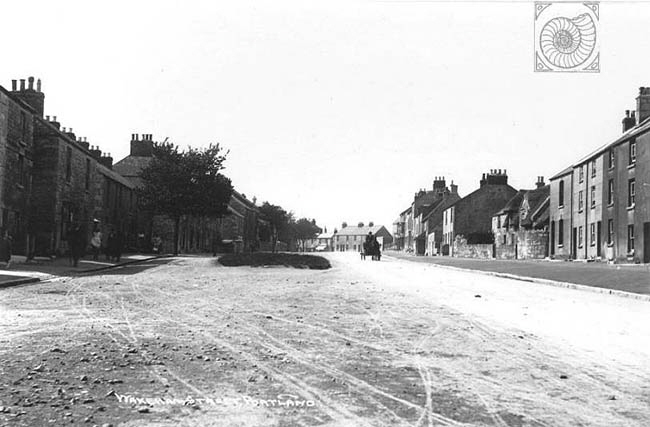
Bumpers Lane is a short road branching off Wakeham. In the old picture below taken looking north up Wakeham we would find Bumpers Lane on the right about where the man on the cart is seen.
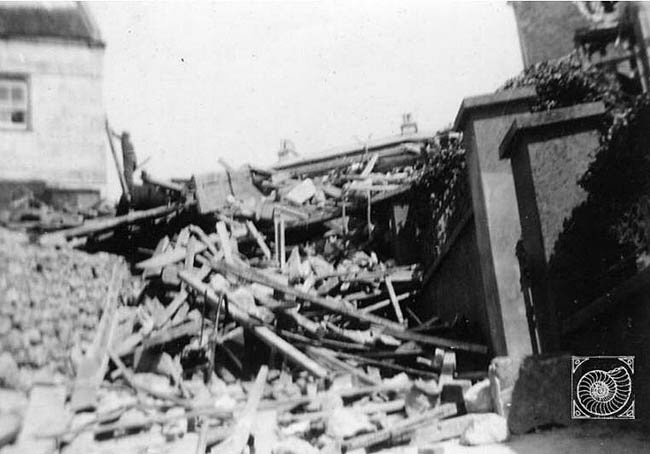
The houses in Bumpers Lane took a direct hit from a Luftwaffe bomb in 1940 as seen above.
Portland suffered terribly during World War 2 largely because of the presence of the Royal Navy in the Dockyard. As many as 304 houses were damaged and 40 totally destroyed. There were 48 air raids with 532 bombs dropped on the Isle of Portland. Thirty-seven civilians were killed.
There are no old houses now in Bumpers Lane because, since World War 2, it has been the main entrance into Silklake and Chalklands Quarries; both of which have been abandoned.
For decades the traction engines and then later the lorries accessed Silklake Quarry from Wakeham through Bumpers Lane. This caused great disruption for local residents. Stone dust and small debris would be scattered on the roads and pavements and the dust would blow into gardens soiling washing and getting into houses. Complaints by residents to the stone company were ignored with all the disdain characterised by the Portland stone industry towards local people until well into the late 1980s. It was not until a local bye-law was introduced forcing stone lorries to have their loads covered with dust sheets that this nuisance was stopped in the 1990s.
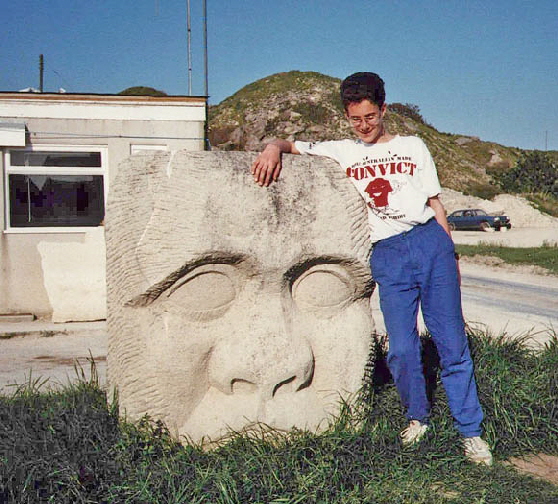
At the entrance to Silklake Quarry stood a carved head as shown above in my 1990 photograph. This carving originally was moved from Tout Sculpture Park.
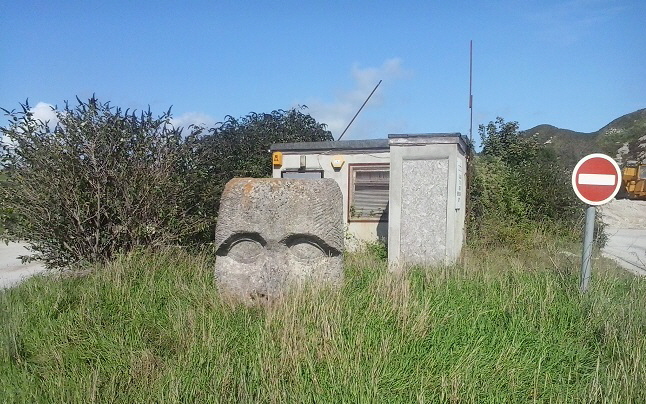
Twenty-five years on from the previous picture and the grass had grown higher but the carved head has now gone back to Tout Sculpture Park to make way for a new housing estate.
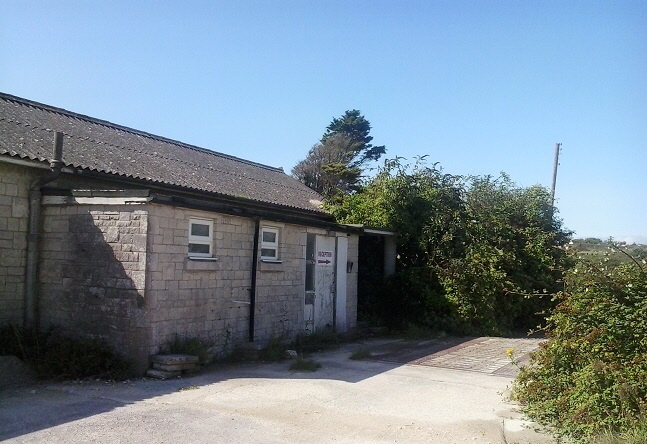
Just inside the entrance to the quarry was a weighbridge and and reception office.
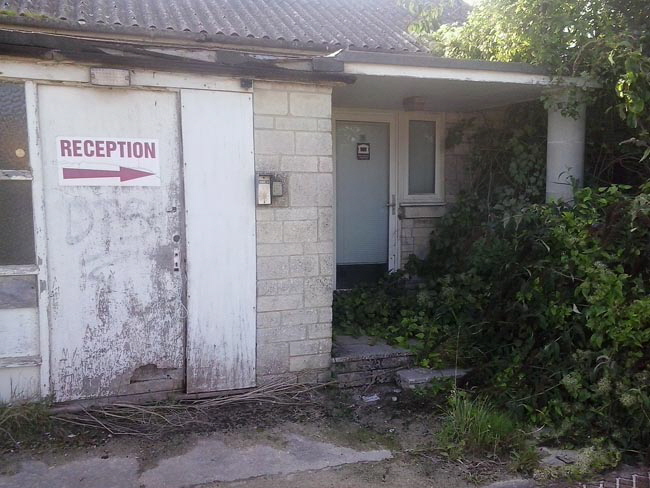
Obviously the ‘Reception’ area has been disused for a long time.
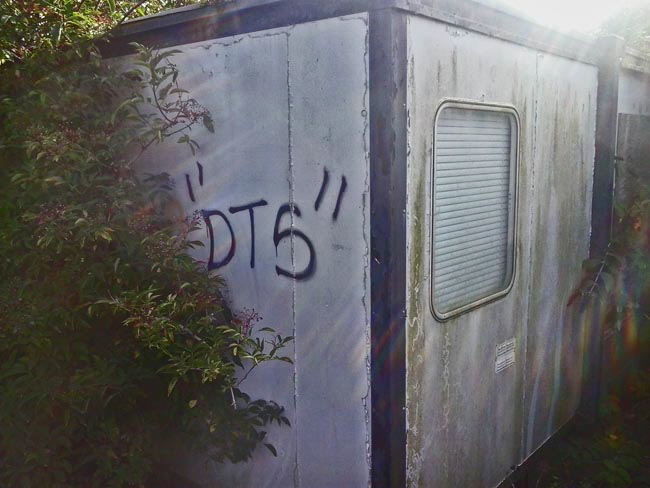
The ‘tag’ of the ‘Portland Bois’ gang on a building in Bumpers Lane.
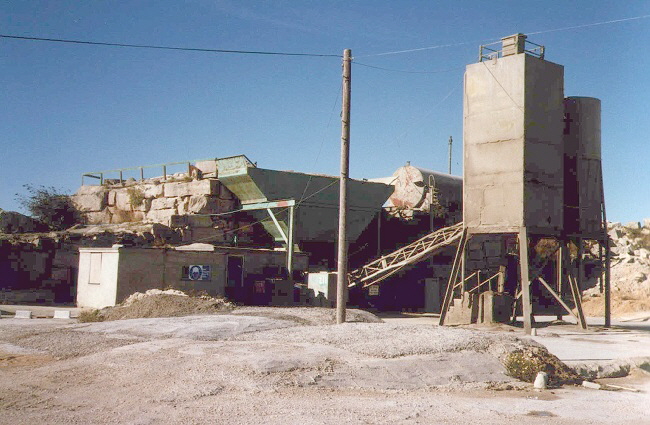
During the late 1980s these buildings and machinery were being dismantled and removed. This shows the crushing plant shortly before its removal in July 1989.
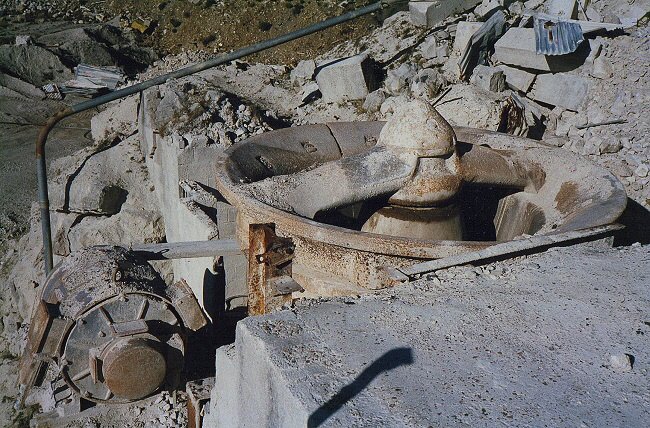
Part of the stone crushing equipment awaiting destruction.
Two of my children examine a huge stone moving vehicle in Silklake Quarry in 1990 when the quarry was being abandoned.
A fissure in the Silklake Quarry has produced archaeological materials including several human skeletons - see here.
A planning application was submitted to Weymouth and Portland Planning Department to build dozens of houses in Bumpers Lane. The application was strenuously opposed on the grounds of unimaginative design and road layout as well as the use of brick construction so close to ancient stone cottages in Wakeham. Stuart Morris’s devastating criticism of the plans can be read here. A much improved plan was accepted by the Council in July 2014 - see here.
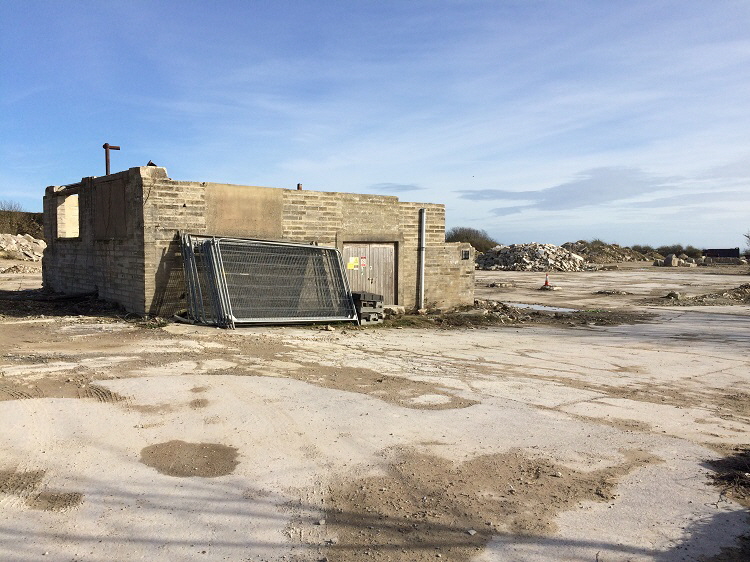
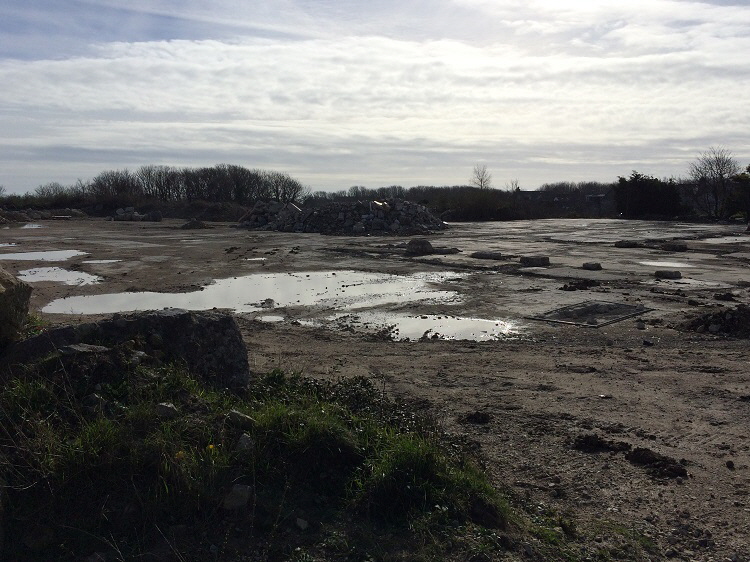
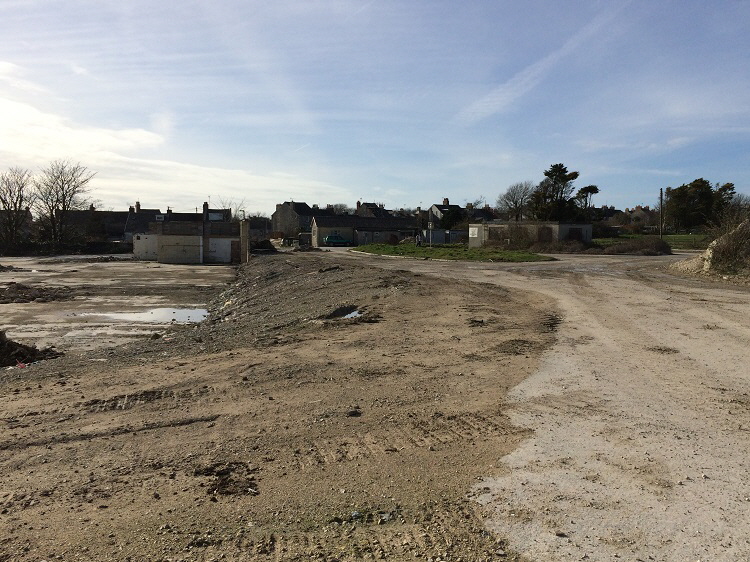
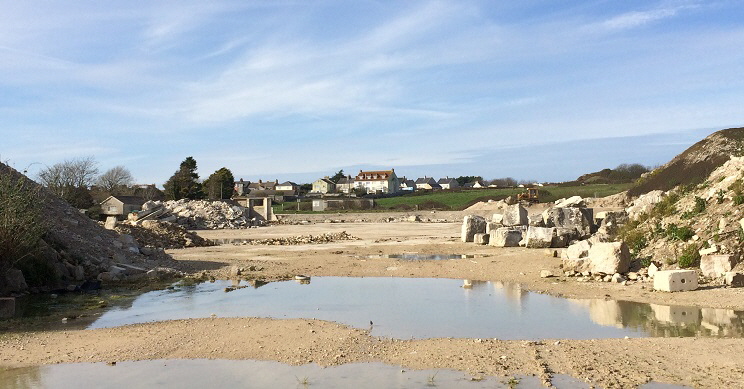
The following pictures show the area being cleared ready for the housing estate to be started.
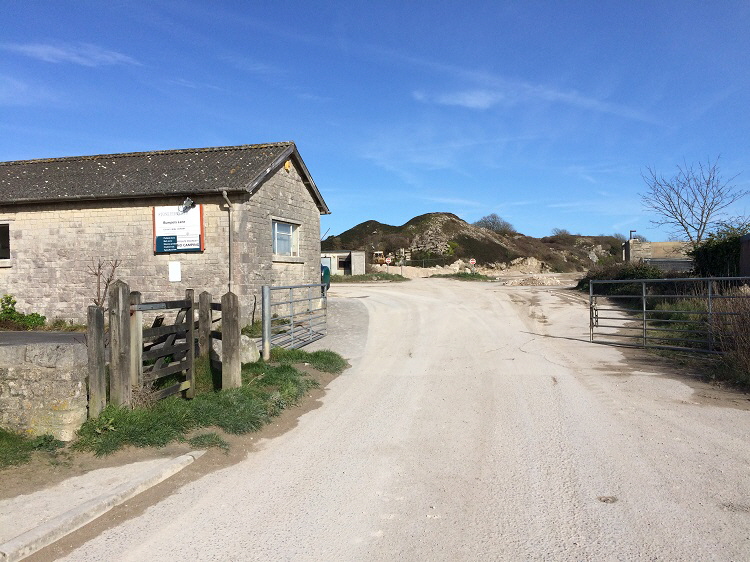
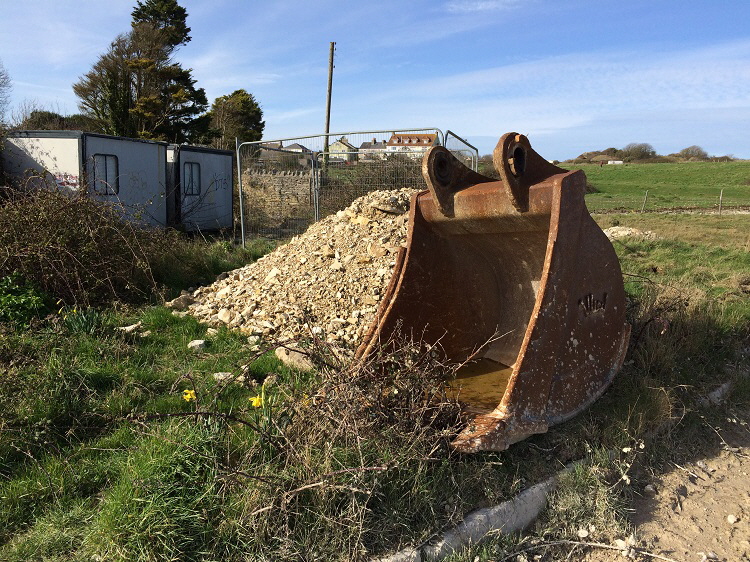
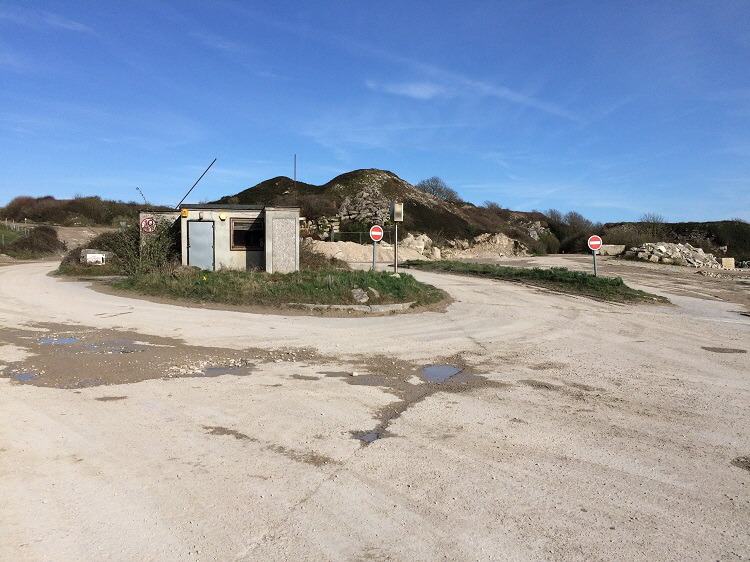
Return To Top Of Page
SOUTH WAKEHAM [2]
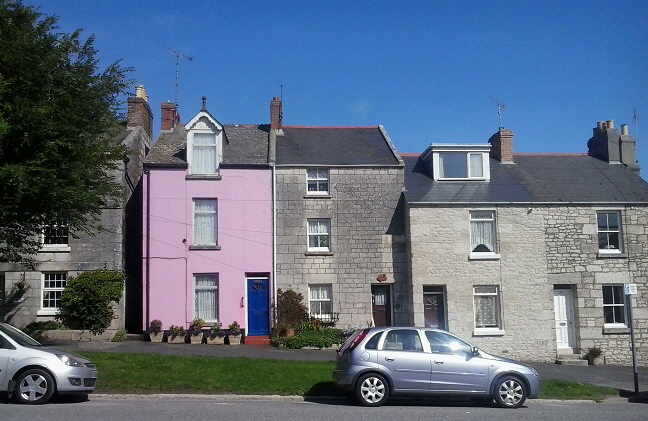
The whole of Wakeham is a fascinating place to explore on foot. Even after nearly thirty years of exploration I am still discovering interesting artefacts. Just walk down towards the Portland Museum and look carefully at every cottage. Each one is independently built and worth a close look.
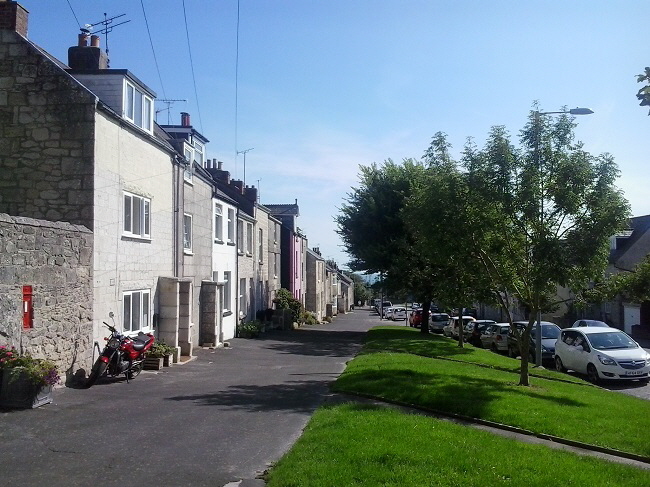
The east side of Wakeham with its individually styled cottages; some with old traditional stone porches.
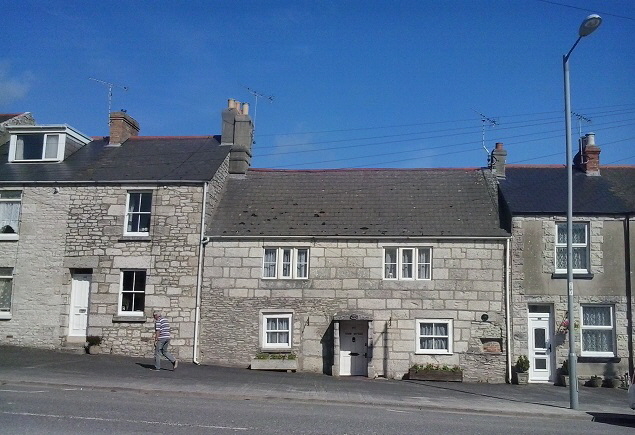
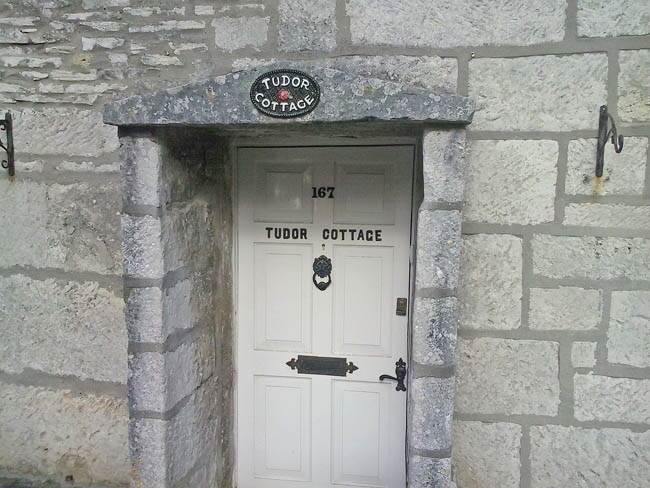
Tudor Cottage dates from the late 1500s and is one of the oldest inhabited houses on Portland. To the right of the front door is a brick structure which looks like an oven whose outer brickwork has been exposed.
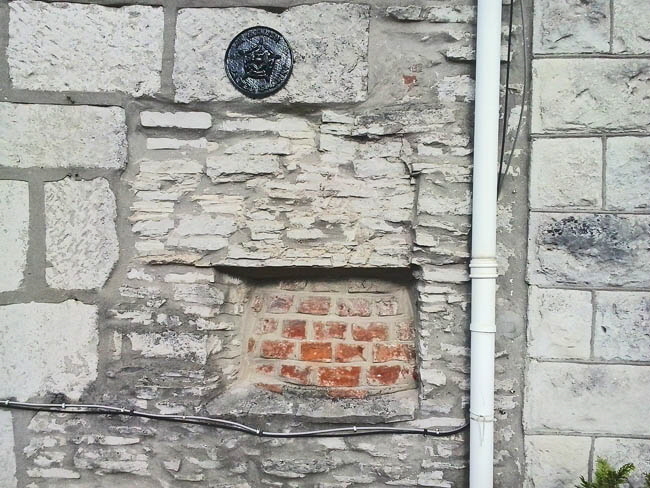
Is this the remains of a bread oven?
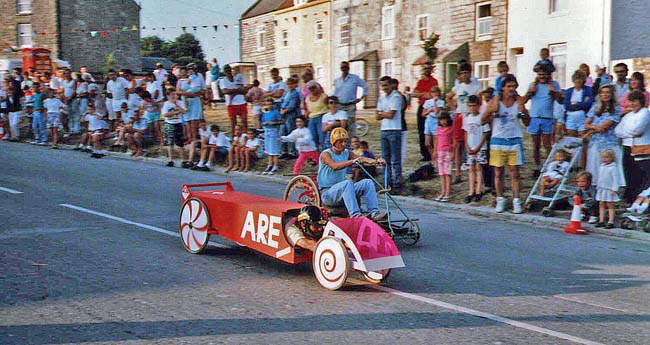
These two pictures show the 1990 Soapbox Derby which was run down Wakeham. Although very popular at that time it stopped being organised soon afterwards. Shame!

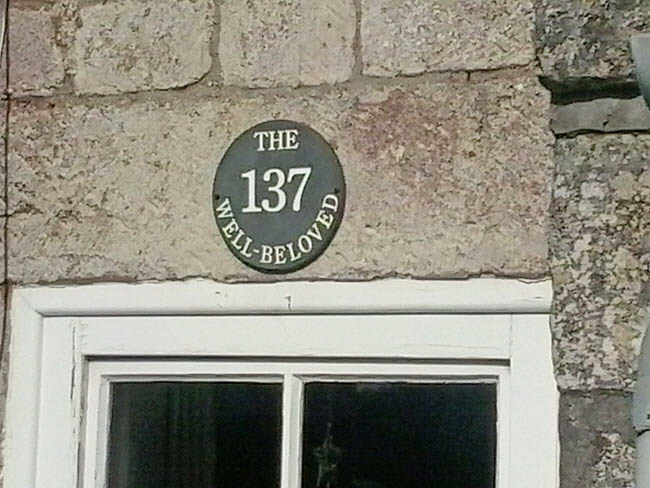
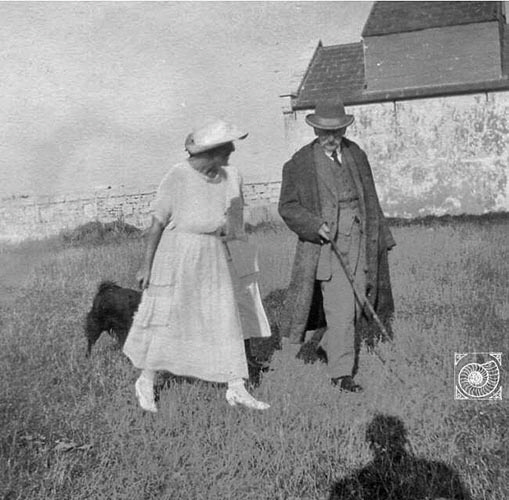
“The Well-Beloved” refers to Thomas Hardy’s novel of that name based on Portland. A cottage housing what is now part of Portland Museum founded by Marie Stopes, a friend of Hardy and his wife, was an inspiration for the book. The cottage acted as the fictional home of Avice, the novel's heroine.
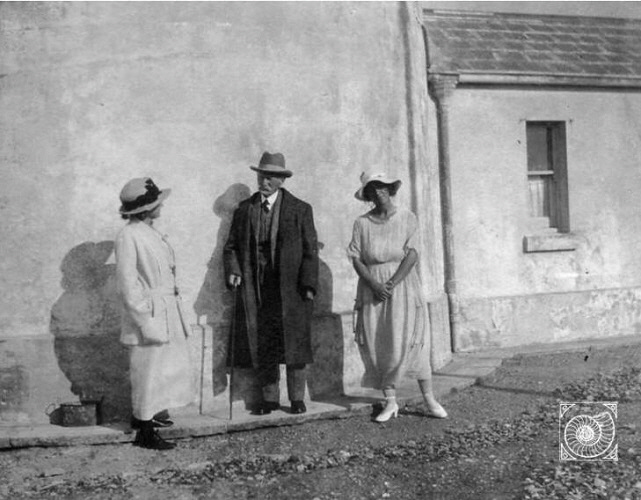
Thomas Hardy, Mrs Hardy and Marie Stopes at her home in the Old Higher Lighthouse. For more pictures of Marie Stopes on Portland please click here.
Marie Stopes and Thomas Hardy outside the Old Upper Lighthouse.
Return To Top Of Page
ALESSANDRIA HOTEL [3]
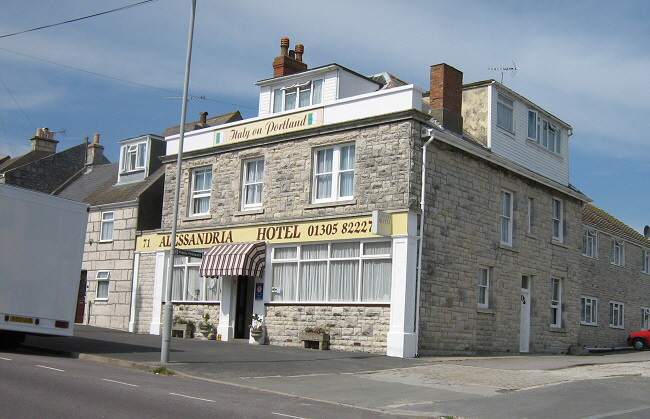
The Alessandria Hotel in Wakeham. Its website can be viewed here.
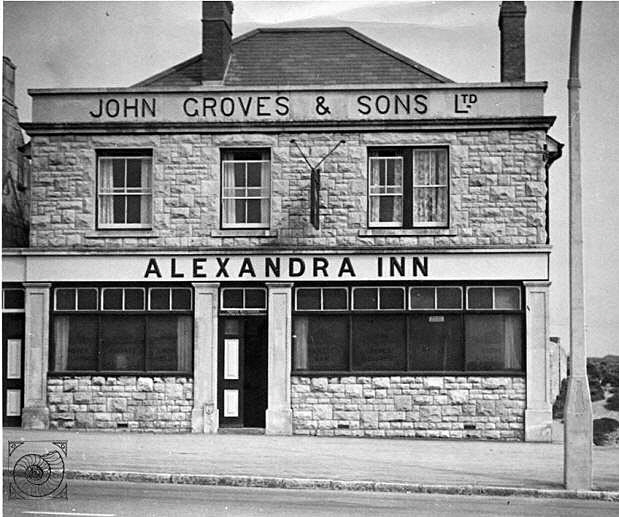
The hotel in a previous existence.
Return To Top Of Page
THE MERMAID INN [4]
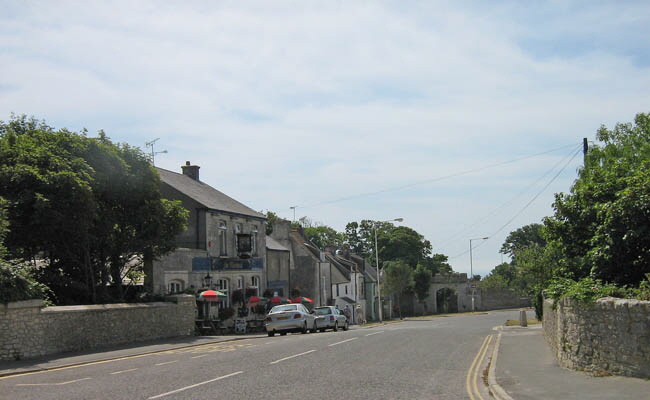
The railway from Weymouth to Easton used to run under the main road at this spot. On the left used to be ‘The Mermaid Inn. Beyond is Portland Museum and Pennsylvania Castle.
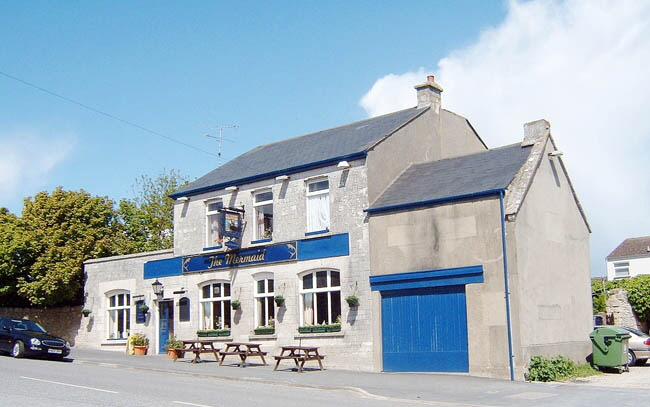
There is a story that a mermaid was washed ashore near this point some time in the 18th century - and that is how the Mermaid Inn got its name; this being the closest pub to Church Ope Cove.
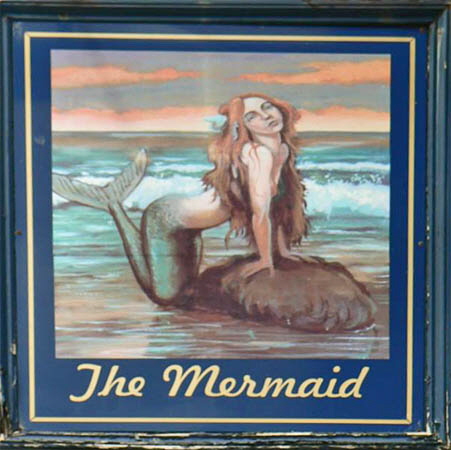
The old pub sign reproduced by kind permission of Robin Ballard.
Please see the story of Portland's mermaid by clicking here. Another sea monster was washed ashore along Chesil Beach during the nineteenth century. It was described as having a very long neck and a snake-like head. However, the 'monster' was a camel!
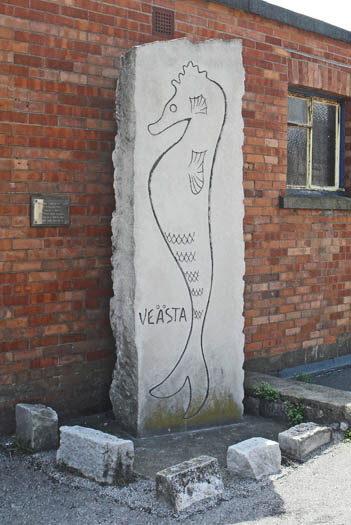
Portland’s most famous monster which has appeared many times since 1757 - and again as recently as 1995 - is Veasta. This was a mixture of Sea Horse and fish as seen below in a carving outside the Ferrybridge Inn in Wyke Regis.
For more stories of Portland’s sea monsters, giant underwater chickens and mermaids please click here.
The Holinshed's Chronicle reported a strange creature seen emerging from the sea near Portland. The account is as follows: -
|
In the moneth of November 1457, in the Ile of Portland not farre from the town of Weymouth, was seen a cocke coming out of the sea, having a great creast upon its head and a red beard, and legs half a yard long: he stood on the water & crowed foure times, and everie time turned him about, and beckened with his head, toward the north, the south and the west, and was of colour like a fesant, & when he had crowed three times, he vanished awaie."
|
|
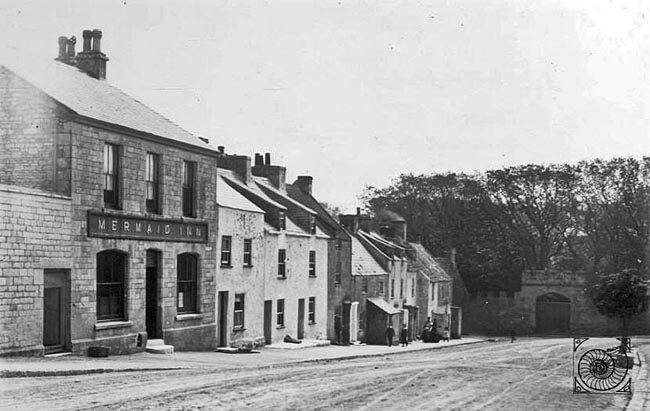
The above picture shows the Mermaid Inn in Wakeham between the World Wars.
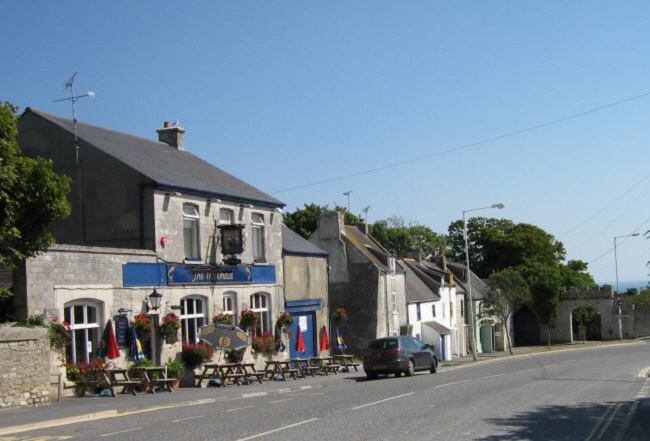
Above is the same scene in happy times in the early 1990s. Alas, the Mermaid Inn was to fall on hard times and to close to be converted into an excellent tea room.
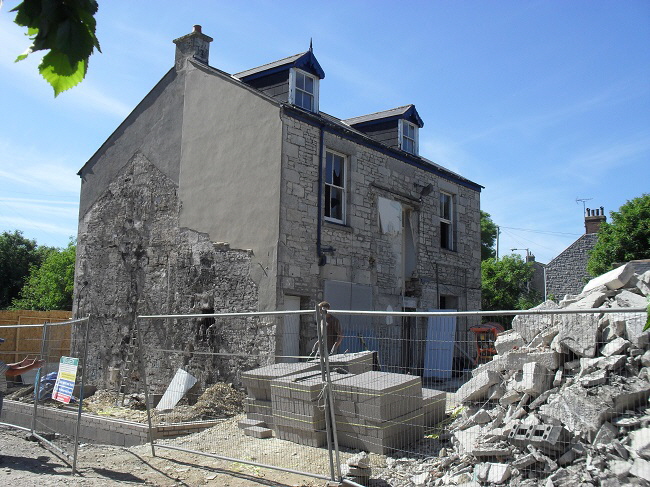
The Mermaid Inn in 2010 being converted into a private house and tea room.
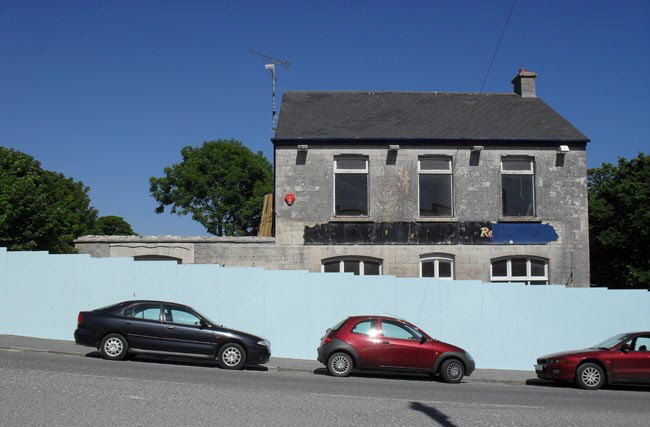
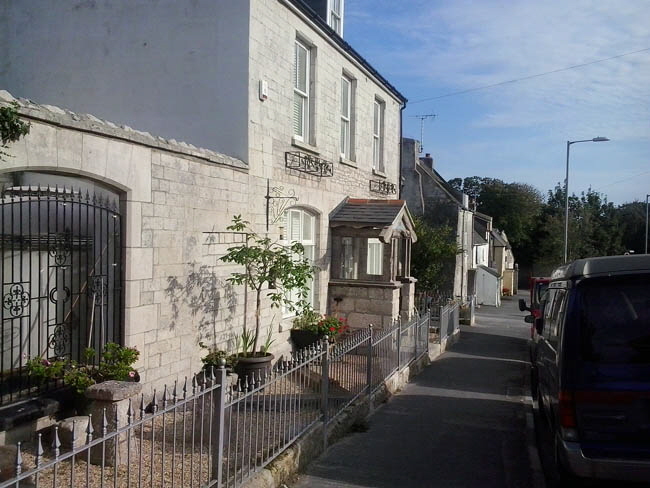
The Mermaid Tea Rooms pictured in 2015.
So what went wrong with the public house? Well it all went badly when the landlord attacked an Environmental Health inspector who had visited in response to customer complaints about the state of the pub’s kitchen.
The landlord threatened and pinned the officer against the refrigerator, an offence for which he was given a suspended prison sentence. Unfortunately for him, he later threatened his girl friend and this activated the prison sentence. This sad story can be read here.
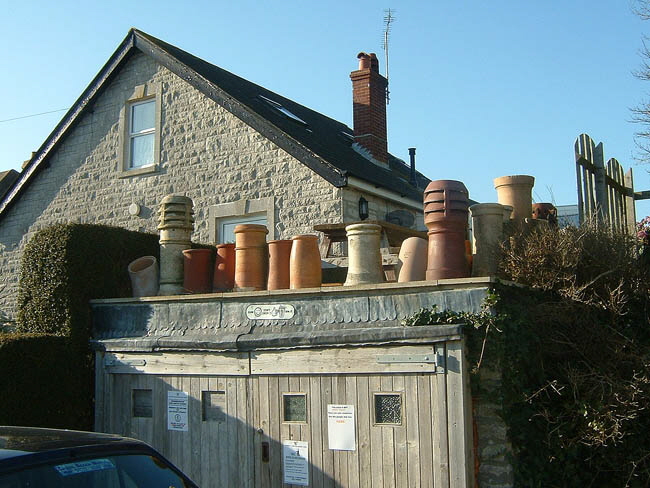
Near to the Mermaid Tea Rooms was a wonderful display of chimney pots. It’s that sort of random discovery that encourages me to continue to explore Portland’s wealth of interesting features.
Return To Top Of Page
PORTLAND MUSEUM [5]

The Portland Museum is the last building on the left. The archway in the centre of this picture taken in 2015 leads to a small estate of old cottages which were owned by John Penn who built the Pennsylvania Castle in the early 1800s. He had the main road past his castle diverted and this enclosed the cottages into his ownership.
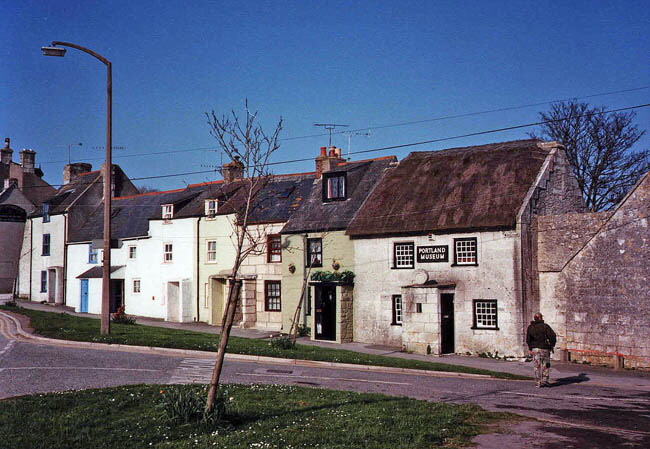
Near the point where the road through Wakeham bends to avoid Pennsylvania Castle lies a row of very old cottages. In the early 1960s these could be bought for under £1,000.
The right-hand pair of cottages form Portland Museum. These were bought and presented to the people of Portland for use as a museum in 1930 by Dr Marie Stopes, a pioneer of birth control in Britain. The end cottage was called Avice's Cottage and is mentioned in Thomas Hardy's novel "The Well-Beloved".
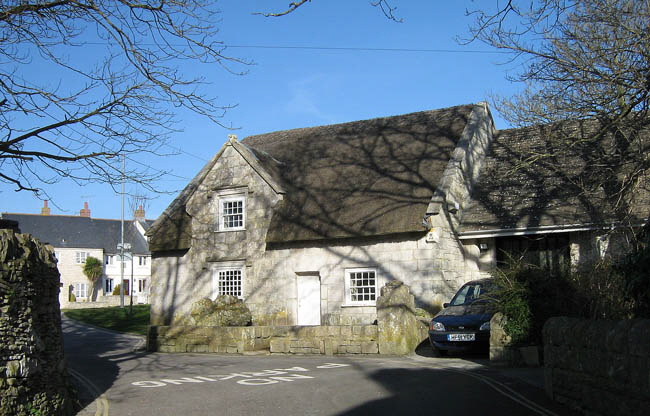
Another view of Portland Museum recorded in 1989. One of the two cottages dates from 1640.
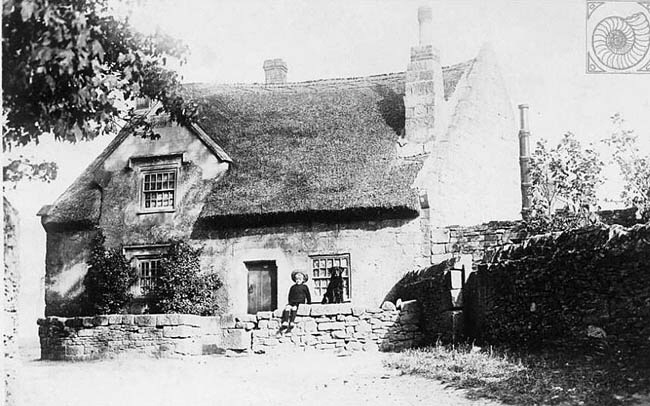
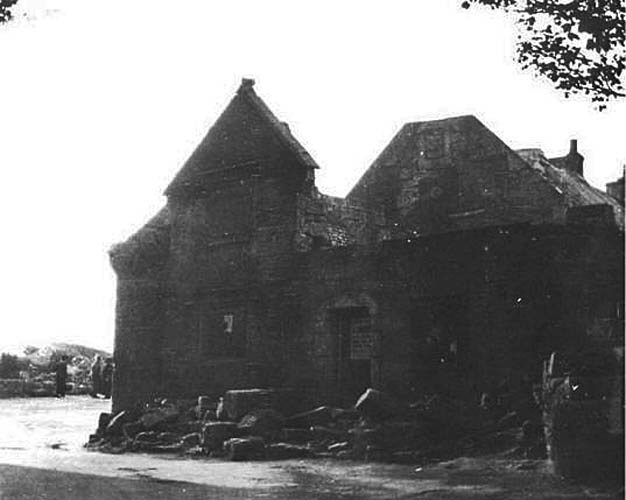
Avice’s cottage in 1924.
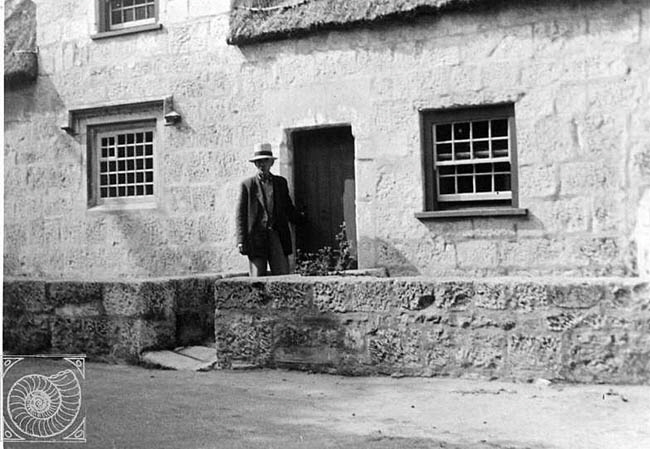
A picture of the museum from 25 July 1935.
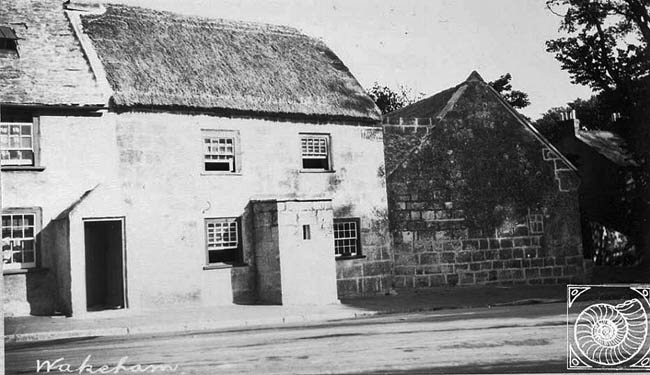
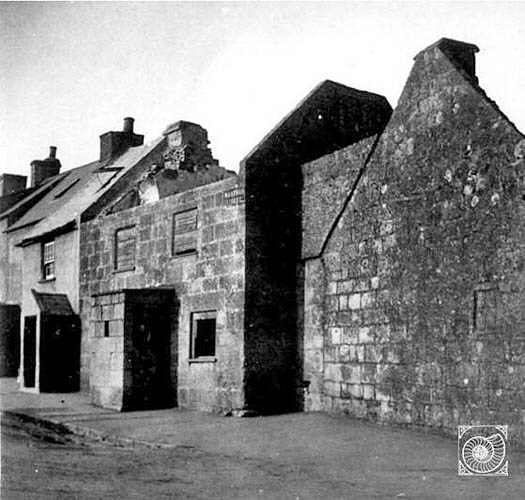
These pictures of Avice’s Cottage are of unknown date.
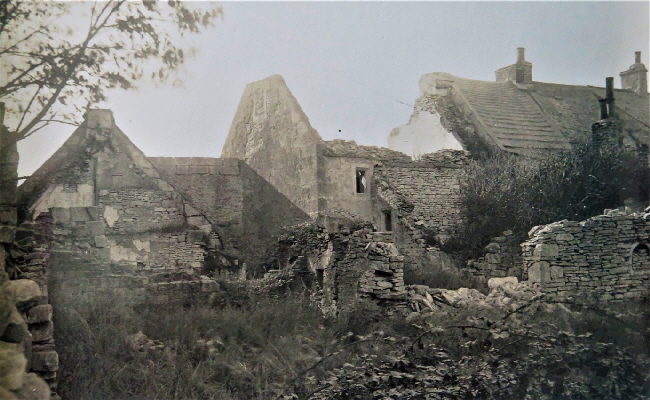
The ruins of the cottages taken from the garden.
The Museum’s website can be visited here.
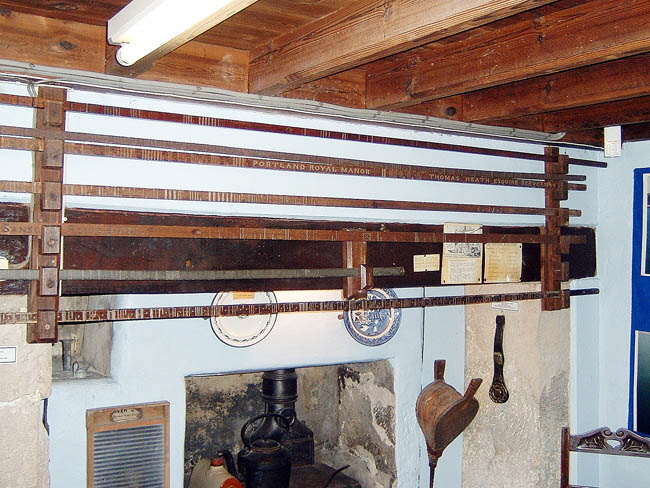
Examples of Reeves' Staffs used to record the accounts of the Court Leet. Each year a staff was carried around Portland and, as rents due to the Court Leet were collected, a mark was made to record the hamlet and the amounts paid. A "whole notch" represents one shilling; a "half-notch" sixpence; a "full scratch" a penny; a "half-scratch" a halfpenny and a " quarter-scratch," a farthing. The staff varies in length from year to year, according to the style of cutting the items of rent and the number of tenants. The old staffs are much valued by their owners and are from about seven feet to nearly twelve feet in length.
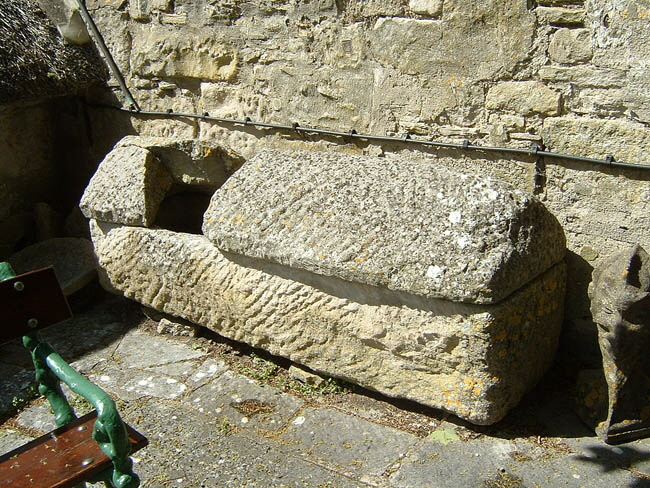
A Roman stone coffin found locally.
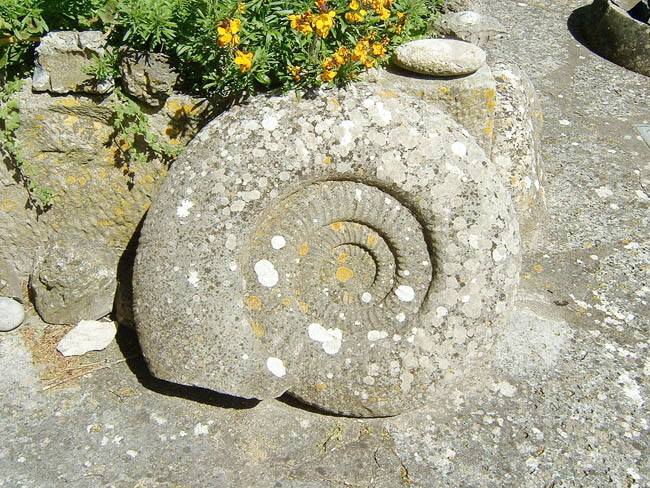
A large ammonite. These have been found in huge quantities on Portland.
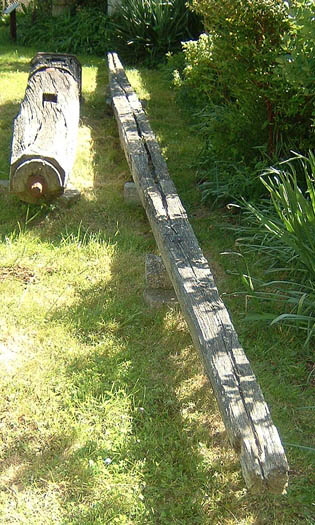
Parts of the sail mechanism of one of the two medieval windmills.
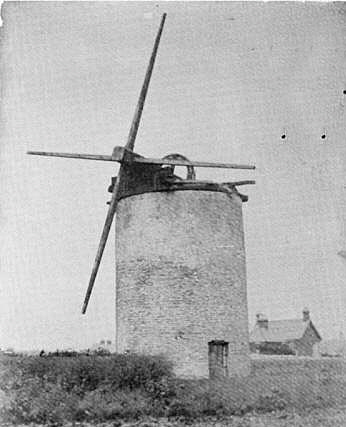
A picture from a century ago showing the northern windmill with some mechanism in place.
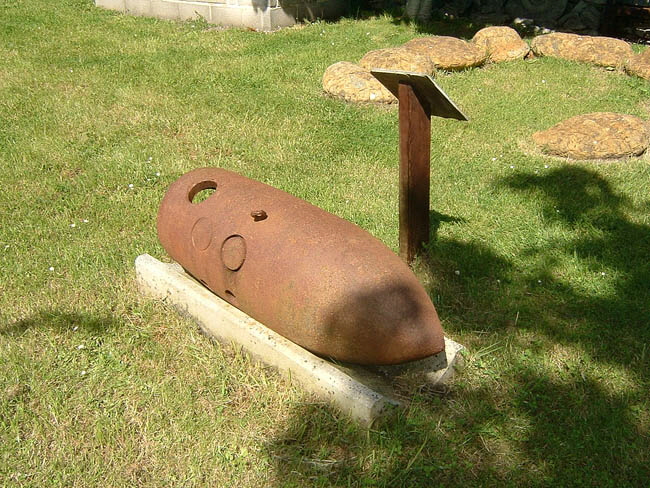
The casing of the 500 kg German bomb discovered under the Portland FC pitch in 1995. A BBC News item about the discovery and removal of this bomb can be viewed here. It was estimated that 4000 people would have to be relocated and that, in addition to this, a further 4000 people, living to the south of the exclusion zone, would be marooned there because no road traffic was allowed to travel to or from the island during the course of the disarming. An article describing the discovery, disarming and social impact of this bomb can be read here.
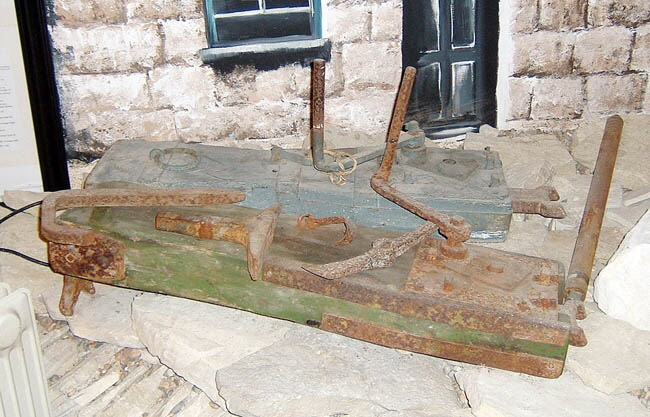
Old tools of the quarrying industry. This is a ‘Portland Screw Jack’ which was used to move large stone blocks.
Return To Top Of Page
LONDON CENOTAPH QUARRY [6]
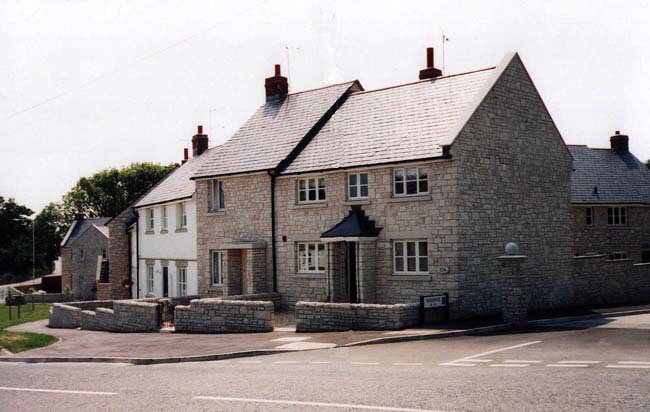
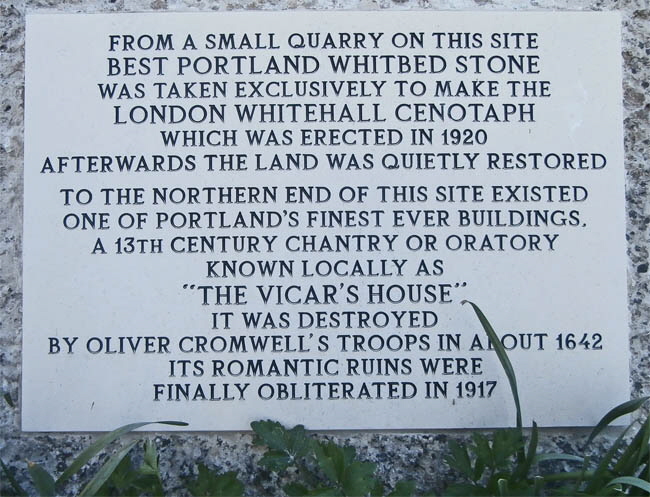
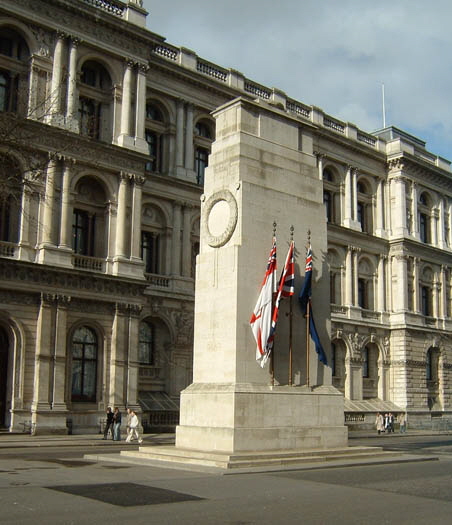
At this point opposite Portland Museum once stood a small disused quarry where some allotments had been created - a quiet place deliberately left unspoiled by building works. This is where the stone was taken to produce the thousands of gravestones for the War Graves Commission as well as the stone for the War Memorial in London's Whitehall.
Return To Top Of Page
AN ABANDONED CRANE [7]
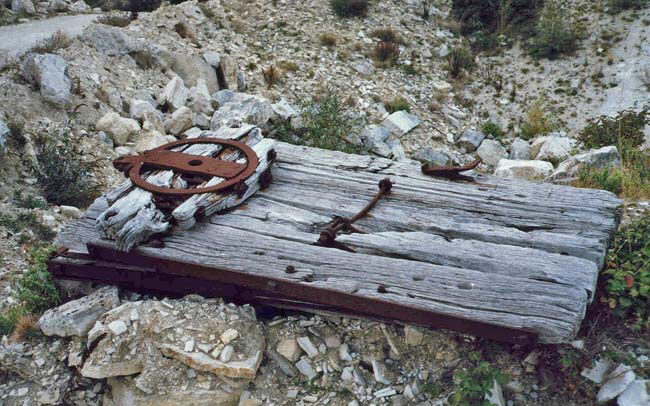
The remains of a smashed and rotting hand-operated quarry crane. This one lies in ruins near Rufus Castle above the old railway line. So much of Portland's history has just been allowed to rot away. The above picture was taken in 1990.
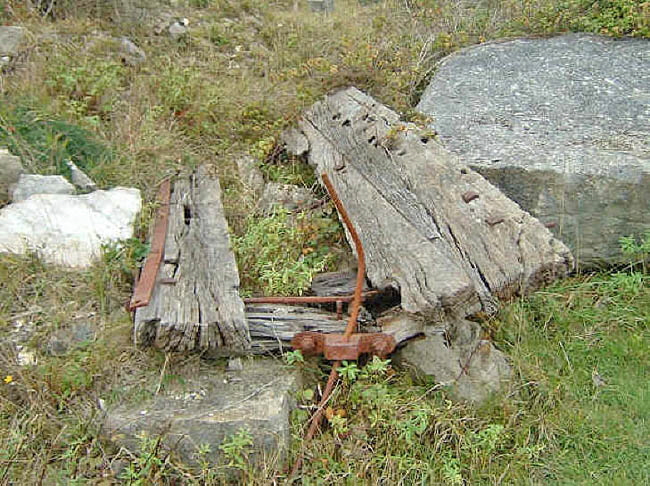
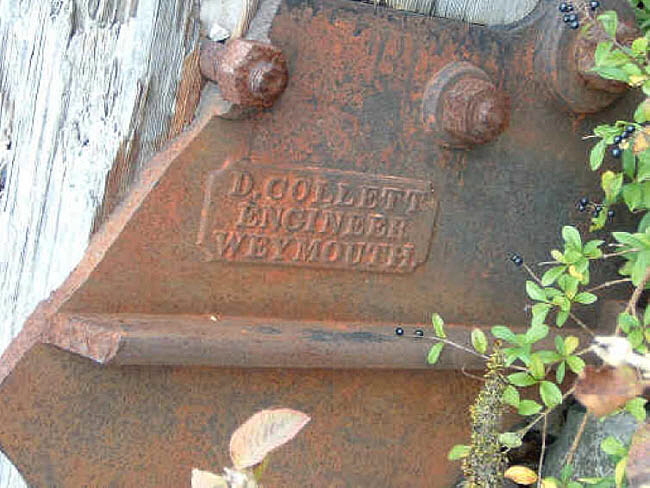
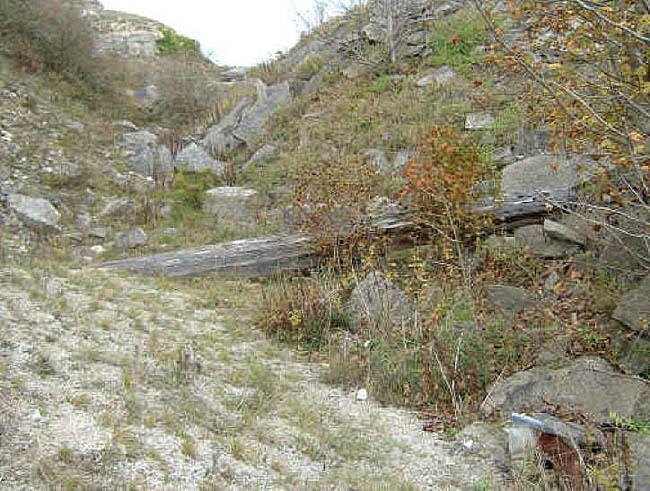
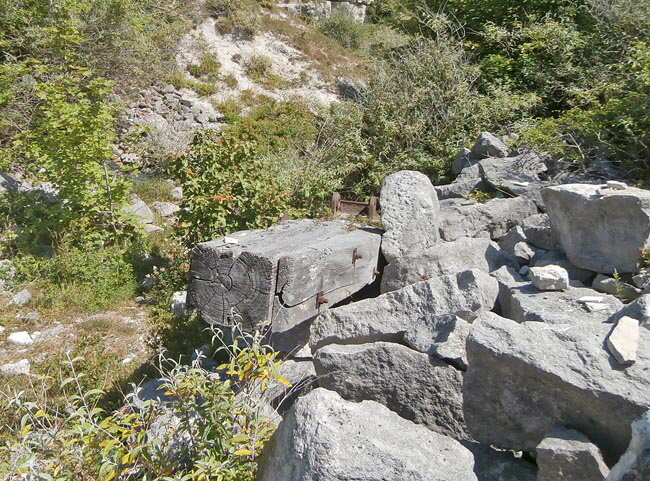
The above pictures were taken in 2015. Little of the crane now remains.
Return To Top Of Page
RUFUS CASTLE [8]
The book “Portland - An Illustrated History” by Stuart Morris and Ashley Smith’s excellent and comprehensive history website - please click here - should be read to learn about this very old and romantic ruin.
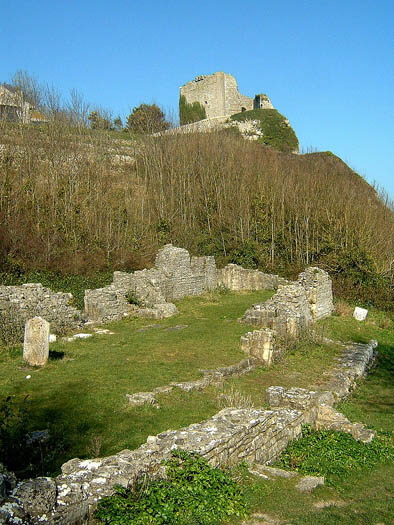
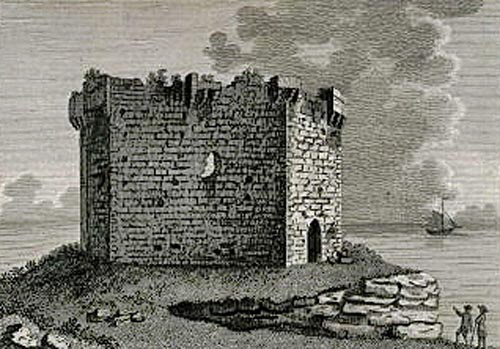
High above Church Ope Cove and the ruins of St Andrew’s Church are the decaying remains of Rufus - or Bow and Arrow - Castle. The Castle dates from the late 15th century on the site of an earlier building with origins dating from 1142.
Much of the original castle has been lost over the years and only ‘The Keep’ survives in a ruinous state as shown in the above old engraving.
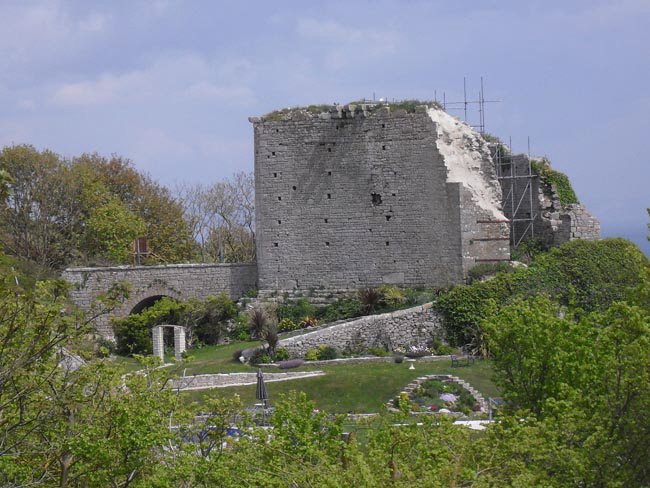
Rufus Castle stands on private property in a garden above Church Ope Cove.
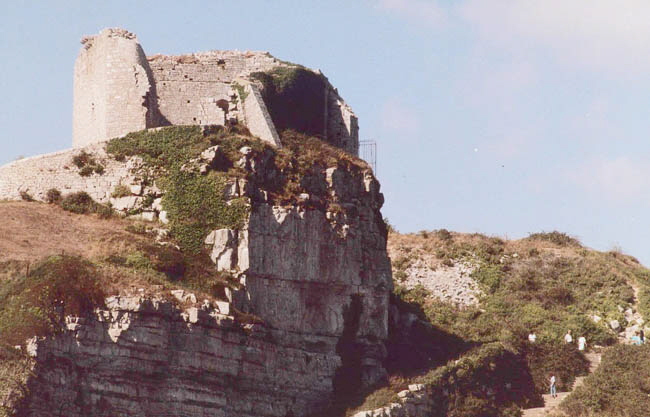
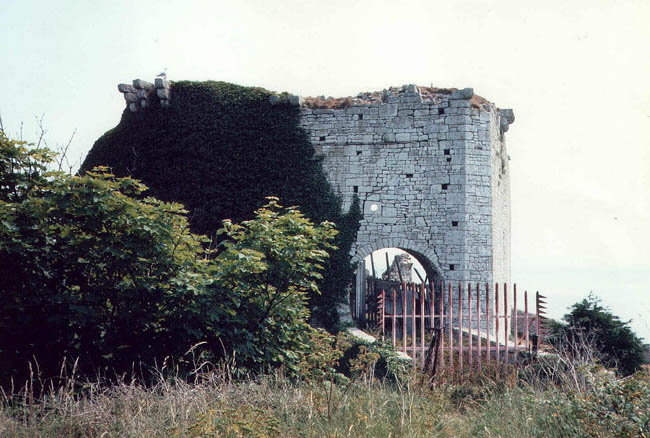
The entrance is through a much overgrown small nature reserve and is barricaded off for safety reasons. This area around Rufus Castle is a designated Site of Special Scientific Interest (SSSI).
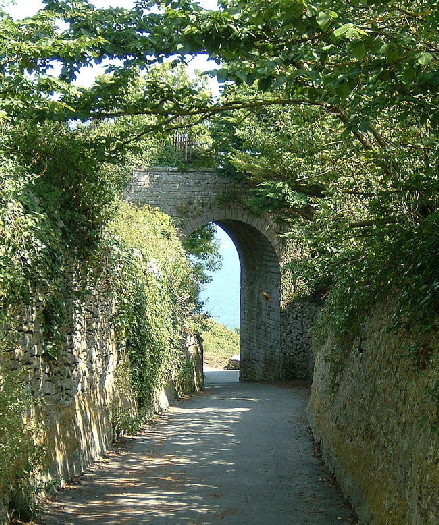
This relatively modern archway takes the visitor down from Portland Museum to a view point overlooking Church Ope Cove.
Return To Top Of Page
CHURCH OPE COVE [9]
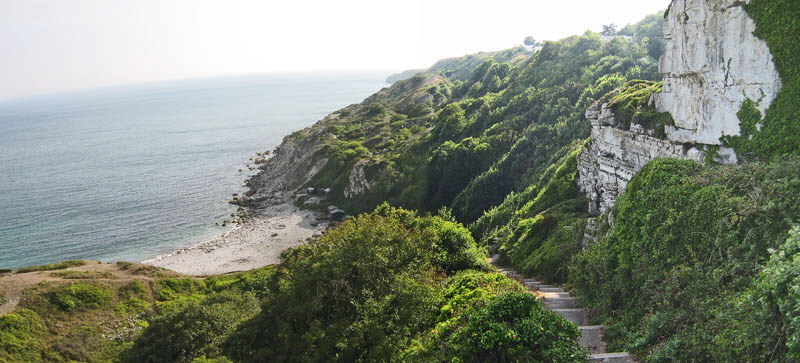
A long flight of stone steps takes visitors down to Church Ope Cove passing the eastern ramparts of Rufus Castle on the right. From time to time these steps have had to be closed because of the danger from falling masonry.
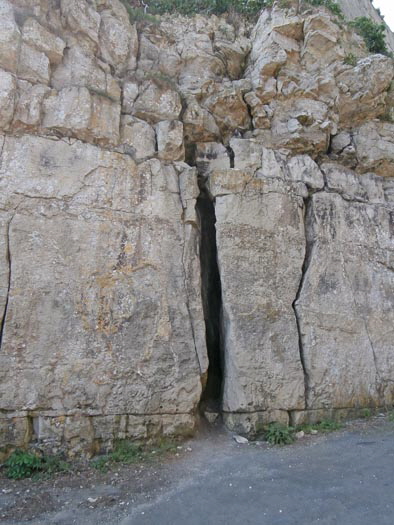
This fissure at the view point is a favourite hiding spot for small children - but make sure they do not get stuck!
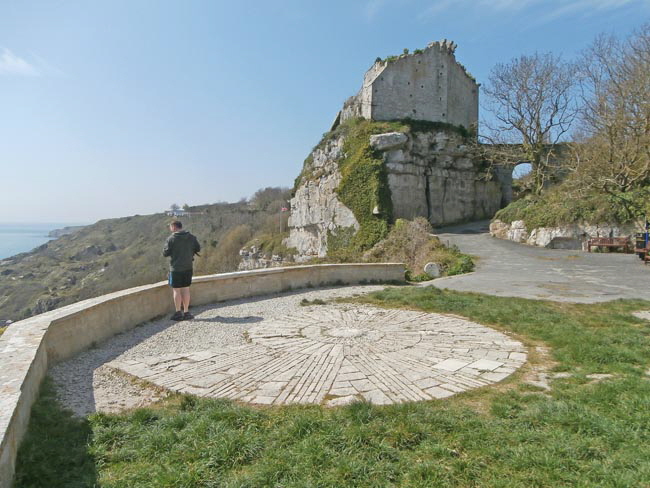
An attractive viewing area in the shape of an Ammonite.
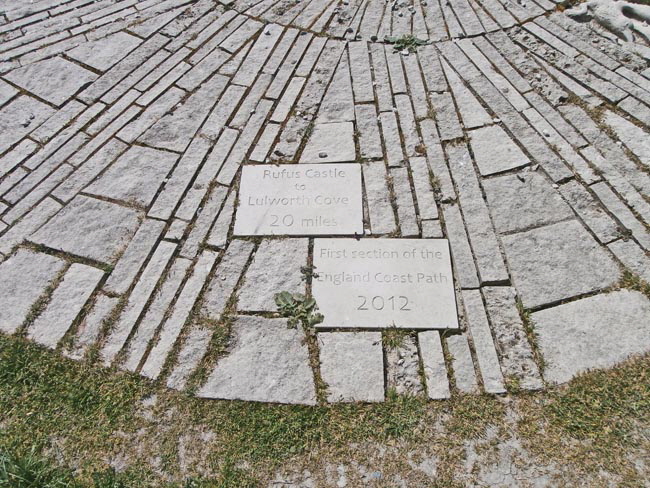
This celebrates the England Coast Path.
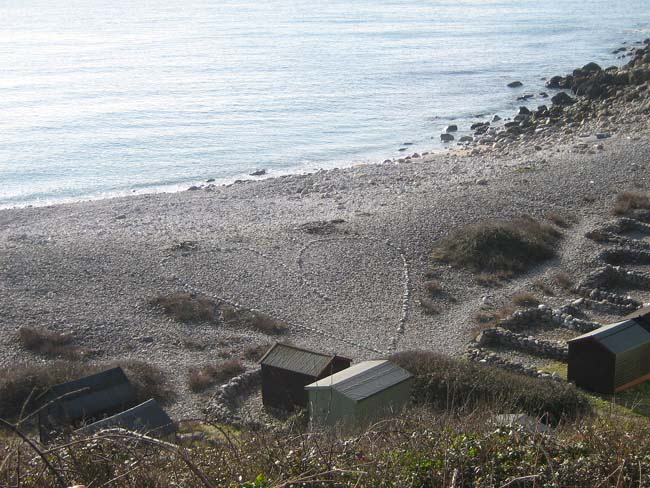
Someone had romantic intentions when visiting Church Ope Cove in 2009!
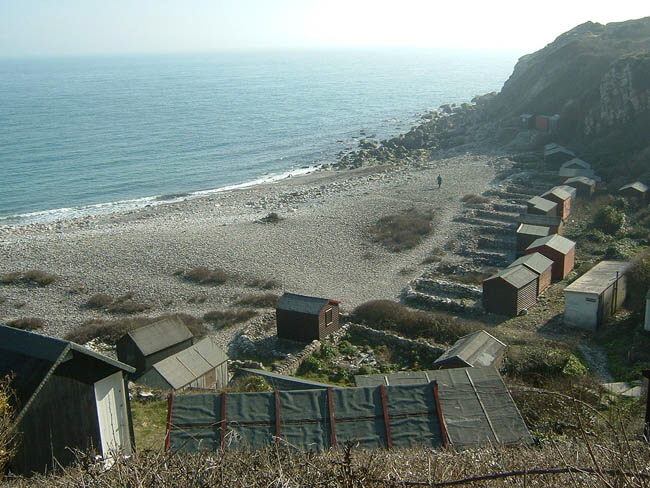
This earlier view from the 1990s shows the beach huts and stony beach.
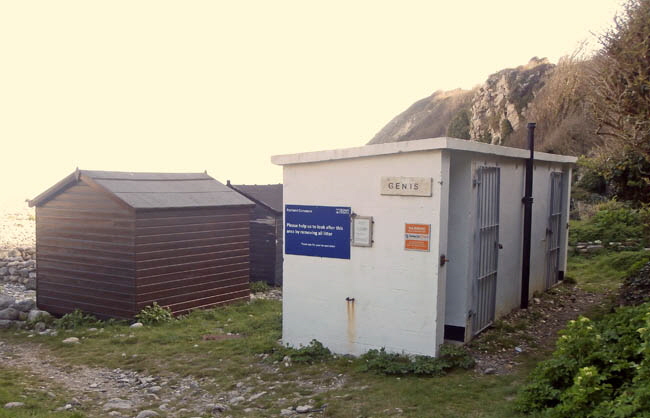
These essential toilets have been the subject of much wrangling between locals and Weymouth and Portland Borough Council who wanted to shut this facility down. These toilets are now privately managed.
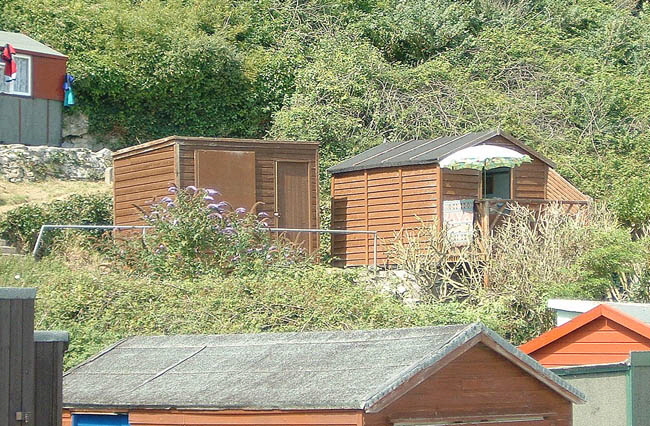
Beach huts at Church Ope Cove change hands for large sums of money.
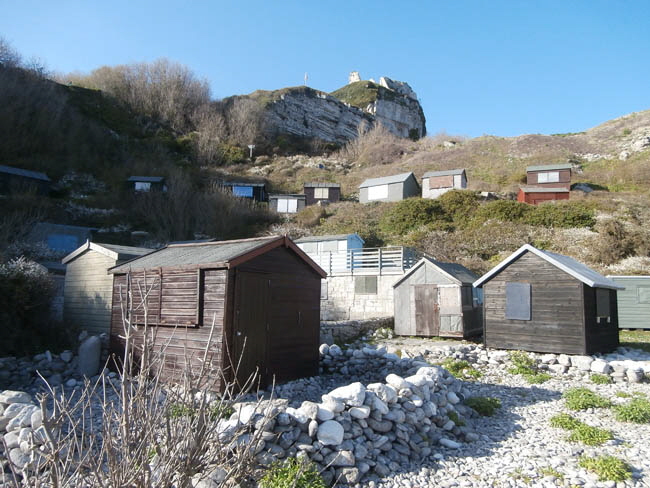
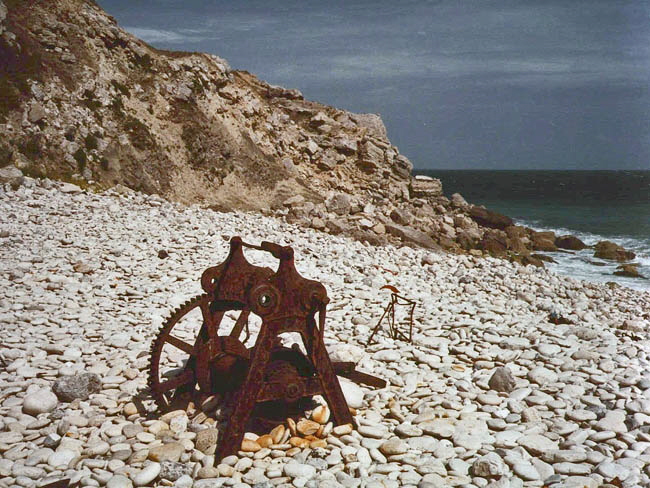
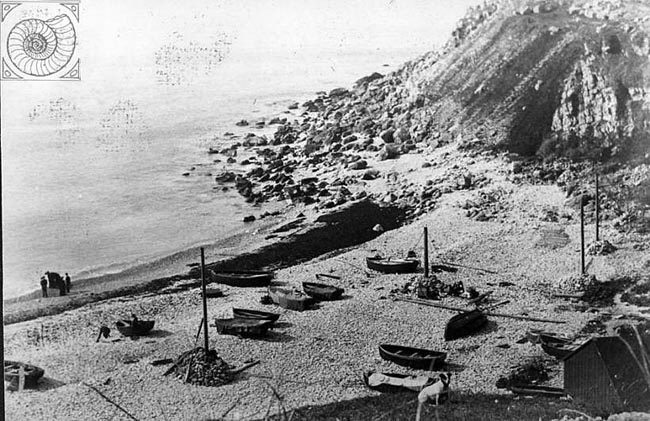
This rusting winch pictured in 1990 is a reminder of the days when Church Ope Cove was a thriving fishing location
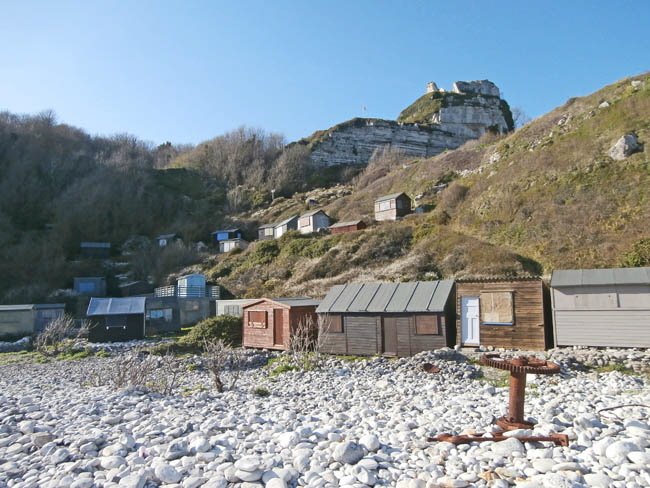
The remains of the winch is 2015.
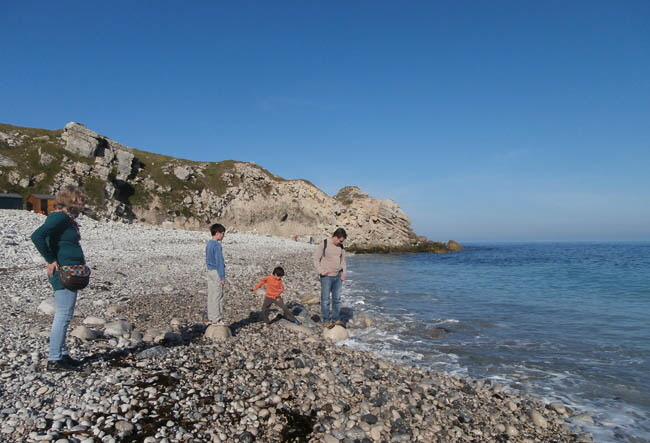
Some of my family enjoying the solitude, sea and sunshine of the cove.
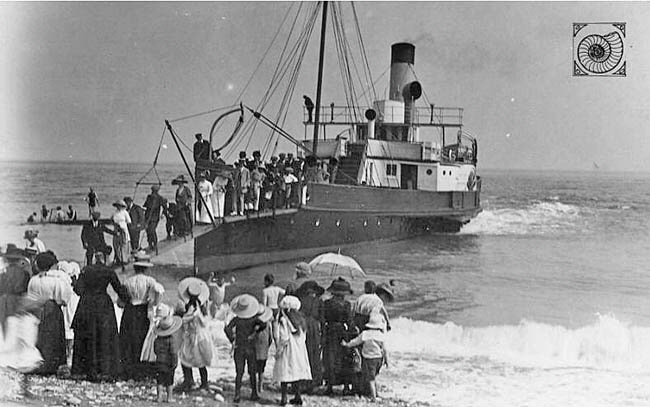
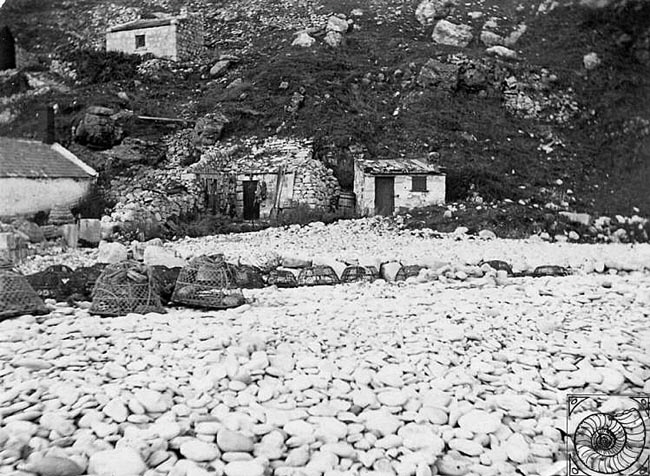
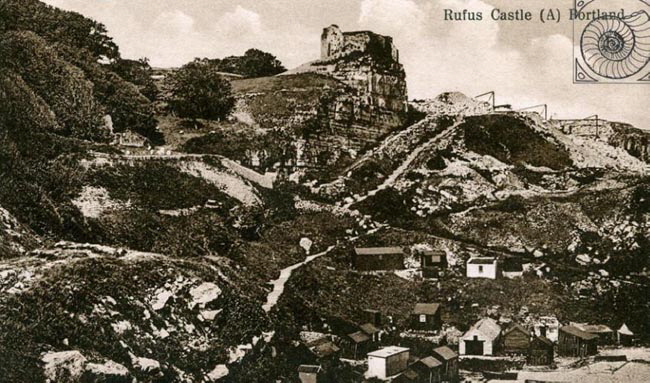
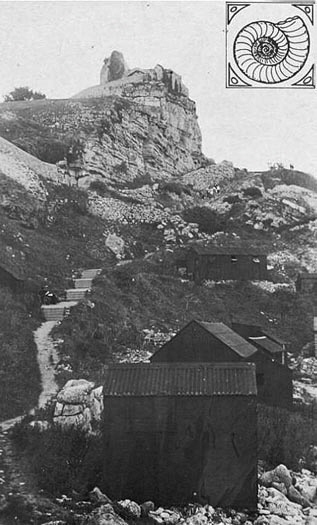
The old pictures below show Church Ope Cove in busier days.
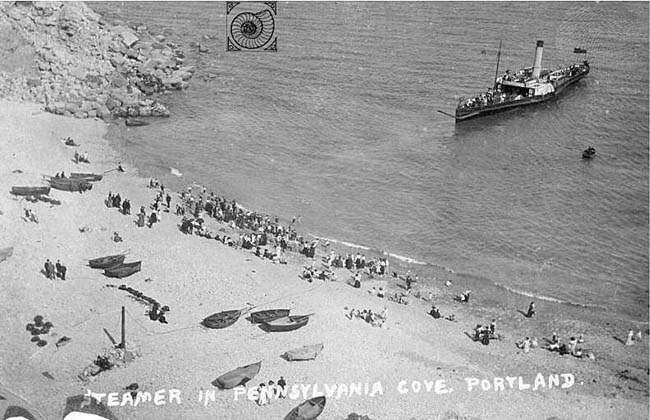
Regular excursions were run to take people to the cove by sea.
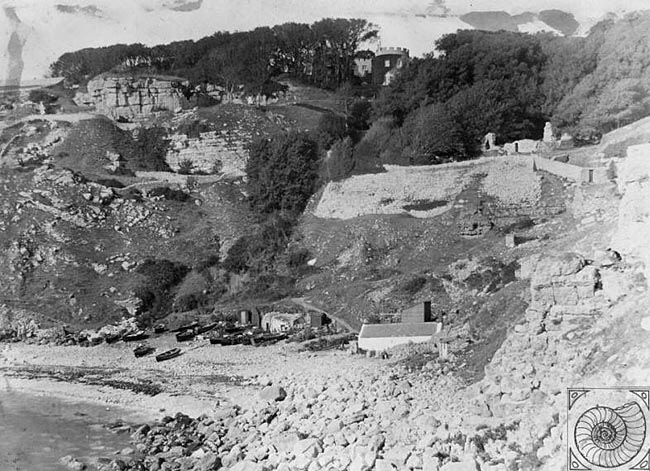
Pennsylvania Castle stands on the top of the cliffs with the ruined St Andrew’s Church clinging to the side of the hill. In the cove the long white building was a lifeboat station. There was also a cafe in the cove.
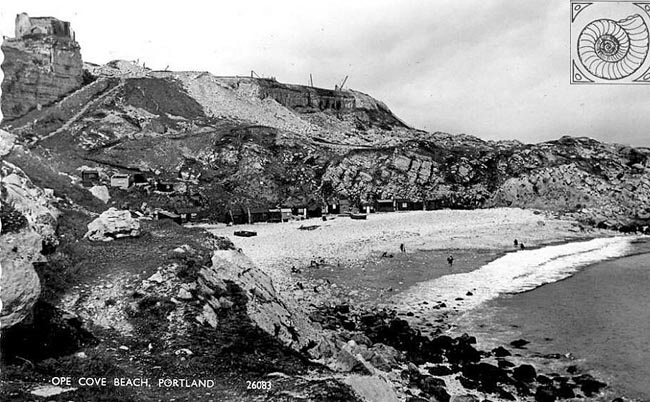
Note the quarry cranes working in the area called Shepherds Dinner on the skyline. In between the World Wars the cove was a favourite swimming location for Portland children. However, barriers were set up to divide the beach into boys and a girls halves.
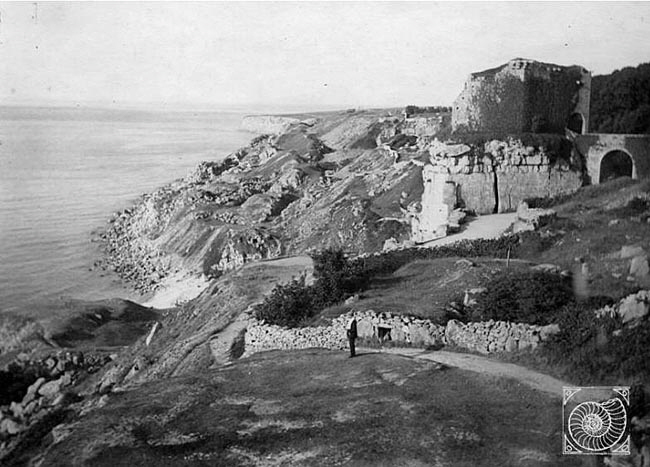
Rufus Castle and the viewpoint over Church Ope Cove in 1903.
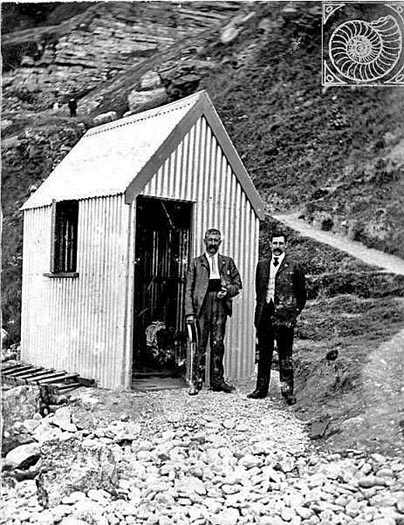
The hut belonging to George Ernest Fulleylove in 1900.
Return To Top Of Page
St ANDREW’S CHURCH [10]
The book “Portland - An Illustrated History” by Stuart Morris and Ashley Smith’s excellent and comprehensive history website (please click here) should be read to learn about this very old and romantic ruin. The church was originally of Saxon origin and it was destroyed by an earthquake in around the year 1,000. It was further ravaged in 1340 when French raiders landed at Church Ope Cove and torched the church and again in 1404. Each time the church was rebuilt until abandoned in the 1700s.
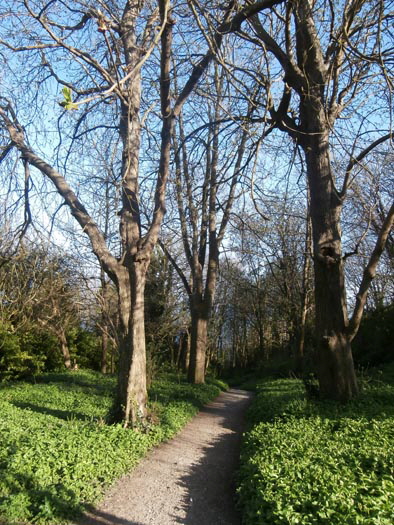
This attractive wooded path adjacent to Pennsylvania Castle takes visitors directly down to the church.
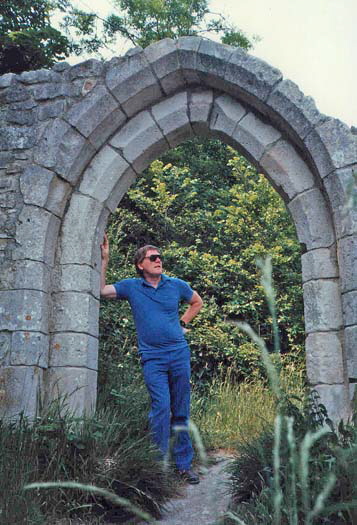
At the foot of the descending wooded path the visitor suddenly comes across this ancient arch. In this 1989 picture I pose for a ‘selfie’ wearing my padded comedy false stomach - if only
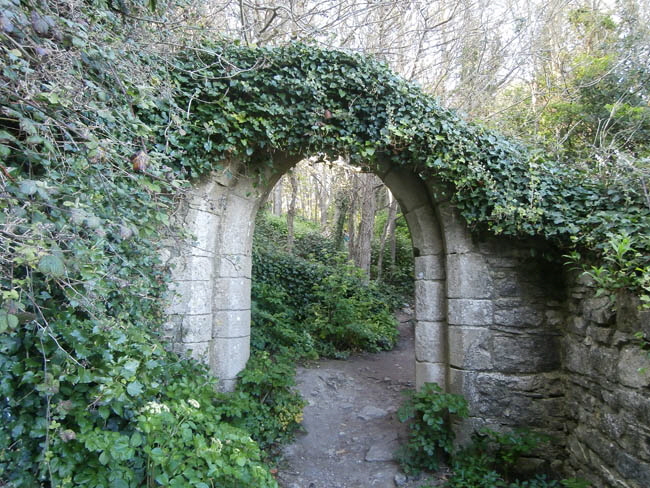
I have stopped posing and the ivy has spread in the intervening 25 years between the above two pictures.
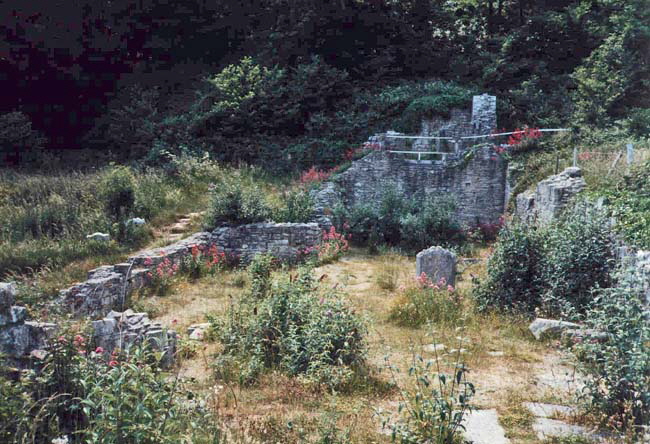
The church in 1990 in a much neglected state just before being cleared by Borstal Boys in 1992
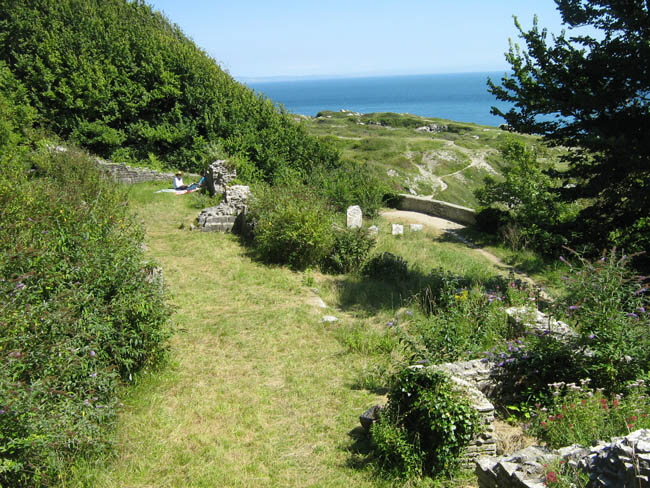
In a better state of maintenance in 2007.
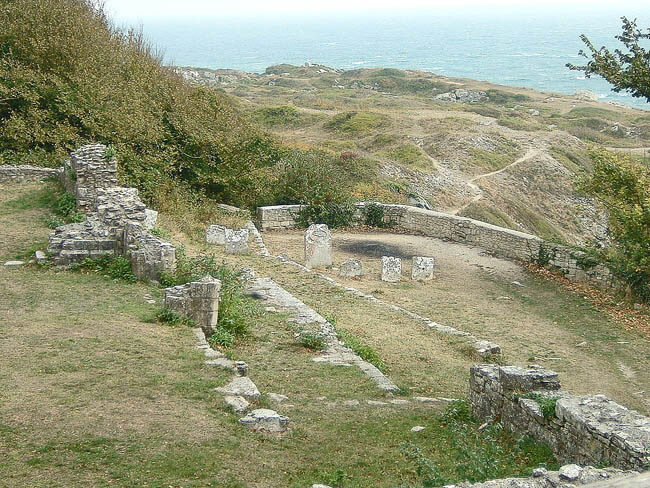
In the Autumn of 2003 there was great consternation because a bonfire had been lit in the graveyard as part of a party. The scorch mark can be seen in this picture. It could have been a lot worse - the fire was lit as far from the wall and gravestones as feasible - but it is still inappropriate to do this in a graveyard.
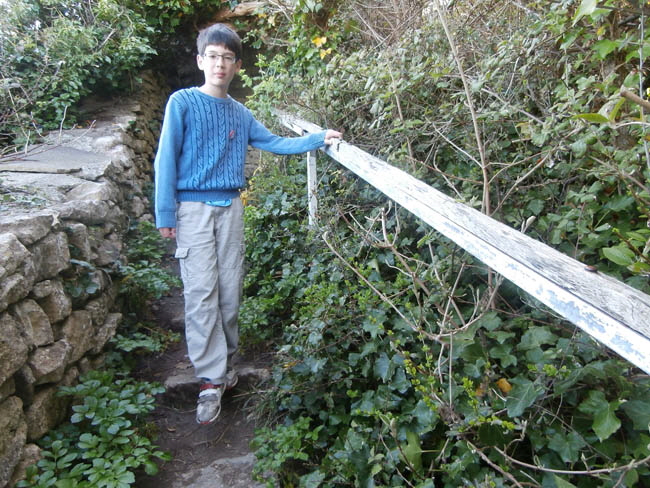
In 1992 I was made redundant from my work and spent the next six months working as a volunteer for the British Trust for Conservation Volunteers. One of the many tasks I helped with was creating this handrail on the path between the church and the Church Ope Cove flight of steps. As seen in this 2015 picture my eldest grandson is showing that my handrail is still in useful condition!
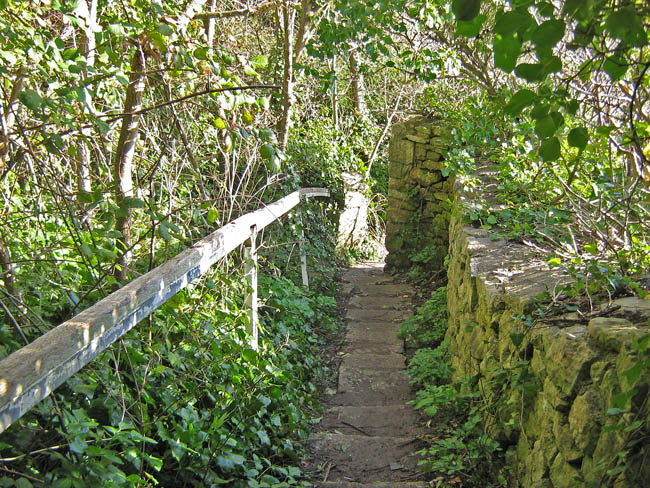
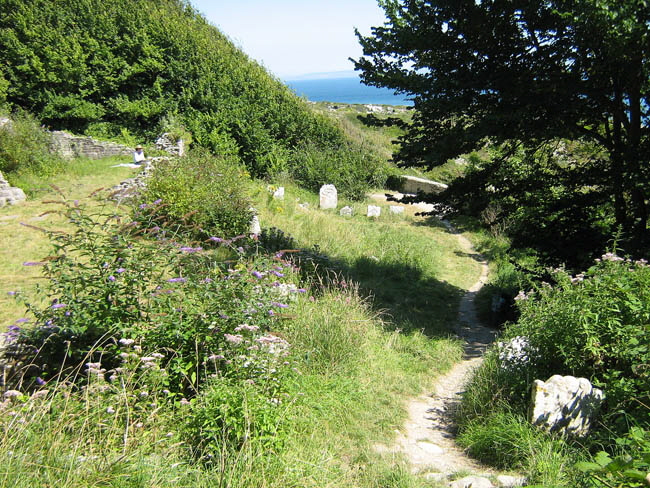
By 2015 the church was getting overgrown again - it needs regular care and attention.
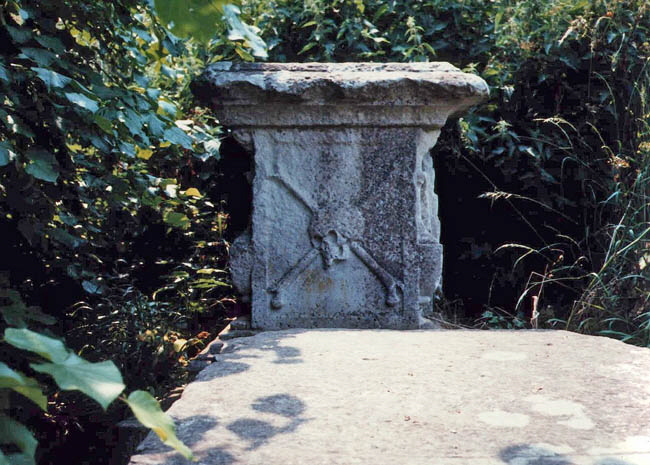
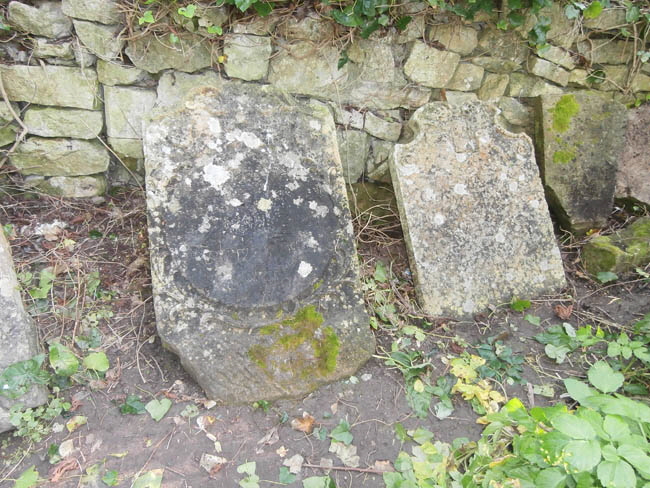
There are many fascinating gravestones in St Andrew's ruined church yard. Now that it has been 'tidied up' these are more visible. This tomb has the skull and crossbones emblem. This has nothing to do with pirates as is mistakenly but frequently written in local guides. The skull and crossbones symbol was once common on tombstones representing Death. The people buried here were respectable citizens of Portland.
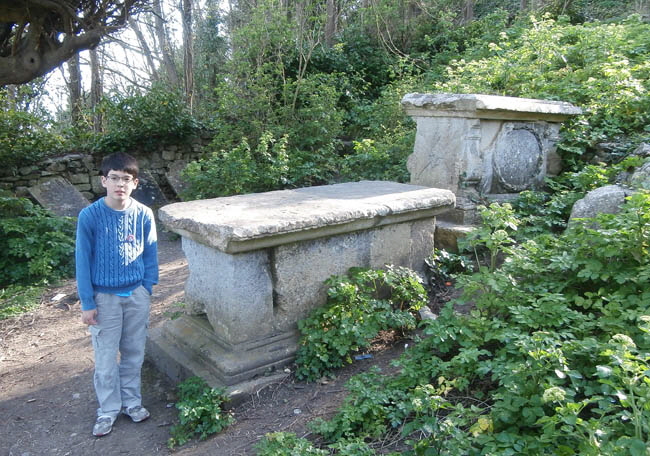
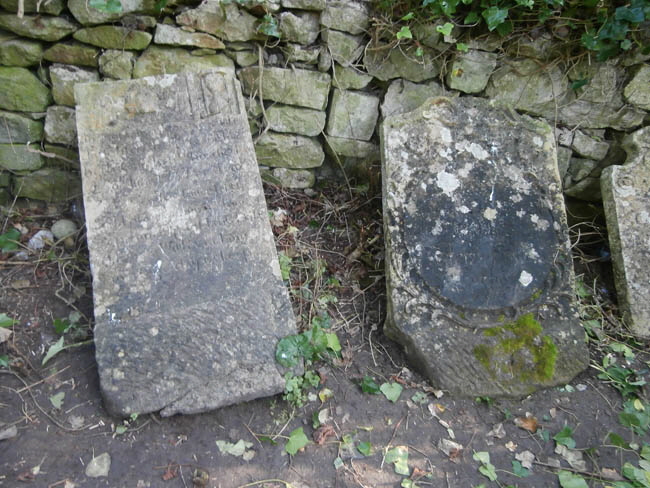
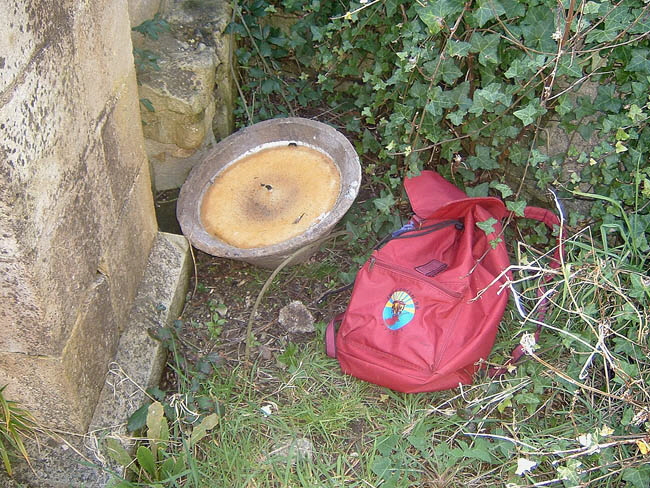
In March 2003 I discovered this massive candle hidden behind a wall in St Andrew's Church. I placed my backpack near it to show the scale. It consists of a large wooden vessel filled with wax and having a thick length of rope as a wick. What strange practices could this be associated with? I put this picture on this website in 2003 asking if anyone knew the purpose of this candle. On April 8th I had another look but - the candle was gone!
I received an e-mail from a visitor to this page who sent the following information:
"That candle you discovered behind a wall at St Andrews, well I myself also discovered the candle about two years ago and after a bit of research (mainly talking to old locals) it appears that the candle has been in use in one form or another for the last twenty years by a local witches coven during their black art ceremonies."
Later I was told by Sarah Curtis who owned the nearby Pennsylvania Castle at that time that this huge candle was a garden decorative candle which had been stolen some weeks earlier. A much more believable but less dramatic story!
Return To Top Of Page
PENN’S STONE BATH [11]
King George III made sea bathing popular around the end of the 18th century and John Penn, the builder and owner of Pennsylvania Castle, decided that he would join in this healthy pursuit. However, he was not so keen that he wanted to climb all the way down from his Castle to Church Ope Cove. So he had a huge carved stone bath built halfway between the Pennsylvania Castle and the sea. His servants were to struggle up the cliff with buckets of sea water to fill it.
When I first found the stone bath in 1989 it was already much overgrown and it has retreated a lot more into the brambles since then.
John Penn was very unpopular with Portland's governing Court Leet. So, the Leet members watched and waited as the bath was built. When finished they announced that Penn had built his wonderful bath on Common Land and that he would have to pay to use it - an exorbitant 2 shillings and 6 pence per year! Outraged, Penn abandoned his bath - much to the relief of his servants!
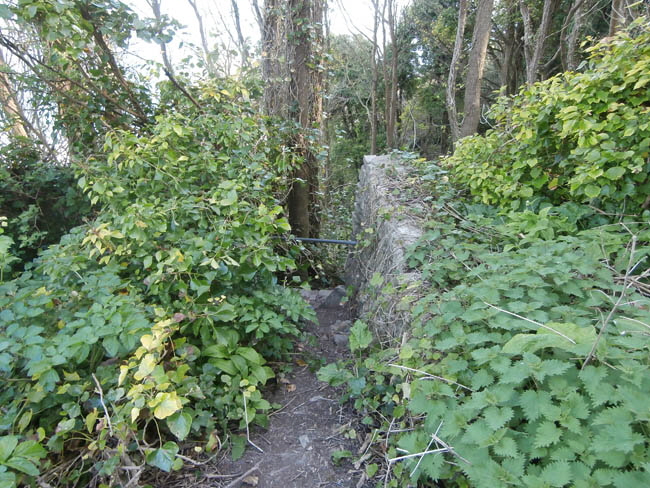
To visit the bath park your car in the public car-park opposite Portland Museum and walk down to St Andrew’s Church on the footpath that follows the northern boundary of Pennsylvania Castle.
Go to the corner of St. Andrew’s Church graveyard which is to your right as you stand looking out to sea. In the corner of the graveyard is a gap in the wall protected with a steel bar as shown above. It may be that this gap is obscured with brambles so you may need to cut your way through with secateurs.
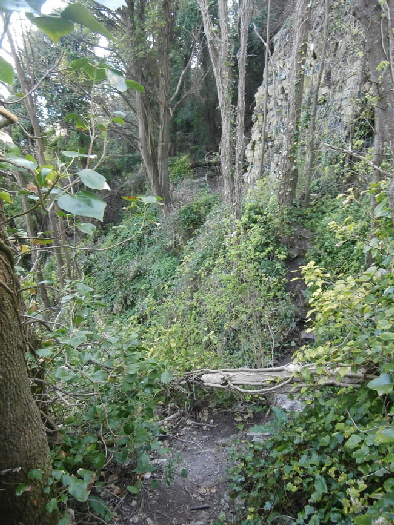
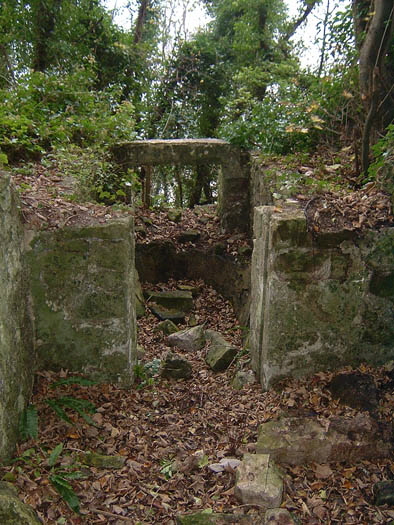
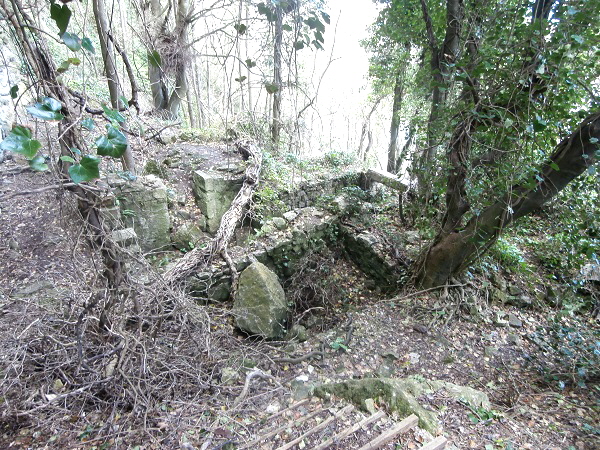
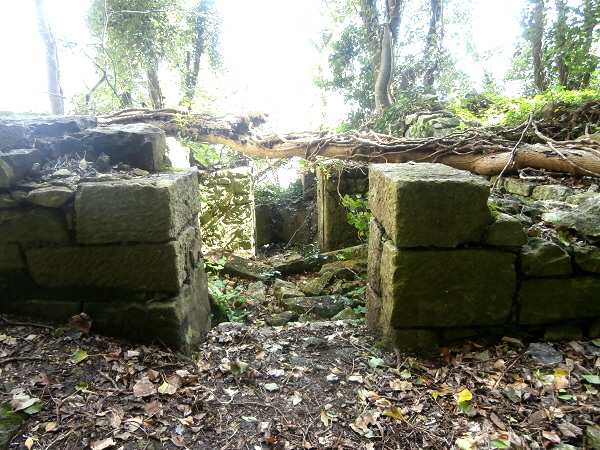
You must then follow a slippery sloping path on the edge of a precipitous cliff. If you slip to the left you will tumble a long way into brambles and trees - so do not attempt this adventure unless the ground is dry and you have a good head for heights. You will eventually see the stone walls of the derelict bath house buildings. It is a truly spooky experience to come across this magical place.
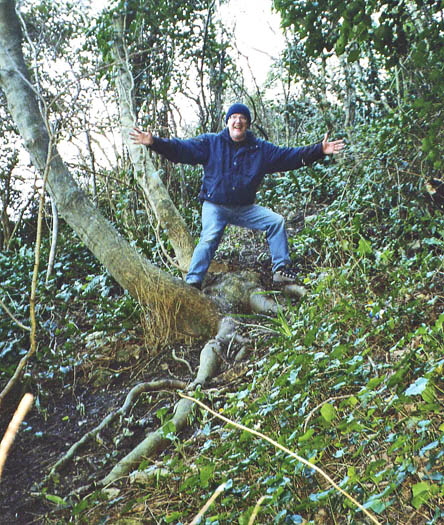
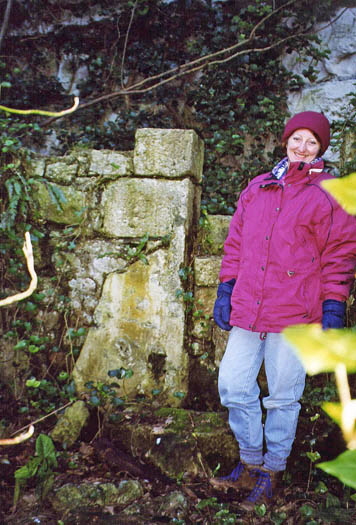
I made it!
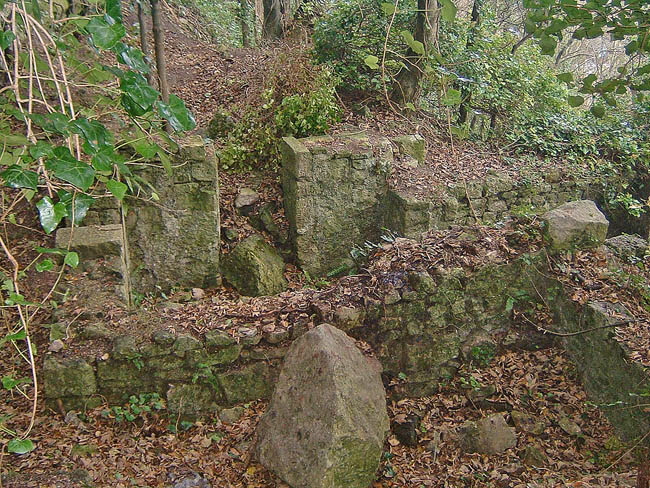
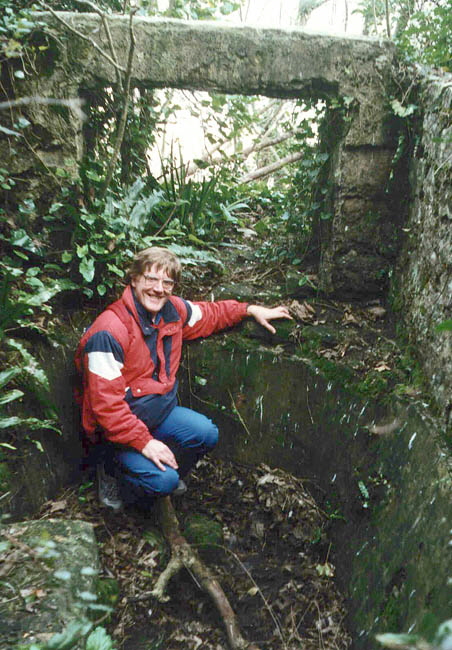
This picture shows my first visit to the stone bath in 1989.
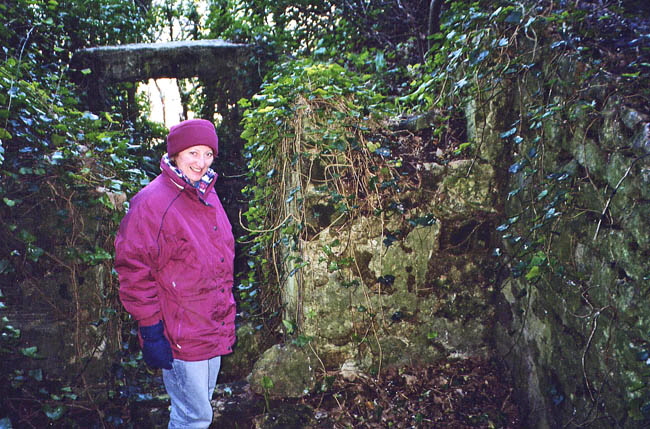
A picture of my best friend Sandy in the bath - John Penn’s stone bath, that is!
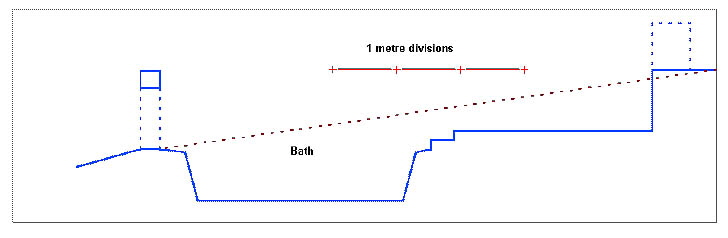
The plans above and below were drawn up by me after a day surveying.
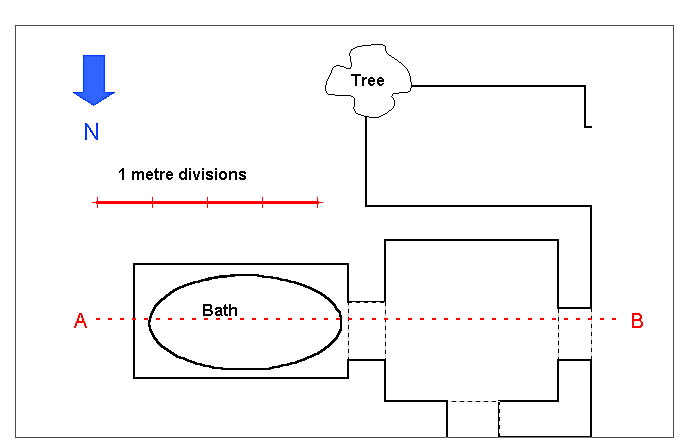
The bath and associated buildings cover an area of 8.3 m x 5.3 m (27 ft x 17 ft). There were two rooms other than the one containing the bath. Their purpose is not known. The room to the east of the bath has a substantial drop of about one metre (3 ft) from the surrounding ground level and there is another drop into the bath.
Penn’s Bath is on common land and can be freely visited at any time - but preferably in daylight! The owners of Pennsylvania Castle built some steps down to the bath from their garden. These steps lead only to private property.
The following pictures of the bath were taken by me in March 2016. These show the deterioration in the structure and the trees that have fallen over the bath.
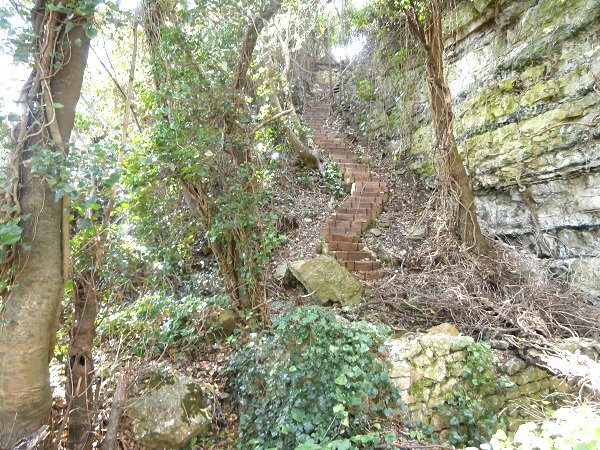
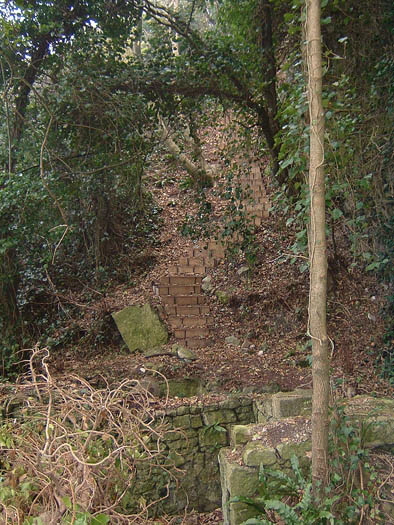
The steps leading to the Pennsylvania Castle’s garden.
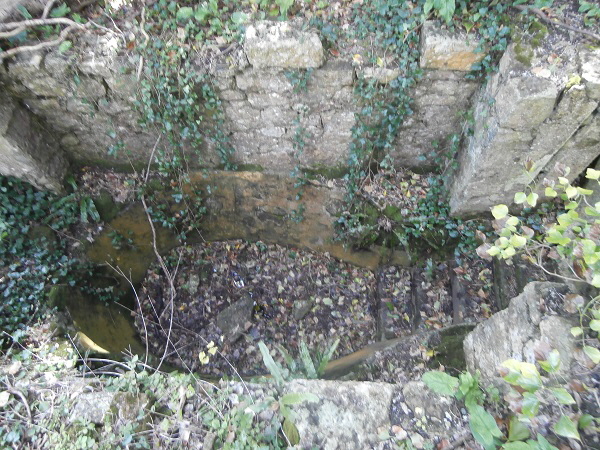
Looking down into the bath.
Return To Top Of Page
OLD RESERVOIR [12]
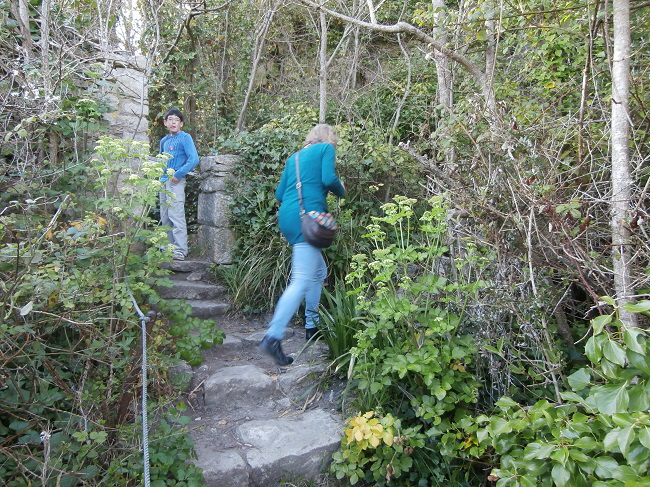
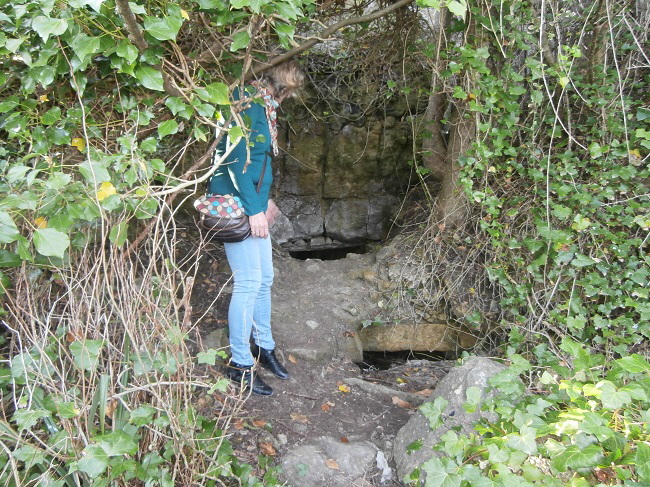
To find the old water reservoir go to the point where the flight of step leading down to Church Ope Cove splits with one flight of steps going up to the viewpoint and the other going up to the old St Andrew’s Church where one of my grandsons is standing. At this point the reservoir is hidden on an overgrown track where my partner is heading.
Here Sandra stands at the entrance to the old reservoir which is the furthest hole. This cannot be entered - at least I could not get in! However, by holding a camera into the hole and using a flash the pictures below have been captured.
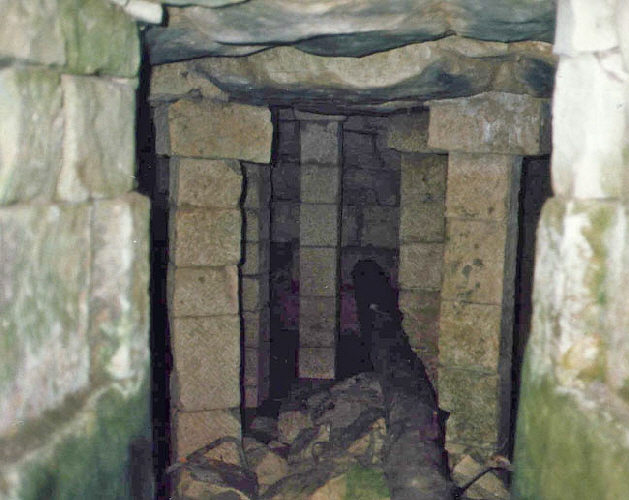
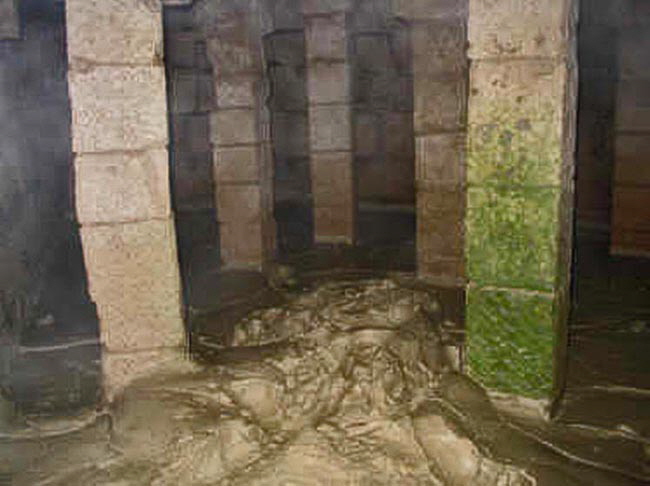
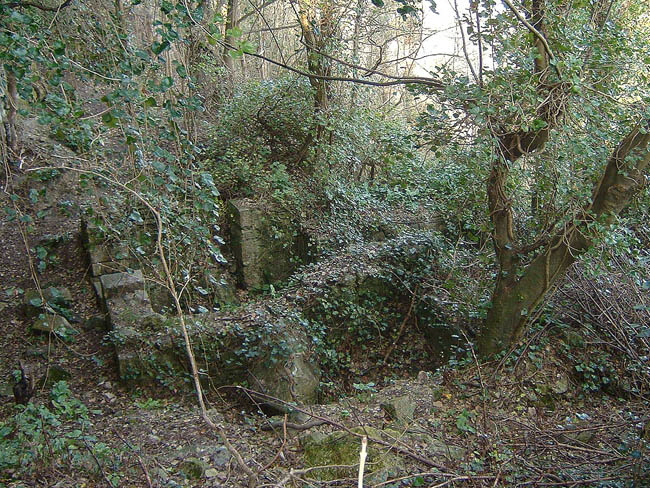
The purpose and age of this cistern is not known. There are stories on Portland that it might have been built by the Romans. However, it is more likely that it was built to service the cafe that used to stand in Church Ope Cove about a century ago.
Return To Top Of Page
PENNSYLVANIA CASTLE [13]
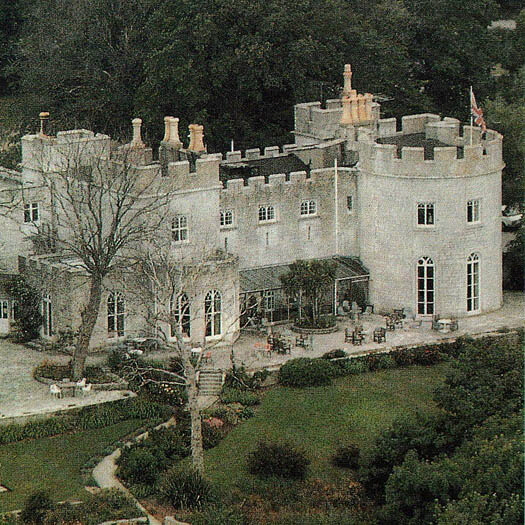
There is an excellent history and description of Pennsylvania Castle here. The castle was built between 1797 and 1800 by John Penn who was the grandson of William Penn the founder of the US state of Pennsylvania. In 1800 King George III and his queen celebrated their wedding anniversary at the castle. During World War II, Winston Churchill, General Eisenhower and General de Gaulle visited the castle, where they met to finalise their plans for the liberation of Europe (D-Day).
In 1950 the private residence was turned into a successful hotel, known as "The Pennsylvania Castle Hotel", which continued to operate until the 1990s. It included a popular restaurant and lunches in the orangery, with its superb views across Weymouth Bay, were especially sought after by local businesses and the nearby Ministry of Defence (AUWE) staff for entertaining visitors.
During the end of its life as a hotel, the business had been run by Paul and Indu Fransham. They commissioned a new brochure to be printed and I was invited to appear in this as a model guest.
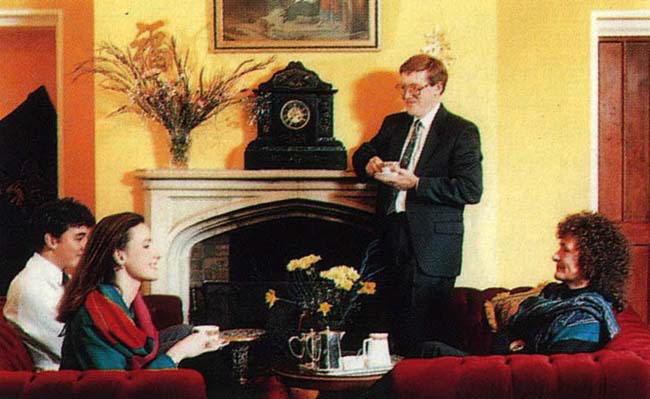
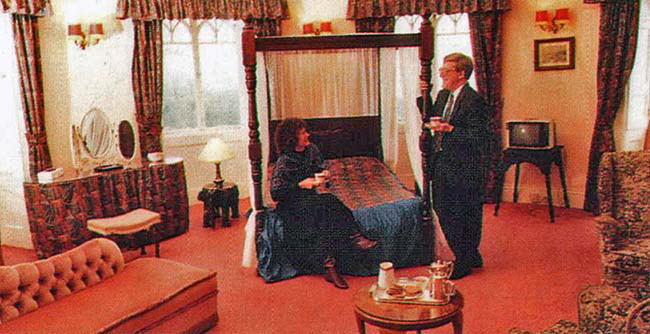
However, soon after the brochure had been produced the owners decided to sell the Pennsylvania Castle as it was becoming expensive to maintain and there were a lot of hotel and restaurant businesses springing up in competition with the enterprise. The new owner, local ‘New Look’ businessman John Hanna, turned the hotel back into a private residence by 1994. John Hanna sold the building to Stephen Curtis a solicitor with business interests in Russia, who was killed in a helicopter crash in 2004 - read the story of the tragedy here. The castle was then sold by his widow Sarah to a buyer from Australia.
After the brief spell as a private home, the castle was made available as a holiday home, also catering for weddings, private and corporate functions and other events.
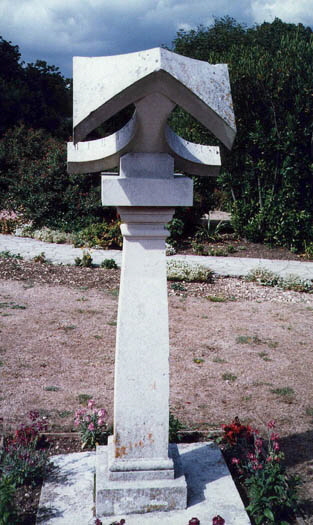
The Pennsylvania Castle has extensive gardens which include waterfalls and exotic plants. This sundial has an unusual design. Sarah Curtis opened up the gardens for charity events and the following pictures show such an event in 2010.
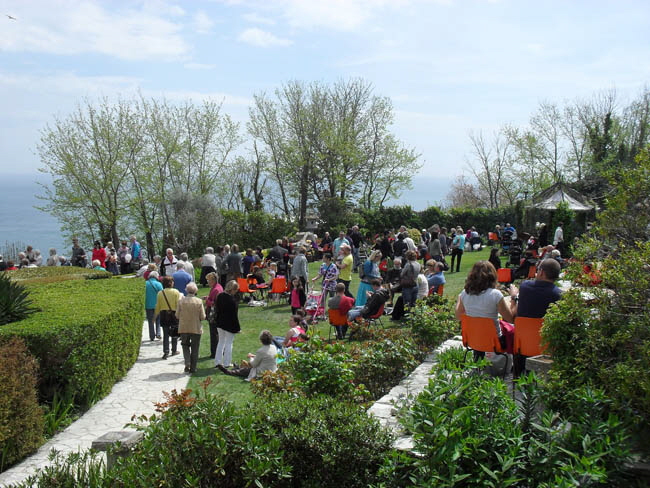
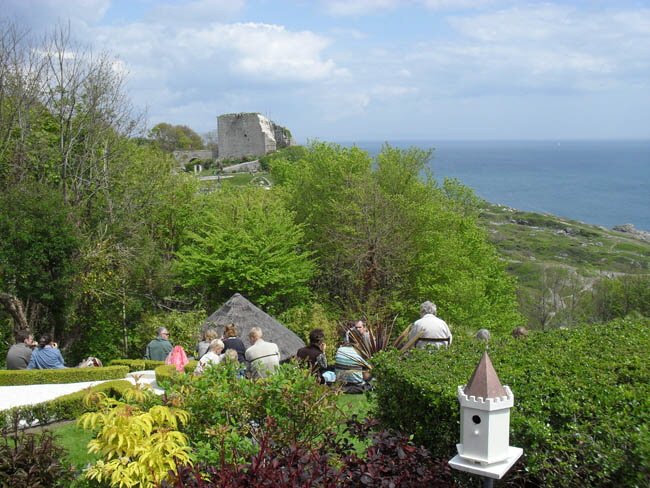
Return To Top Of Page
PENN’S WEARE [14]
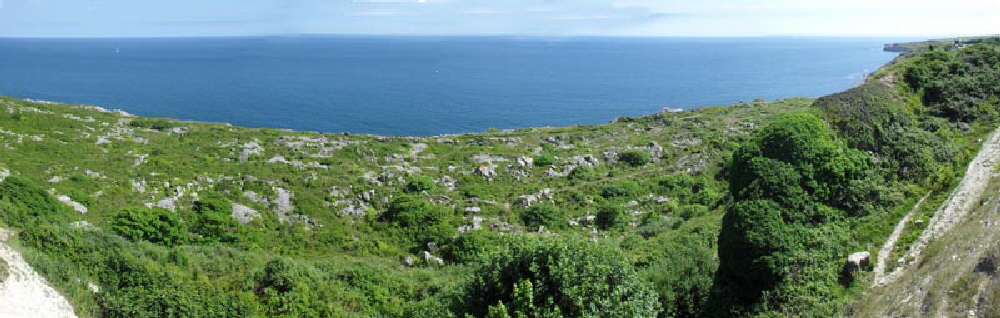
Penn’s Weare is a huge area of quarried coastal strip which has been worked since Sir Christopher Wren took stone from here to rebuild St Paul’s Cathedral in the 17th century.
The above panorama is a composite of five pictures taken from the abandoned railway line and extends from Durdle Pier in the north around to Church Ope Cove in the south.
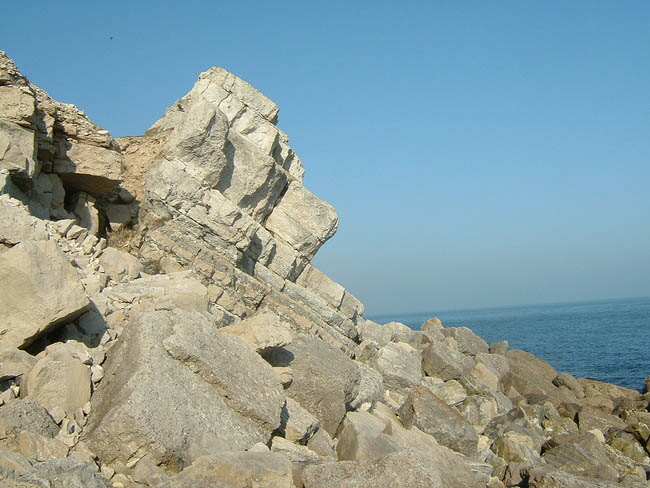
The crazy tilting of huge blocks of stone in the area north of Church Ope Cove demonstrates the huge consequences of undermining and displacing large areas of the coastal landscape.
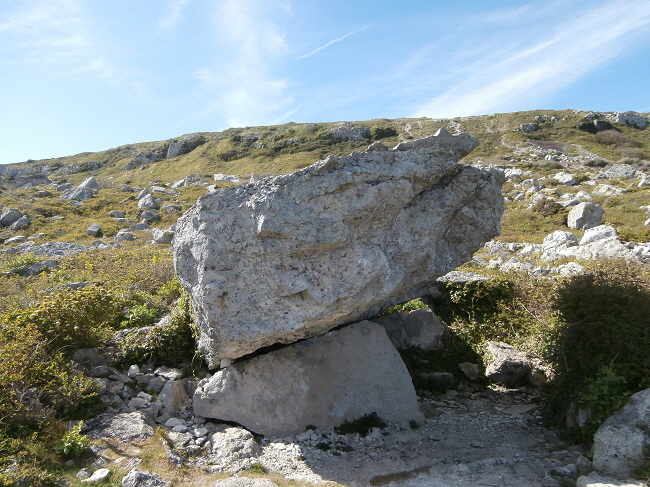
It looks almost as though playful quarrymen in centuries long gone piled up some huge blocks of stone just to show the power of their equipment.
Return To Top Of Page
ABANDONED RAILWAY TRACK [15]
As the railway hugged the cliffs along East Weares it slowly climbed up from the Castletown and the old Royal Navy Dockyard towards its destination at Easton. On part of this route there were huge problems with frequent landslips on the unstable scree slopes created by centuries of quarrying.
The next two pictures show the railway disrupted by landslips. Indeed, the cost of maintaining this part of the track was a major reason why the Castletown to Easton section of track was a financial liability.
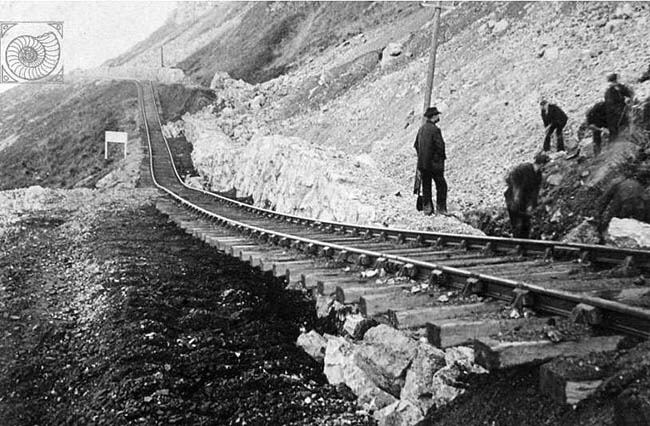
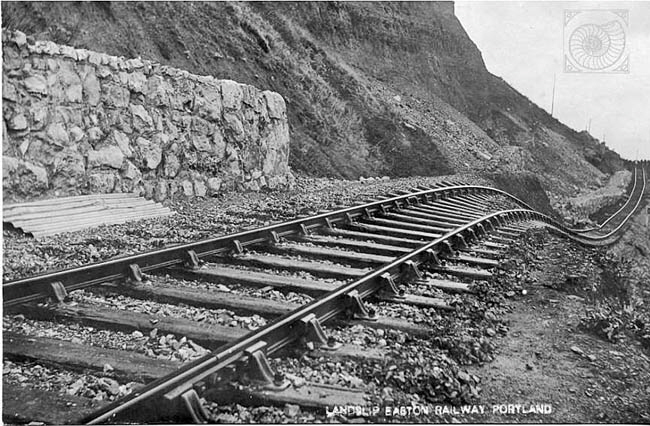
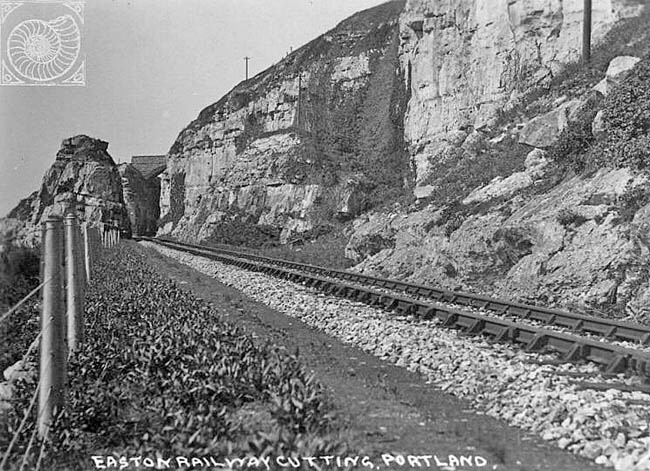
The tracks headed towards Easton through a deep cutting over which Yeolands Bridge carried a much used public path. This bridge can just be see in the distance in the above picture.
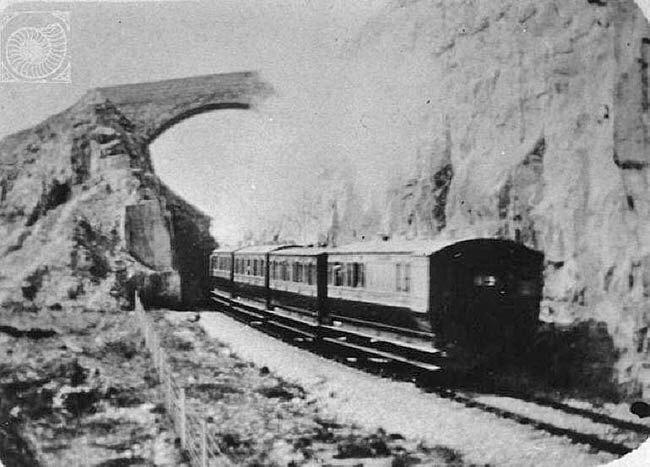
This picture from early in the twentieth century shows a train passing under Yeolands Bridge.
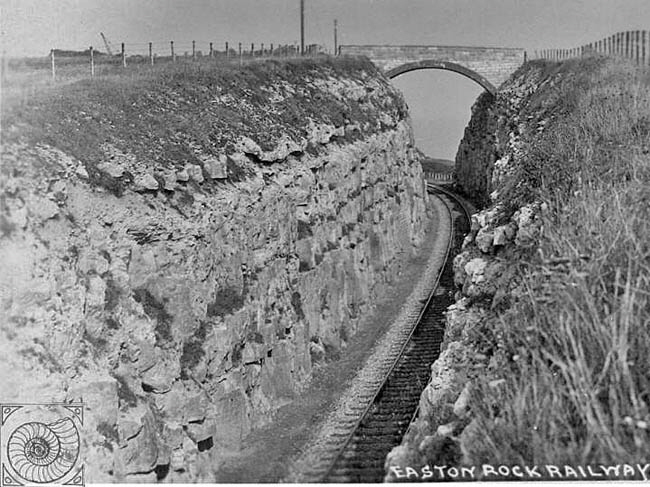
Regrettably, the local stone company who owned the land around the railway track demolished this fine bridge. This was typical of the crass behaviour of some of the Portland stone companies who ignored the laws and needs of the public. As a result of public outrage the bridge was replaced by the jib of a crane with planking fixed on the framework to enable people to get across this ravine. Eventually the ravine was partially filled in as shown below and the ugly crane jib was removed.
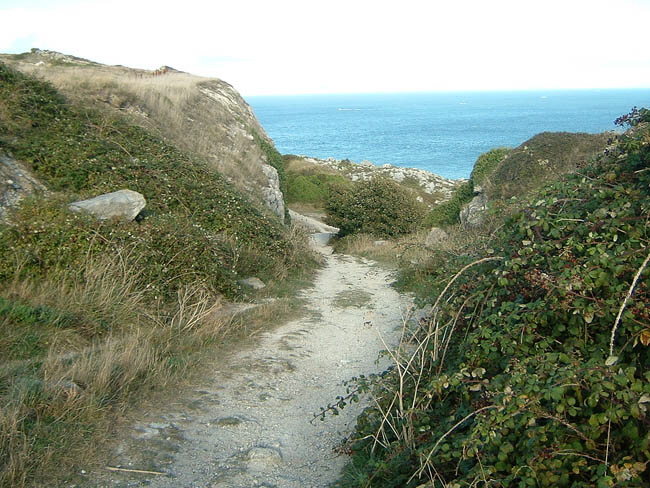
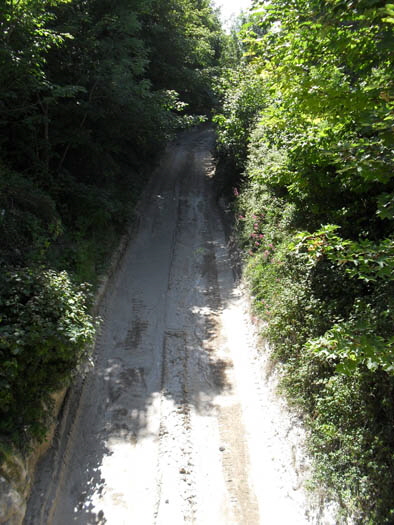
The track of the railway line partially filled in to create a track for lorries to use.
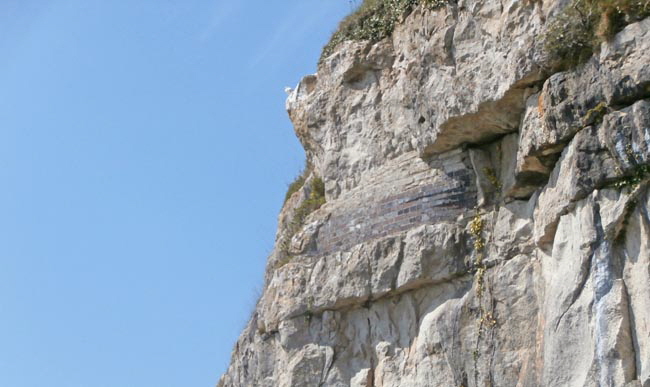
In places gaps in the rock face have been filled in with brickwork to prevent the railway trains being hit by falling rocks.
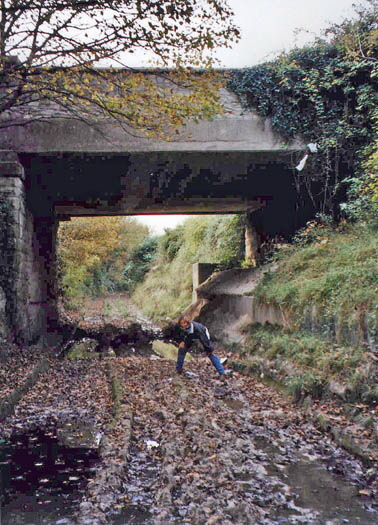
The railway track swings west and passes under the main road near where the Mermaid Inn stood. The track under the bridge has always been a very muddy area created initially by all the stone company lorries that used this as a route from the quarries south of Easton to get to the East Weares and Yeolands Quarry area.
Return To Top Of Page
ANOTHER OF MY HOBBIES

At the age of 75 I started a new hobby - writing and publishing books. These are available as paperbacks from Amazon - please click here for details. Their overall star rating from readers is 
Keywords Pennsylvania Castle Wakeham Portland Museum Old Crane Church Ope Cove Penn’s Weare Dorset
|